
Heads up: this post contains affiliate links. If you buy through one, we may earn a small commission at no extra cost to you. As an Amazon Associate, we earn from qualifying purchases.
⚡ Quick Answer: The best spinning reels for freshwater fishing — reel sizes explained, what makes a smooth drag, and top picks from Pflueger, Daiwa, and Shimano at every budget.
If you fish freshwater with lures or bait, a spinning reel is almost certainly your reel. It casts light lures spincast reels can’t, forgives mistakes baitcasters punish, and a good one costs less than a tank of gas. Here’s what separates a smooth, decade-lasting reel from a bargain-bin birdnest machine.
Reel Size: The First Decision
Spinning reels are sized by numbers like 1000, 2500, 3000, 4000. For most freshwater fishing, a 2500 or 3000 is the sweet spot — light enough for panfish and trout, strong enough for bass and walleye. Go 1000-2000 for ultralight trout and panfish setups, 4000+ for catfish, pike, and light saltwater duty.
What Makes a Good Spinning Reel
- Smooth drag: the system that tires out fish. It should pull line evenly with no jerks — the single most important quality difference.
- Ball bearings: quality over count. Five good bearings beat twelve cheap ones. Feel for a smooth, wobble-free crank.
- Gear ratio: around 6:1 is a versatile all-rounder; higher picks up line faster for working lures.
- Line capacity: printed right on the spool — plenty for any pond fishing; matters more for big water.
- Weight: a lighter reel means less fatigue over a full day of casting.
Top Spinning Reels
The Pflueger President and Daiwa Crossfire LT are legendary value picks, and the Shimano Sedona brings big-brand smoothness at a friendly price:
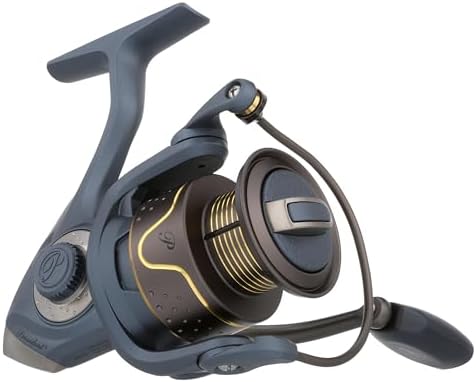
- PERFORMANCE MEETS VALUE: Pflueger President spinning reels combine smooth operation with a price that won’t break the ba…
- SIZE 35 SPINNING REEL: Features a graphite body and rotor, for lightweight, corrosion-resistant fishing reels. The alumi…
- RECOVER 28.1″ | 71cm for every turn of the crank. Slow oscillation gearing and a Total Line Control system reduces twist…

- AIRDRIVE Design – Engineered for flawless, effortless rotation, reducing resistance for a smoother fishing experience
- Tough Digigear Construction – Built for long-lasting durability, delivering consistent power and smooth gear performance
- LC-ABS Spool Technology – Provides trouble-free casting with improved line flow and greater casting distance

- Gear Ratio: 14.2 lbs (6.2 kg), Practical Drag Force: 13.3 lbs (6 kg), Maximum Drag Force: 24.3 lbs (11 kg)
- Weight: 11.2 oz (310 g) / Spool Diameter: 2.1 inches (54 cm) / Stroke: 0.6 inches (17 mm)
- Line Capacity: Nylon (No. – m) 4-190, 5-150, 6-125, Fluoro (No. – M) 4-170, 5-135, 6-115, PE (No. – m) 1.5-400, 2-300, 3…
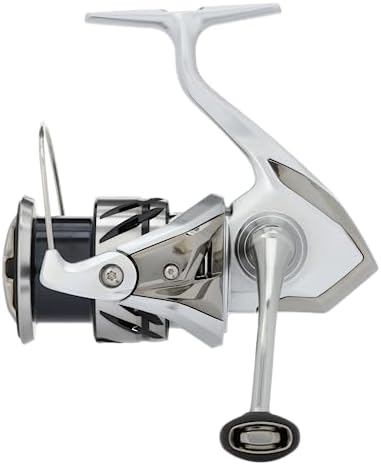
Ready to step up? The Shimano Stradic is the “buy once, cry once” reel that serious anglers keep for a decade:
Match It to Your Fishing
- Panfish and stocked trout: 1000–2500 size with 4–6 lb line.
- Bass all-arounder: 2500–3000 with 8–10 lb line — if you own one reel, this is it.
- Catfish and pike: 4000+ with strong drag and 15 lb+ line.
- Kids: stick with spincast (push-button) until casting clicks — see our teaching kids to fish guide.
Make It Last
- Rinse (don’t soak) after dirty or brackish trips, and back the drag off for storage.
- A drop of reel oil on the handle knob and bail pivot once a season keeps it silky.
- Never crank against a screaming drag — that’s how gears die.
Pair your new reel with the right line — our fishing line guide breaks down mono vs. braid vs. fluoro — and put it to work with our beginner’s fishing guide.
Frequently Asked Questions
What size spinning reel do I need?
Reel sizes are numbered, and a 2500 to 3000 size is the versatile all-around choice for freshwater species like bass, trout, and panfish. Smaller 1000 to 2000 reels suit ultralight and finesse fishing, while 4000 and larger handle bigger fish and saltwater. Match the reel to your rod and target species.
Are spinning reels good for beginners?
Yes, spinning reels are the most beginner-friendly type because they are easy to cast, rarely tangle compared with baitcasters, and handle light lures well. They are versatile across many species and techniques, which makes a quality spinning reel the ideal first reel for most new anglers.
How do you maintain a spinning reel?
Rinse it with fresh water after saltwater use, wipe it dry, and periodically add a drop of reel oil to the moving parts and grease to the gears per the manual. Keep the line fresh, store the drag loosened, and avoid dropping it in sand. Simple regular care keeps a reel smooth for years.

Written by Tom Rivera · Fishing & Hunting
Tom has spent four decades outdoors — on lakes, rivers, and treestands — and still fishes most weekends. These days his favorite catch is watching his grandkids reel in their first bluegill.