
Heads up: this post contains affiliate links. If you buy through one, we may earn a small commission at no extra cost to you. As an Amazon Associate, we earn from qualifying purchases.
⚡ Quick Answer: Monofilament vs. braided vs. fluorocarbon fishing line explained — which to use for bass, trout, and catfish, pound test by species, and the braid + leader setup.
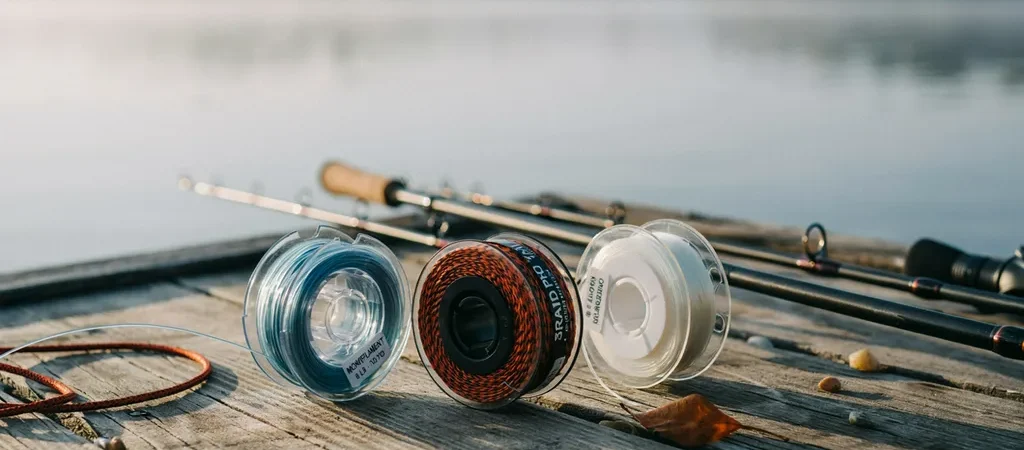
Fishing line is the only thing connecting you to the fish, and it costs less than anything else in your kit — yet most anglers never think about it. The three line types behave completely differently, and matching line to technique catches more fish than a new lure ever will. Here’s the whole picture in plain English.
The Three Line Types
Monofilament: The Forgiving All-Rounder
Single-strand nylon. Stretchy (cushions hook-sets and head shakes), cheap, easy to knot, and floats — which makes it great for topwater and bobber fishing. The stretch costs you sensitivity, and sunlight degrades it, so respool yearly. Best for: beginners, panfish, trout, bobber rigs, topwater.
Braided Line: Strength and Sensitivity
Woven fibers with near-zero stretch and incredible strength for its diameter — 30 lb braid is as thin as 8 lb mono. You feel every tick and pebble, and it slices through weeds. Downsides: visible in clear water (use a leader), slippery knots, and it’s unforgiving of drag mistakes. Best for: heavy cover, deep water, anyone who wants maximum feel.
Fluorocarbon: The Invisible Leader
Nearly invisible underwater, abrasion-resistant, and it sinks. Stiffer and pricier than mono, which is why most anglers use it as a 2–4 foot leader tied to a braid main line rather than filling the whole spool. Best for: clear water, leader material, line-shy fish.
Proven Lines Worth Spooling
A quality example of each type covers every freshwater situation:

- Power Pro Original Spectra Braid Fishing Line 30lb 500yd Moss Green 30-500
- Power Pro Original Spectra Braid Fishing Line 30lb 500yd Moss Green 30-500
- Power Pro Original Spectra Braid Fishing Line 30lb 500yd Moss Green 30-500

- 100% pink fluorocarbon leader material disappears in most saltwater applications
- Unmatched abrasion and shock resistance in the saltwater world
- Superior knot strength, thin diameter and low memory are key traits
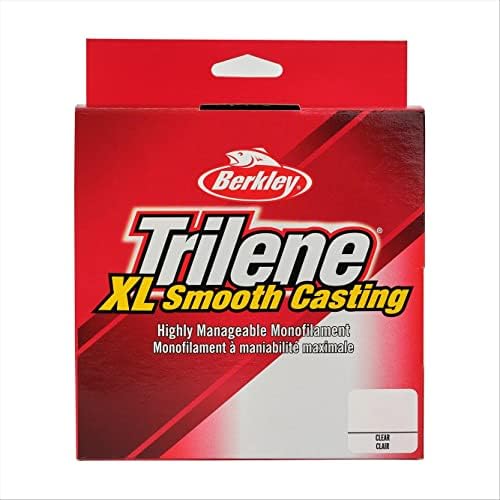
- BERKLEY TRILENE XL: Don’t let fish off the hook. Stronger and smoother than ever before, this versatile clear fishing li…
- MAXIMUM MANAGEABILITY: This mono fishing line resists twists and kinks allowing for remarkably smooth casting that lets …
- HIGH STRENGTH PER DIAMETER MONOFILAMENT FISHING LINE: This easy-casting fish line offers a break strength of 14lb | 6.3k…
How Heavy? (Pound Test by Target)
- Panfish and small trout: 4–6 lb mono.
- Bass and walleye: 8–12 lb mono/fluoro, or 15–30 lb braid with a fluoro leader.
- Catfish and pike: 15–30 lb mono or 30–50 lb braid.
- Lighter line casts farther and gets more bites; heavier line survives cover. When in doubt, go lighter and let the drag do its job.
The Braid + Leader Setup (Worth Learning)
The most versatile modern rig: braid main line for casting distance and sensitivity, joined to a fluorocarbon leader for invisibility. Learn one knot — the Double Uni or FG — and you unlock the best of both lines. Practice at home, not on the water.
Line Care
- Respool mono yearly; braid lasts several seasons.
- Check the last few feet for nicks after every fish and every snag — run it through your fingers.
- Keep spare spools out of the sun and heat.
Match your line to a reel with our spinning reel guide, pick the right offering from our bait guide, and put it together with the beginner’s guide to fishing.
Frequently Asked Questions
What fishing line should a beginner use?
8–10 pound monofilament: forgiving, cheap, easy to knot, and right-sized for panfish through bass. Learn its habits, then branch to braid for sensitivity or fluorocarbon for invisibility as specific needs appear.
What is the difference between mono, braid, and fluorocarbon?
Mono stretches, floats, and forgives; braid is thin, strong, zero-stretch, and casts forever but needs a leader in clear water; fluorocarbon is nearly invisible and sinks, ideal as leader material. Most setups eventually combine braid mainline with a fluoro leader.
How often should you change fishing line?
Mono and fluoro: at least yearly, sooner with heavy use or visible abrasion. Braid lasts several seasons. Sun, heat, and memory degrade line invisibly — and old line fails precisely when the fish is finally big.

Written by Tom Rivera · Fishing & Hunting
Tom has spent four decades outdoors — on lakes, rivers, and treestands — and still fishes most weekends. These days his favorite catch is watching his grandkids reel in their first bluegill.