
Heads up: this post contains affiliate links. If you buy through them, WildMorrow may earn a small commission at no extra cost to you. As an Amazon Associate, we earn from qualifying purchases.
⚡ Quick Answer: How to see two thousand stars from your campsite: finding real darkness, timing the moon, the red-light rule, and what you can spot with zero equipment.
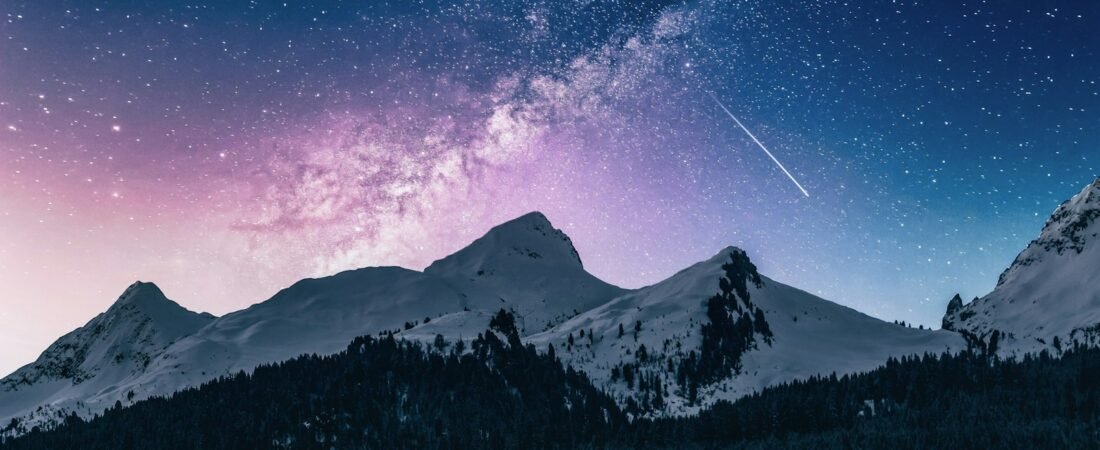
The best show in the outdoors starts after the campfire dies down, runs all night, and costs exactly nothing. Most campers sleep straight through it. City skies hide all but a few dozen stars; a dark campsite two hours from town can show you two thousand, plus the Milky Way draped across the middle like someone spilled it.
Stargazing is the easiest hobby to start tonight. Here’s how to do it properly from a campsite.
Find real darkness
The single biggest upgrade isn’t equipment, it’s location. Look for campgrounds labeled dark-sky friendly, or simply pick sites 60+ miles from a major city and away from the bathroom floodlights. A meadow, lakeshore, or ridgeline beats a forest site; you want the widest slice of sky you can get.
Time it like a pro
Check the moon phase before you book: a full moon is beautiful and also a giant spotlight that washes out everything else. New moon weekends are prime time. Give your eyes 20 to 30 minutes to fully adapt to darkness, and guard that adaptation with your life, which brings us to gear.
The red light rule (and the short gear list)
One glance at a white phone screen resets your night vision to zero. A headlamp with a red-light mode is the stargazer’s best friend: red light barely disturbs dark adaptation, so you can check the star chart, find the snacks, and keep your eyes tuned to the sky. Add something comfortable to lie on and a power bank to keep the star apps alive, and you’re fully equipped.

- 【COMFORT IS PRICELESS IN EVERY CAMPING TIME】The super soft and cozy memory foam camping mattress is made of high-density…
- 【CertiPUR-US CERTIFICATION PROVIDES SAFETY GUARANTEE】 The cot mattress pad has been certified by CertiPUR-US . Compared …
- 【EASY PORTABLE & WATERPROOF AND NON-SLIP BOTTOM】Free storage bag and packing straps are included. The adjustable buckle …

- Long Press Function and Motion Sensor: Unlike the old version, LHKNL headlamp has added a long press function. Just hold…
- Super Bright and Rechargeable: The headlamp flashlight camping essentials uses class-leading LED chips that will provide…
- Ultra-light and Adjustable: The hand-free headlamp is only weight 1.87 OZ, comfortable and lightweight. The lamp head ca…

- EFFICIENT CHARGING: Use the adapter included in the package to charge the power station from 0 to 80% in 2hrs, and use t…
- COMPACT & PORTABLE DESIGN: Super slim size(6.5 x 4.6 x 3.1 inches), the portable power station is about the size of a ba…
- MULTI-OUTPUT: There are 8 output ports could be used at the same time, and the built-in BMS system ensures stability and…
Beginner Telescopes Worth a Look
Binoculars are the easiest on-ramp to the night sky, but if stargazing grabs you, a beginner telescope is the upgrade that reveals the Moon’s craters in crisp relief, the rings of Saturn, and the four bright moons of Jupiter. You don’t need an expensive rig to start — these entry-level scopes earn consistently strong reviews from beginners for being easy to set up and genuinely fun to look through. One rule of thumb before you buy: aperture (the width of the lens or mirror) gathers light and matters more than raw magnification, and a steady mount matters more than either. A refractor is the grab-and-go choice, while a small Newtonian reflector gives you more aperture for the money.

- Superior Optics: 400mm(f/5.7) focal length and 70mm aperture, fully coated optics glass lens with high transmission coat…
- Magnification: Come with two replaceable eyepieces and one 3x Barlow lens.3x Barlow lens trebles the magnifying power of…
- Wireless Remote: This refractor telescope includes one smart phone adapter and one Wireless camera remote to explore the…

- Superior Optics: The 90mm aperture and 800mm focal length (f/8.89) telescope for adults provides clear, bright views. Fu…
- Optimum Magnification (32X-240X): The refractor telescope comes with two replaceable eyepieces (10mm and 25mm) and a 3X …
- Adjustable Tripod: The astronomical telescope includes a sturdy stainless steel tripod adjustable from 28.7 to 46.4 inch…
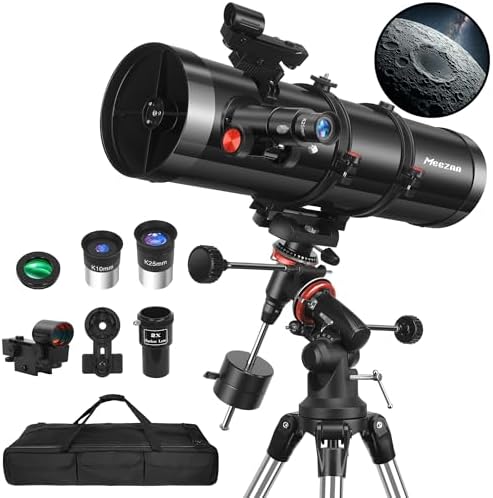
- 150mm Large Aperture: This astronomical reflector telescope for adults features a 650mm focal length and 150mm aperture,…
- High Magnification & Clear Optics: Equipped with two eyepieces (25mm & 10mm) and a 2X Barlow lens, this telescope for as…
- Stable German Equatorial Mount: Upgraded Equatorial mount with precision dials and slow-motion control knobs provides sm…

- 【Excellent Optics】Astronomical telescope features 80mm aperture 600mm(f/6.7) focal length-The big aperture can capture m…
- 【Portable & Stable】Our refractor telescope has a backbag, an adjustable aluminum tripod and an upgraded phone adapter. A…
- 【Easy to Operate】 This telescope is easy to assemble even for astronomy beginners and kids. You can set up easily with t…
What you’ll actually see (no telescope required)
With bare eyes on a dark night: the Milky Way core (summer’s showpiece), five planets at various times of year, meteors on any clear night (up to one a minute during August’s Perseids), satellites gliding in straight lines, and the International Space Station, which looks like a bright star in a hurry. A free star app that overlays constellations when you point your phone up turns “pretty dots” into a guided tour. Set it to red-light mode first.
Make it a campsite ritual
Lay out the pads at dusk facing the darkest horizon. Hot drinks in hand, lights out at full dark, and give it a solid half hour. Someone will see a shooting star. Someone will claim they saw two. This argument is part of the experience.
Clear skies
Stargazing pairs perfectly with everything else on this site: pitch camp with our camping hacks, feed the crew with campfire nachos, and let the sky handle the entertainment. Gear gaps? The best camping gear roundup has you covered.
Frequently Asked Questions
What is the best time for stargazing while camping?
The week around a new moon, an hour-plus after full darkness, on clear dry nights. Late summer evenings offer the Milky Way core; winter brings the sharpest skies. Give your eyes 20 minutes with no white light to fully adapt.
Where are the darkest skies for camping in the US?
The desert Southwest and intermountain West dominate: certified dark-sky parks like Big Bend, Great Basin, Capitol Reef, and Cherry Springs (the East’s best) offer skies most Americans have never seen. Check darksitefinder.com maps before booking.
What equipment do I need for stargazing?
Just eyes, a red-light headlamp, and something comfortable to lie on. Binoculars reveal Jupiter’s moons and star clusters — a better start than a telescope. A free astronomy app that names what you point at completes the kit.

Written by Sarah Brooks · Hiking & National Parks
Sarah fell in love with the outdoors on a childhood trip to the Smokies and has logged thousands of trail miles across 30+ national parks since. She is happiest above treeline with a map in hand.