
Heads up: this post contains affiliate links. If you buy through one, we may earn a small commission at no extra cost to you. As an Amazon Associate, we earn from qualifying purchases.
⚡ Quick Answer: The most reliable way to start a fire without matches is a ferrocerium rod, which throws sparks hot enough to light dry tinder in any weather. A lighter, a battery and steel wool, or a magnifying lens also work. Whatever the spark, success depends on dry tinder and a well-built fire lay.
Fire means warmth, dry clothes, hot food, and a signal for rescue, so knowing how to make one without matches is a core outdoor skill. The spark is only half the job, though. The real secret is preparation: dry tinder, a graded pile of kindling, and patience. Here are six methods that work, ordered from most practical to last resort.
First, Gather Tinder and Kindling
Before you make a single spark, collect your fuel and sort it by size. Start with tinder that catches instantly, such as dry grass, birch bark, pine needles, cattail fluff, or a cotton ball rubbed with petroleum jelly. Add pencil-thin kindling, then finger-thick sticks, then wrist-thick fuel. Keep everything bone dry and within reach, because a flame in tinder dies in seconds if you have to go hunting for the next size up.
Method 1: Ferrocerium Rod
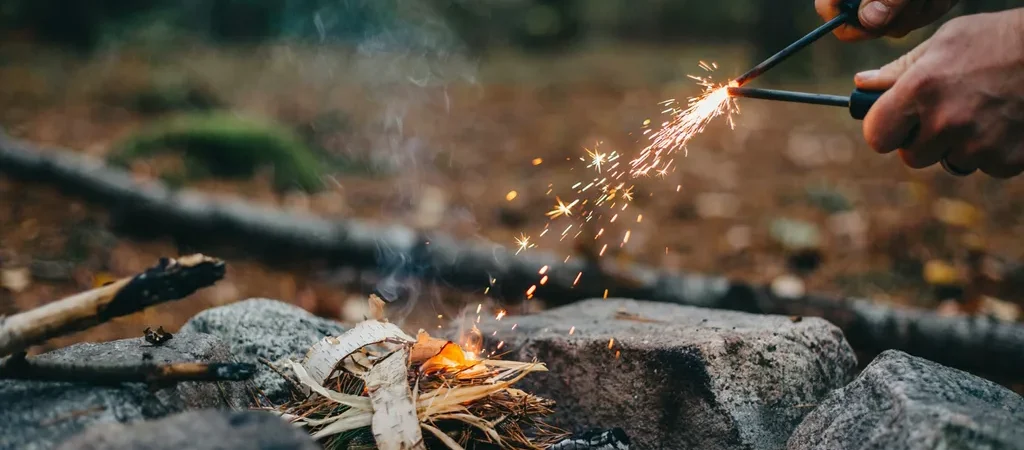
A ferro rod is the outdoor standard. Scrape the back of your knife down the rod with firm pressure and it throws a shower of sparks well over 5,000 degrees, hot enough to light good tinder even when it is damp and cold. It works when wet, lasts for thousands of strikes, and belongs in every pack. Aim the sparks straight into a loose nest of fine tinder.
Method 2: Lighter
An ordinary lighter is the simplest tool of all, so carry one or two even if you also pack a ferro rod. A butane lighter can struggle in cold or wind, so warm it in your hands first and shield the flame. Even an empty lighter still throws sparks from the flint, which can light a good tinder bundle.
Method 3: Battery and Steel Wool
Touch both terminals of a 9-volt battery to a piece of fine steel wool and the wool glows and ignites almost instantly. AA or AAA batteries work too if you bridge them with the wool. It is a great trick to know because these items ride in many packs already, but keep the two well apart in storage so they do not spark by accident.
Method 4: Magnifying Lens
On a sunny day, a magnifying glass, a camera lens, or even reading glasses can focus sunlight into a hot point that lights tinder. Angle the lens so the bright dot is as small and sharp as possible and hold it steady on dark, fine tinder until it smokes and catches. It is silent and reusable, but useless after dark or under clouds.
Method 5: Flint and Steel
The traditional flint-and-steel kit strikes sparks off a hard stone with a steel striker, landing them on char cloth that smolders into a coal. It takes practice and the right materials, but it is durable and works when modern tools fail.
Method 6: Friction, the Last Resort
A bow drill or hand drill makes fire by friction alone, spinning a spindle against a fireboard to create a glowing ember. It is the hardest method by far, demanding the right woods, good technique, and real effort, so treat it as a survival fallback rather than a first choice. Practice it at home long before you ever need it.
Build It to Last
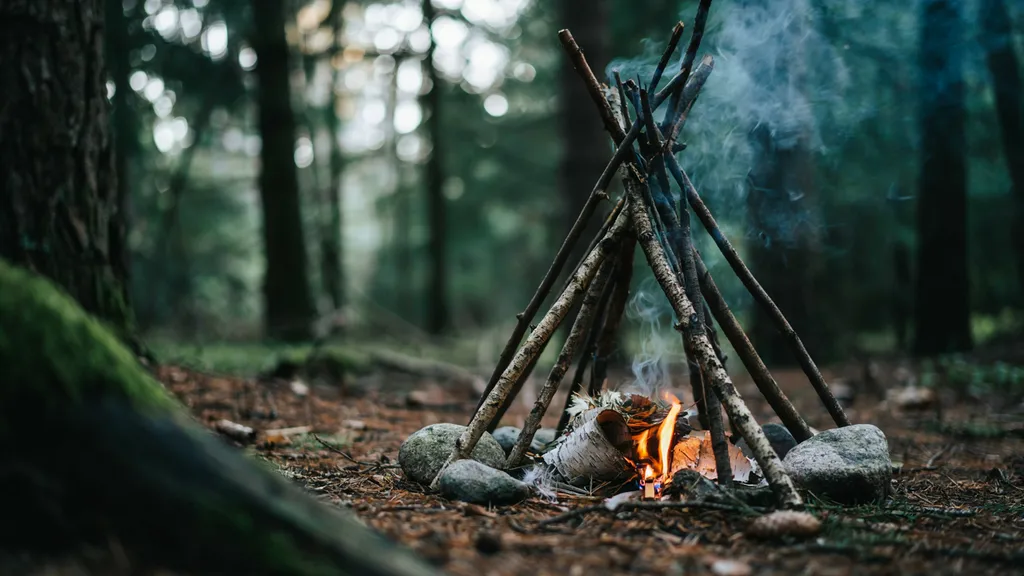
Once your tinder catches, feed the flame gently with your smallest kindling in a teepee or log-cabin shape, giving it plenty of air. Add larger fuel only as the fire grows. Master the fire lay and any of these spark sources will reward you with a real, lasting fire.
Recommended Gear
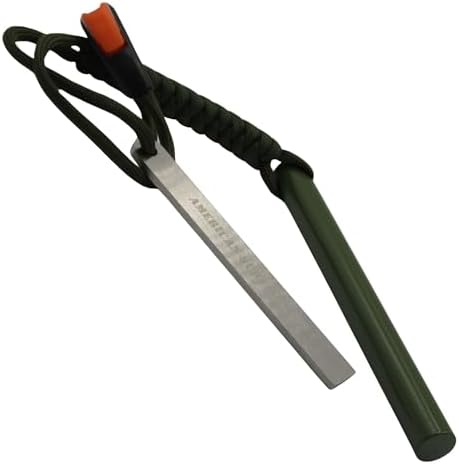
- LARGE FERRO ROD: Features a 5 inch x 1/2 inch ferrocerium rod for reliable, long-lasting fire starting in any condition.
- 15,000+ STRIKES: One rod lights thousands of fires. Hot 3,000-degree sparks ignite tinder, char cloth, dry grass, birch …
- HARDENED STEEL STRIKER: Includes a hardened steel striker designed to produce hot, consistent sparks with every scrape.

- Ferro Rod Fire Starter: features a high-quality hexagonal ferrocerium rod measuring 6 inches(15cm) in length and 1/2 inc…
- EXTRA LARGE Hexagonal Fire Starter kit: Super thick and large ferro rod throws a MASSIVE shower of hot sparks to light f…
- The Newly Designed Striking Edges Striker features an ergonomic grip and is crafted from high-quality stainless steel wi…

- Up to 20,000 Strikes: The Hexå Original camping fire starter is built with our Sånft-korr ferro blend, throwing 5,500°F …
- Sized for Survival: At 6″ long and 1/2″ thick, this fire starter tool provides extended use while staying compact enough…
- Six-Sided Control: The Hexå’s flat hexagon profile provides better grip and efficiency, delivering more molten ferroceri…
Frequently Asked Questions
What is the easiest way to start a fire without matches?
A ferrocerium rod is the most reliable option, throwing sparks hot enough to light dry tinder in almost any weather. Scrape it with the back of a knife into a loose nest of fine, dry tinder. A lighter or a battery touched to steel wool also works. Success depends most on having truly dry tinder ready.
What can I use as tinder to start a fire?
Good natural tinder includes dry grass, birch bark, pine needles, cattail fluff, and fine wood shavings. A cotton ball rubbed with petroleum jelly is an excellent homemade fire starter. Whatever you use, it must be bone dry and fluffed up so it catches a spark and flames quickly.
Can you really start a fire with a battery?
Yes. Touching both terminals of a 9-volt battery to a piece of fine steel wool makes the wool glow and ignite almost instantly. AA or AAA batteries work if you bridge them with the wool. Store batteries and steel wool well apart so they do not spark by accident in your pack.
Written by Jake Miller · Camping & Gear
Jake grew up pitching tents before he could drive and has spent 15+ years camping, car-camping, and gear-testing his way across the country. If it can be cooked over a fire or packed into a trunk, he has an opinion on it.