Heads up: this post contains affiliate links. If you buy through one, we may earn a small commission at no extra cost to you. As an Amazon Associate, we earn from qualifying purchases.
⚡ Quick Answer: For most car campers the best cooler is a roto-molded hard cooler in the 45 to 65 quart range, which can hold ice for several days when pre-chilled and packed well. Soft coolers are lighter and fine for day trips, while budget hard coolers work for a single overnight.
A good cooler is the difference between fresh food on day three and a soggy bag of warm disappointment. For car camping, where weight is not a concern, a well-built cooler keeps your meat, dairy, and drinks safe long after a cheap foam box has given up. Below we cover how to shop for a cooler and three picks that span weekend warriors to serious multi-day trips.
Why Cooler Quality Actually Matters
Ice retention comes down to insulation and sealing. A thin-walled cooler with a loose lid can lose its ice in a day, which puts your food into the danger zone and forces expensive ice runs. A thick, well-sealed cooler holds a safe temperature for days, protects your food budget, and means fewer trips to the store. Over a summer of camping, the better cooler quietly pays for itself.
What to Look For
- Insulation: thick walls and a roto-molded body hold ice far longer than thin injection-molded boxes.
- Size: 45 to 65 quarts suits most families for a weekend, while solo campers can go smaller.
- Seal: a gasketed lid and solid latches keep cold air in and warm air out.
- Durability: a tough shell doubles as a seat and a table and survives being tossed in a truck bed.
- Drainage: a low, no-leak drain plug makes cleanup easy.
- Extras: bear-resistant certification matters in bear country, and wheels help with heavy loads.
Our Top Picks

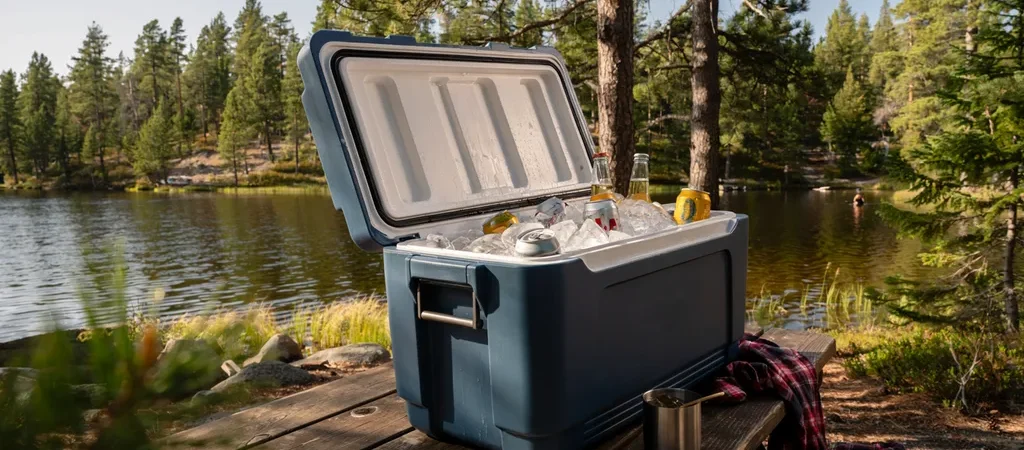
- The YETI Tundra 45 combines versatility with durability with a capacity of up to 26 cans with a recommended 2:1 ice-to-c…
- Ice stays ice thanks to up to 3 inches of PermaFrost Insulation and an extra thick FatWall design is certified Bear-Resi…
- The Rotomolded Construction makes the Tundra armored to the core and virtually indestructible so wherever you decide to …

- FULLY INSULATED: Lid and body Keeps the Ice up to 5 days in temperatures as high as 90°F; logo color on cooler may vary
- BUILT TO LAST: UV coating helps protect the cooler from damaging sun rays; rust-resistant stainless steel hardware preve…
- EASY-TO-CLEAN: Antimicrobial and stain-resistant liner resists odor, mold, and mildew from forming in between uses; leak…
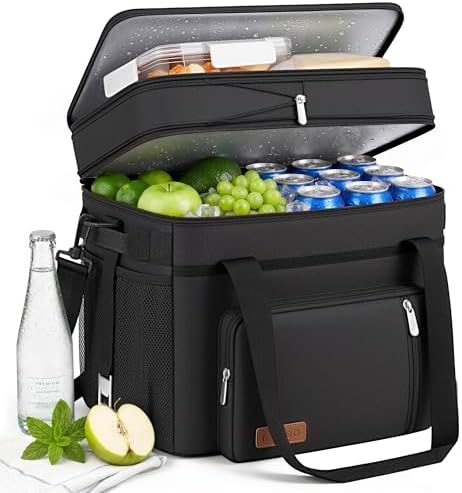
- 【Extra Large Capacity】 Size: 14.6” x 11” x 8.5”. Expanded size: 14.6” x 11” x 11.4”. Different foods can be placed on th…
- 【Three Ways to Carry】 Comes with side handles and a removable shoulder strap, this cooler bag can be carried by two peop…
- 【Collapsible Design】This portable cooler is suitable for beach, camping, hiking, travel, shopping, kayaking and road tri…
How to Choose the Right Cooler
For weekend car camping with a family, a roto-molded hard cooler around 50 to 65 quarts is the sweet spot of capacity and ice life. Solo campers and shorter trips can drop to a 25 to 45 quart model. If you mostly do day hikes, picnics, or paddling trips, a quality soft cooler is lighter and easier to carry, at the cost of shorter ice retention. Match the size to how many people and how many days you feed, then round up slightly so you are not cramming food against warm walls.
Cooler Tips for Longer Ice Life
- Pre-chill the cooler overnight with a sacrificial bag of ice before your trip.
- Use block ice or frozen jugs, which last much longer than cubes.
- Pack the cooler full, since a full cooler holds cold better than a half-empty one.
- Keep it in the shade and open it as little as possible.
A quality cooler is a buy-it-once piece of gear that pays off every trip in fresh food and cold drinks. Size it to your crew, pre-chill it, pack it smart, and it will keep things cold long after the weekend is over.
Frequently Asked Questions
How long can a good cooler keep ice?
A quality roto-molded cooler can hold ice for several days when it is pre-chilled, packed full, and kept in the shade. Cheaper thin-walled coolers may lose their ice in a day. Ice retention depends heavily on insulation, a tight seal, and how often you open the lid.
What size cooler do I need for camping?
For weekend car camping with a family, a 45 to 65 quart cooler is the sweet spot. Solo campers and short trips can use a 25 to 45 quart model, while long trips or big groups may want 70 quarts or more. Size it to how many people and days you are feeding, then round up slightly.
How do I make cooler ice last longer?
Pre-chill the cooler overnight before your trip, use block ice or frozen jugs instead of cubes, pack it full so there is little warm air space, and keep it in the shade. Open it as little as possible, and keep drinks in a separate cooler from food to cut down on openings.
Written by Jake Miller · Camping & Gear
Jake grew up pitching tents before he could drive and has spent 15+ years camping, car-camping, and gear-testing his way across the country. If it can be cooked over a fire or packed into a trunk, he has an opinion on it.