Heads up: this post contains affiliate links. If you buy through one, we may earn a small commission at no extra cost to you. As an Amazon Associate, we earn from qualifying purchases.
⚡ Quick Answer: To camp comfortably in summer heat: create shade beyond your tent (canopy or shade tarp over camp AND over the tent itself), maximize airflow (mesh doors, a battery fan, hammock instead of tent on hot nights), schedule activity for mornings and evenings with water time midday, and treat the cooler like a heat-management system — because it is.
Summer is peak camping season and, some weekends, a test of will — a nylon tent in July sun becomes a greenhouse by 8 am. But hot-weather camping is a solvable problem: shade, airflow, timing, and cold logistics. Here’s the heat playbook that keeps everyone happy through the dog days.
Shade Is Infrastructure
- Shade the tent, not just the people: a tarp or reflective fly pitched OVER the tent (with an air gap) drops interior temps dramatically — the tent stops being a solar oven.
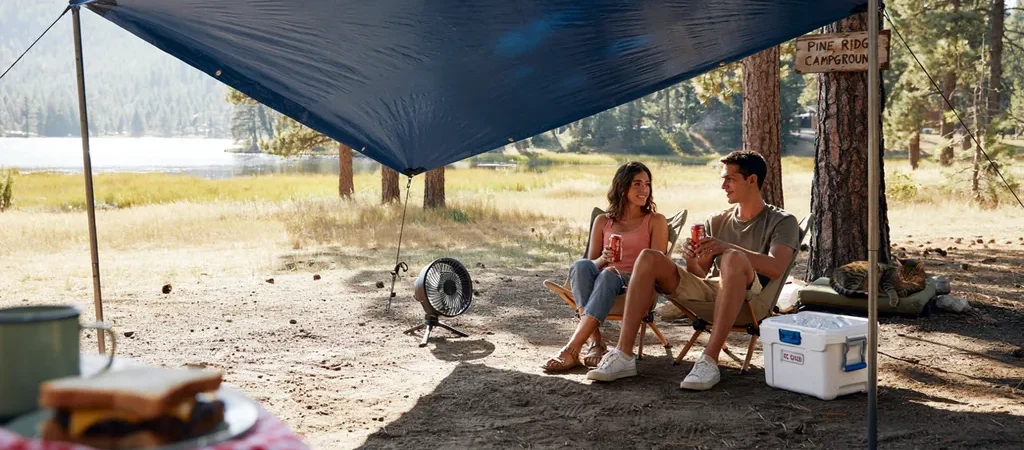
- The canopy is the living room: a shade canopy over the table turns midday from exile to lounge (our beach guide shade picks work anywhere).
- Pick sites with afternoon shade — western tree cover matters more than morning sun (see choosing a campsite).
- Doors and vents face the breeze; rainfly OFF (or rolled back) on dry nights — mesh is your friend.
The Schedule Beats the Heat
- Hike at dawn, swim at noon, relax at five — the heat illness guide timing rules apply doubly at camp with kids.
- Cook early or late; better yet, plan no-cook dinners for the hottest nights.
- Camp near water when you can — a swimming hole is nature’s air conditioning, and lakes moderate evening temps.
Sleeping Cool
- A battery camp fan moves the night from sticky to sleepable — the single best summer purchase:

- 20000mAh Large Capacity Battery with 2 Outputs: The camping fan has a built-in 20000mAh rechargeable battery, which can …
- Stay Cool Wherever You Go: With 4 speeds wind, this beach fan makes it a highly effective tool for keeping you cool and …
- Super Bright LED Camping Lantern: The tent fan has 3 brightness settings, making it the ideal light source for nighttime…
- Sleep ON a sheet over the bag, not in it; a damp bandana on pulse points is the free upgrade.
- Hammock nights: airflow on all sides beats any tent below 75°F evenings (see hammock picks).
- Hydrate through the EVENING — waking up parched at 2 am is a preventable event.
Cold Logistics
- Two-cooler system: drinks cooler (opened constantly) and food cooler (opened rarely) — the food ice survives days longer (cooler strategy).
- Freeze water bottles as ice blocks: they cool the cooler, then become cold drinking water. Zero waste.
- Shade the cooler and throw a wet towel over it — evaporation is free refrigeration.
- Watch the food-safety window: nothing perishable sits out past an hour in 90°F+ heat.
Bugs peak with the heat — the two-layer bug system completes the summer kit. Master shade, airflow, and the schedule, and July camping goes back to being what it should be: swimming holes, long evenings, and fireflies.
Frequently Asked Questions
How do you stay cool camping in the summer?
Camp in shade, swap the rain fly for full mesh at night, wet a bandana for your neck, and shift activity to mornings and evenings. A battery fan and a cotton sheet (summer’s exception to the no-cotton rule) transform hot nights.
Is it safe to camp in extreme heat?
Above roughly 95°F daytime highs, plan seriously: heat illness risk climbs, coolers struggle, and fire restrictions tighten. Choose higher elevation or waterside sites, double your water plans, and know the signs of heat exhaustion before you go.
Where should you pitch a tent in hot weather?
Afternoon shade beats morning shade — west-side tree cover keeps the tent from becoming an oven by dinner. Higher ground catches breeze, and orienting the biggest mesh panels toward prevailing wind turns the tent into a wind scoop.
Written by Jake Miller · Camping & Gear
Jake grew up pitching tents before he could drive and has spent 15+ years camping, car-camping, and gear-testing his way across the country. If it can be cooked over a fire or packed into a trunk, he has an opinion on it.