
Heads up: this post contains affiliate links. If you buy through one, we may earn a small commission at no extra cost to you. As an Amazon Associate, we earn from qualifying purchases.
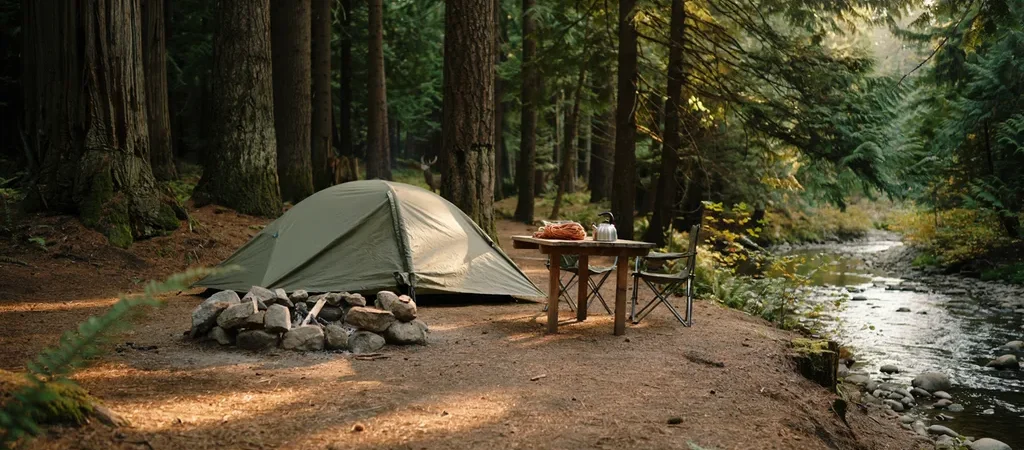
⚡ Quick Answer: Choose a campsite that’s flat (or has a slight head-uphill slope), on durable ground 200 feet from water, sheltered from wind but not under dead branches, and morning-sun facing. Arrive with 2+ hours of daylight, and always look UP before pitching — widowmaker branches are the hazard people forget.
A great campsite makes an average trip great, and a bad one ruins the best weather. The difference takes five minutes of walking around before you drop the tent bag — most campers skip it and pay all night. Here’s the checklist experienced campers run automatically.
The Non-Negotiables (Safety)
- Look up first: dead branches and standing dead trees (“widowmakers”) kill campers every year. No tent under anything that could drop.
- Stay out of drainages: that smooth sandy wash or grassy dip is where water goes. In canyon country this is a flash-flood rule; everywhere else it’s a puddle rule.
- Wind exposure: ridge tops and lake points get hammered; a stand of trees or a boulder windbreak makes a 10-degree difference.
- Distance from water: 200 feet (about 70 paces) — it protects the shoreline, keeps bugs down, avoids cold-air pooling, and it’s the actual rule in most backcountry.
The Comfort Multipliers
- Flat, but test it: lie down where the tent will go. A slight slope? Sleep head-uphill.
- Morning sun, afternoon shade: an east-facing site dries dew and warms you at breakfast; western shade saves summer afternoons.
- Durable surface: established pads, gravel, pine duff, or dry grass — never dig trenches or clear vegetation. Great sites are found, not made.
- The kitchen triangle: tent, kitchen, and food storage 100+ feet apart in bear country (see the bear safety guide).
Reading a Campground Map (Car Camping)
- Corner and end sites have one fewer neighbor; sites backing to woods or water feel twice as private.
- Distance from bathrooms is a trade: close = convenient + foot traffic + light; far = quiet.
- Note the sun line: shaded loops stay cool but dry slowly after rain.
- Check the site photos on the reservation page for the tent pad and slope — “spacious” in the description can mean “parking lot.”
The Five-Minute Ritual
Walk the site. Look up (branches), look down (roots, rocks, ant hills, water paths), feel the wind, find the morning sun line, lie where the tent goes. Five minutes, every time, even arriving late — it beats moving the tent at midnight in the rain. Speaking of which: our rain camping guide covers what happens when the forecast turns anyway.
Once you’ve picked the spot, set it up right: our tent guide, sleeping pad picks, and camp setup hacks finish the job.
Recommended Gear

- FITS: This 13’6″ x 9’6″ footprint is perfect with our: CORE 10 Person Straight Wall Cabin Tent (model #40034), CORE 10 P…
- ESSENTIAL TENT ACCESSORY: Provides an extra layer of protection against water, tears, sharp rocks, insects, and moisture
- EASY SETUP: Elastic loops on all four corners allow for quick and secure staking under your tent

- A MUST FOR TENT: An extra tent tarp doesn’t just give you extra waterproofing, it is used as ground cloths under tents t…
- HEAVY DUTY: A tough groudsheet that can be easily overlooked but it makes all the difference when setting up the campsit…
- LIGHT&COMPACT: Size 87″ x 59″, weighing a mere 9.8 oz, it isn’t going to add a lot of weight to your pack. Impressed com…

- A MUST FOR TENT: An extra tent tarp doesn’t just give you extra waterproofing, it is used as ground cloths under tents t…
- HEAVY DUTY: A tough groudsheet that can be easily overlooked but it makes all the difference when setting up the campsit…
- LIGHT & COMPACT: Size 118” x 118”, weighing a mere 22 oz, it isn’t going to add a lot of weight to your pack. Impresse…
Frequently Asked Questions
How do you choose a good campsite?
Look for flat, well-draining ground above any low spots that could flood, ideally with natural wind protection and morning sun. Camp at least 200 feet from water and trails, use established sites where possible, and avoid hazards like dead standing trees overhead. Check the ground for rocks and roots.
How far should you camp from water?
A common Leave No Trace guideline is to camp at least 200 feet, about 70 adult steps, from lakes and streams. This protects water quality and shoreline habitat, keeps you away from bugs and flood risk, and preserves the experience for wildlife and other visitors. Always follow local rules, which may differ.
What should you avoid when picking a campsite?
Avoid low-lying spots and dry washes that collect water or flood, ground beneath dead or damaged trees and limbs, exposed ridgelines in storms, and areas with signs of animal activity. Also avoid trampling fragile vegetation by choosing durable or established surfaces.
Written by Jake Miller · Camping & Gear
Jake grew up pitching tents before he could drive and has spent 15+ years camping, car-camping, and gear-testing his way across the country. If it can be cooked over a fire or packed into a trunk, he has an opinion on it.