
Heads up: this post contains affiliate links. If you buy through them, WildMorrow may earn a small commission at no extra cost to you. As an Amazon Associate, we earn from qualifying purchases.
⚡ Quick Answer: The seven Leave No Trace principles explained in plain language, so you can enjoy the outdoors and leave it just as wild for the next person.
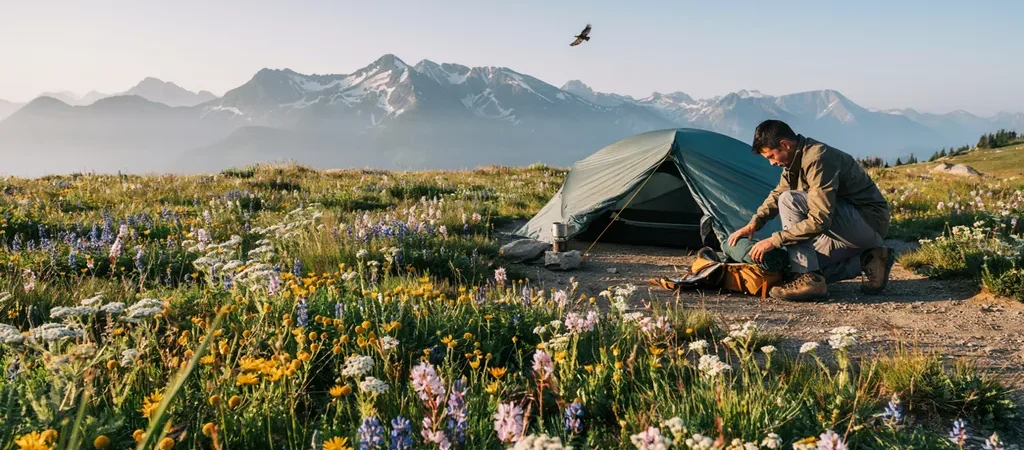
“Leave No Trace” sounds like a rule handed down by a park ranger with a clipboard, but it’s really just the outdoor version of the golden rule: leave the place as good as you found it, so the next person (and the next generation) gets the same wild magic you did. It’s seven simple principles, and once they click, they become second nature. Here they are, human-sized.
1. Plan ahead and prepare
Most damage to wild places comes from people caught unprepared: the group that builds a huge fire because they got cold, or cuts switchbacks because they’re rushing before dark. Check regulations, pack the right gear, and know your route. Preparation isn’t just safer, it’s lower-impact.
2. Travel and camp on durable surfaces
Stick to established trails and campsites. Walk single-file through the middle of the trail even when it’s muddy (going around widens it into a scar), and camp on rock, gravel, or existing sites rather than trampling fresh meadow. Fragile ground can take years to recover from one night.
3. Dispose of waste properly
Pack it in, pack it out, all of it, including food scraps and micro-trash. For human waste where there are no toilets, dig a cat-hole 6 to 8 inches deep and at least 200 feet from water, trails, and camp. A lightweight trowel makes this painless.

- Removes Bacteria & Parasites: The Microfiltration Membrane Removes 99.999999% of Waterborne Bacteria (Including E. Coli …
- Removes Microplastics: Removes the Smallest Microplastics Found in the Environment (Down to 1 Micron), and Reduces Turbi…
- Rigorous Testing: All Claims Are Verified with Laboratories Using Standard Testing Protocols Set by the US EPA, NSF, AST…

- Weight: 0.48 oz (13.5g) Ultralight! Weighs less than 3 nickels!
- Tough and Reliable – Will last a lifetime of use. Lifetime Warranty.
- Made in the USA.
4. Leave what you find
Take pictures, not pinecones. Leave rocks, plants, artifacts, and antlers where they are so the next hiker gets the same discovery. Building rock cairns and carving initials count as leaving a trace, so skip them.
5. Minimize campfire impact
Fires scar the ground and consume deadwood that ecosystems need. Use a camp stove for cooking when you can, and when you do have a fire, keep it small, use an existing ring, burn only wood you can break by hand, and drown it dead out. Our campfire guide covers the responsible how-to.
6. Respect wildlife
Observe from a distance, never feed animals (human food harms them and creates dangerous, bold critters), and store your food securely. A fed animal often becomes a dead animal once it loses its fear of people. Give them space, especially with young around.
7. Be considerate of others
Keep voices and music down (people came for the quiet), yield appropriately on trails, and keep pets under control. The wilderness is a shared gift; a little courtesy keeps it magic for everyone.
It all adds up
None of this is hard, and all of it matters when millions of us love the same trails. Fold these habits into every trip, from a day hike to a backpacking weekend, and you become part of why these places stay beautiful.
Frequently Asked Questions
What are the seven Leave No Trace principles?
Plan ahead, travel and camp on durable surfaces, dispose of waste properly, leave what you find, minimize campfire impacts, respect wildlife, and be considerate of other visitors. Together they add up to one idea: leave places as good as or better than you found them.
Why can’t you leave orange peels or apple cores outdoors?
They take months to years to decompose, draw wildlife to trails where they learn to beg, and are not natural to the ecosystem. ‘Biodegradable’ is not the same as ‘belongs there’ — pack out every scrap.
How far from water should you camp?
At least 200 feet — about 70 adult paces — from lakes and streams. It protects fragile shorelines, keeps waste out of the water everyone drinks, and gives wildlife the access corridors they depend on.

Written by Sarah Brooks · Hiking & National Parks
Sarah fell in love with the outdoors on a childhood trip to the Smokies and has logged thousands of trail miles across 30+ national parks since. She is happiest above treeline with a map in hand.