
Heads up: this post contains affiliate links. If you buy through one, we may earn a small commission at no extra cost to you. As an Amazon Associate, we earn from qualifying purchases.
⚡ Quick Answer: Monofilament is cheap, stretchy, and forgiving, which makes it the best first line. Braid has no stretch and enormous strength for its diameter, so it is best for feel, distance, and fishing in heavy cover. Fluorocarbon is nearly invisible underwater and sinks, which makes it the best leader material. A very common setup is braid on the reel with a fluorocarbon leader.
Anglers will spend hundreds on a rod and then fish it with three-year-old line that has been sitting in a sunny garage. Line is the only part of your setup that actually touches the fish, it is the cheapest thing to replace, and it has more effect on your results than almost any other single upgrade.
Monofilament: the forgiving one
A single strand of nylon. It stretches, which is its defining property and both its strength and its weakness. That stretch absorbs a violent hook set and a sudden lunge at the boat, so you lose fewer fish to pulled hooks while you are still learning what a bite feels like.
- Good at: cost, knot strength, forgiveness, topwater fishing because it floats.
- Bad at: sensitivity, because the stretch mutes feel; and longevity, because UV light degrades it.
- Use it for: your first reel, kids reels, topwater lures, and anywhere a bit of shock absorption helps.
Braid: the sensitive one
Woven fibres, no meaningful stretch, and a very high strength-to-diameter ratio. Twenty pound braid can be as thin as six pound mono, which means longer casts and more line on the spool. Because there is no stretch, you feel everything, including the bottom composition and the softest pickup.
- Good at: sensitivity, casting distance, strength in heavy cover, pulling fish out of weeds, and lasting several seasons.
- Bad at: visibility in clear water, and unforgiving hook sets that can pull hooks on soft-mouthed fish. It also needs the right knots.
- Use it for: jigs and worms where feel matters, fishing in vegetation, and as a main line with a leader.
Fluorocarbon: the invisible one
A denser polymer with a refractive index close to water, which makes it very hard for fish to see. It also sinks, which helps get lures down and keeps line out of the surface film. It is stiffer and more expensive than mono, and it is less pleasant as a full main line on a spinning reel because it holds coils.
- Good at: invisibility, abrasion resistance, sinking.
- Bad at: price, stiffness, memory on spinning reels.
- Use it for: leaders, almost always. A one to two metre leader is where fluoro earns its money.
What to actually put on the reel
- Absolute beginner, one setup: 10 pound monofilament. Done. Go fishing.
- Second season, general freshwater: 20 pound braid main line with a 10 to 12 pound fluorocarbon leader.
- Bass in heavy cover: 30 to 50 pound braid, short heavy fluoro leader or straight braid.
- Panfish and trout in clear water: 4 to 6 pound mono or fluoro, thin as you dare.
- Ice fishing: specialist low-memory line, since ordinary line coils badly in the cold.
Whatever you choose, spool it properly. Line put on under uneven tension or against the spool rotation direction will twist and tangle forever, and most people who hate their reel actually hate how it was spooled. Reel choice itself is covered in our spinning reel guide.
Two knots and a habit
Learn the improved clinch for terminal connections and the double uni for joining braid to fluoro. Wet every knot before you tighten it, because friction heat weakens line invisibly. And run the last metre of line between your fingers after every few fish; if you feel nicks or roughness, cut it back and retie. Most lost fish are lost at abrasion damage nobody checked for.
How line choice interacts with technique
Braid changes what you can feel, which changes how you fish. A jig on braid tells you when you are on gravel versus mud; the same jig on mono tells you much less. That is why line and technique advance together, and why upgrading line often improves your fishing more than a new rod. See jig fishing basics and the beginner bass lure selection for what to do with that new sensitivity, and live bait vs lures if you are still choosing an approach.
Recommended Gear

- 1. Clear Fishing Line Wire Size: You will get 230 m/755 ft, 0.45 mm/0.018 in fishing Wire
- 2. Monofilament Fishing Line: Fishing line is made of high quality nylon material , Stronger and smoother, delivering ex…
- 3. Invisible Fishing Line: Fishing string is smoother and transparent, the group of fine and even, suitable for all type…
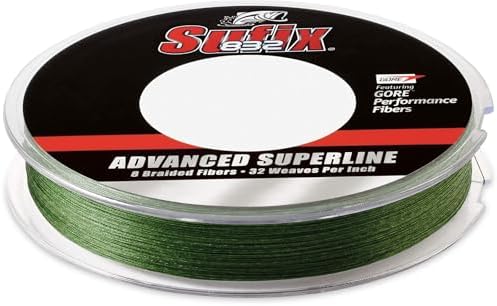
- 8 Fibers (Featuring one GORE Performance Fiber and 7 Dyneema Fibers)
- Ultimate Abrasion Resistance
- Unbeatable Strength

- Discover the Secrets of the Deep and Experience the Joy of Fishing — Our Premium Fishing Lines Fishing enthusiasts, are …
- Excellent Material:GUMMAX braided fishing line 50lb is constructed from 8 high-strength PE (polyethylene) strands, woven…
- Special Process and Performance: Using seamless molding technology, this braid fishing line features a mirror-smooth sur…
Frequently Asked Questions
What line should go on my first reel?
Monofilament in 8 to 12 pound test for general freshwater fishing. It is inexpensive, easy to knot, and its stretch forgives an over-enthusiastic hook set, which will save you fish while you are learning. Upgrade to braid once your technique settles.
Why do people use a fluorocarbon leader with braid?
Braid is highly visible in water and has zero stretch. Fluorocarbon is nearly invisible and slightly cushions the hook set. Joining a short fluorocarbon leader to a braid main line gives you the strength and feel of braid with the stealth of fluoro.
How often should I change my line?
Monofilament roughly once a season, or sooner if it has seen a lot of sun, because UV degrades it. Fluorocarbon similarly. Braid lasts several seasons; when the outer section gets worn you can often reverse the spool and use the unused end.
What knot should I learn first?
The improved clinch knot for tying to a hook or lure, and the double uni or FG knot for joining braid to a fluorocarbon leader. Two knots tied reliably beat six tied badly. Always wet a knot before pulling it tight.
Does line colour matter?
Less than line diameter and stretch. High-visibility braid helps you watch your line for subtle bites, which is genuinely useful, and the leader handles the invisibility question. In very clear water and for spooky fish, go thinner rather than changing colour.
Is heavier line always safer?
No. Thicker line casts worse, is more visible, and can reduce how a lure moves. Match line strength to the fish and the cover, not to worst-case fantasy. Most freshwater fishing is well served by 8 to 20 pound.

Written by Jake Miller · Camping & Gear
Jake grew up pitching tents before he could drive and has spent 15+ years camping, car-camping, and gear-testing his way across the country. If it can be cooked over a fire or packed into a trunk, he has an opinion on it.