
Heads up: this post contains affiliate links. If you buy through one, we may earn a small commission at no extra cost to you. As an Amazon Associate, we earn from qualifying purchases.
⚡ Quick Answer: To survive a flash flood, get to high ground immediately and never try to walk or drive through flowing water. Avoid canyons, washes, and low crossings when rain is forecast, since a flood can arrive from a storm miles away. Turn around, do not drown: even shallow moving water can sweep you off your feet.
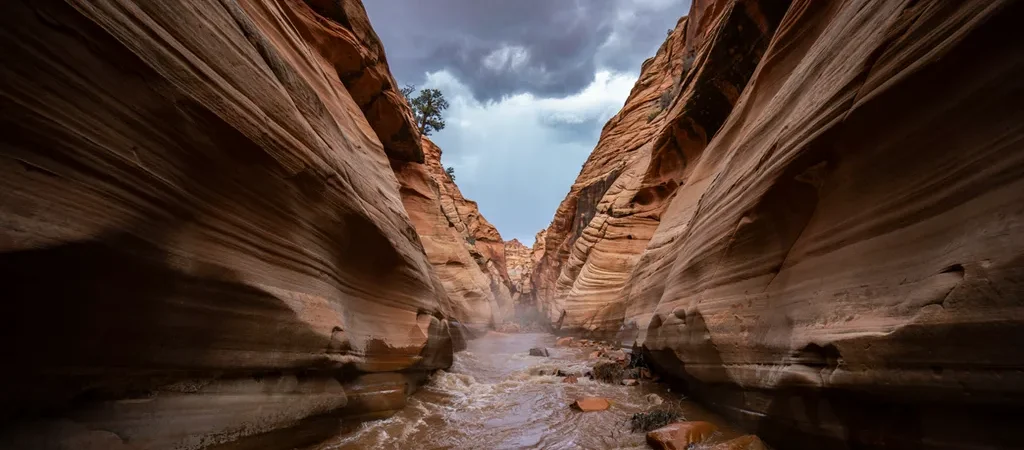
Flash floods are one of the most underestimated dangers in the outdoors. A clear, sunny canyon can fill with a wall of water in minutes from a storm that fell miles upstream, giving little or no warning. Every year hikers and drivers are caught by water that looked harmless moments before. Understanding how flash floods behave, and respecting them, is the key to staying safe.
Why Flash Floods Are So Dangerous
Flash floods form when heavy rain overwhelms the ground faster than it can absorb the water, funneling it into low channels, canyons, and dry washes. The danger is that the storm producing the flood can be far away and out of sight, so the sky above you may be blue while a surge races toward you from upstream. The water moves fast, carries debris, and rises with shocking speed, which leaves almost no time to react once it arrives.
Know Before You Go
The best defense is planning. Check the weather forecast and any flash flood watches or warnings for the entire area upstream of your route, not just your immediate location. Be especially cautious with slot canyons and desert washes, which are beautiful but deadly in the wrong conditions, and avoid them entirely when rain is in the forecast anywhere in the drainage. Know your escape routes to high ground before you enter any narrow canyon.
Warning Signs of a Coming Flood
- A sudden change in water color to muddy brown, or floating debris and sticks appearing.
- A rising water level, or a roaring sound in the distance that grows louder.
- Rain over higher ground upstream, even if it is dry where you stand.
- Water beginning to flow in a previously dry wash or channel.
If a Flash Flood Threatens
Act instantly and move to the highest ground you can reach, climbing out of the canyon or wash rather than trying to outrun the water along its path. Do not wait to gather gear. Even six inches of fast-moving water can knock an adult off their feet, and two feet can float a vehicle, so never attempt to cross flowing water on foot or by car. Abandon a stalled vehicle only if you can safely reach higher ground.
Turn Around, Do Not Drown
If you come to a flooded trail crossing or road, turn around and find another way. It is impossible to judge the depth or the strength of the current or whether the ground beneath has washed away. The vast majority of flash flood deaths involve people entering water they believed was safe. No destination is worth that risk, and the water will recede in time.
Respect the Water
Flash floods are fast, powerful, and often strike without local rain. Plan around the forecast, avoid canyons and washes in unsettled weather, know your route to high ground, and never enter moving water. Treat every flooded crossing as impassable, and you will keep this beautiful but serious hazard at a safe distance.
The depths, in numbers. “Shallow” is the word that kills people here, so it is worth knowing what the National Weather Service actually publishes: “It only takes 6 inches of moving water to knock you off your feet.” Twelve inches “can float a car or small SUV.” Eighteen inches “can carry away large vehicles.” Six inches is ankle-deep. That is the entire margin.
The NWS reason for Turn Around, Don’t Drown is not only depth: “Water may be deeper than it appears and can hide hazards such as sharp objects, washed out road surfaces, electrical wires, chemicals.” You cannot see the road under it, and you cannot tell whether the road is still there. If you are trapped by moving water, get to the highest point you can reach and call emergency services. Never drive around a barricade.
Recommended Gear
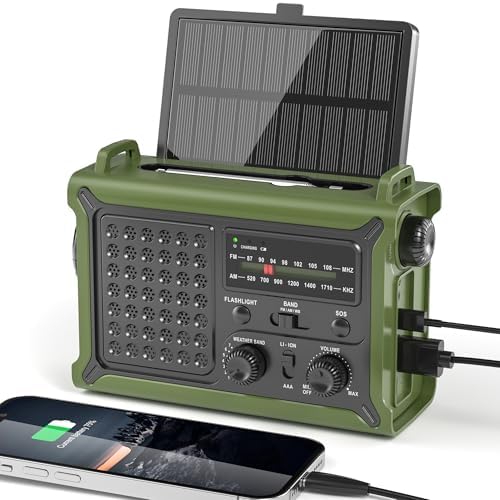
- 【Reliable 𝗡𝗢𝗔𝗔/𝗔𝗠/𝗙𝗠 Reception with Clear Sound】With a high-sensitivity signal chip, noise-reduction circuitry, and an e…
- 【𝗛𝗶𝗴𝗵-𝗘𝗳𝗳𝗶𝗰𝗶𝗲𝗻𝗰𝘆 𝗦𝗼𝗹𝗮𝗿 𝗖𝗵𝗮𝗿𝗴𝗶𝗻𝗴 with Extra-Large Panel】The solar radio features a massive 8500mm² high-efficiency monocr…
- 【𝗛𝗶𝗴𝗵-𝗧𝗼𝗿𝗾𝘂𝗲 𝗖𝗿𝗮𝗻𝗸 𝗣𝗼𝘄𝗲𝗿 for Fast Effortless Charging】With an upgraded internal generator—featuring a larger copper coil…

- NOAA WEATHER BAND RADIO & MULTI-BAND RECEPTION – This emergency radio receives 7 NOAA weather broadcasts (must be powere…
- 12000mAh POWER BANK & MULTIPLE CHARGING OPTIONS – The built-in rechargeable battery helps charge phones and small USB de…
- 8500MM2 LARGE SOLAR PANEL + HAND CRANK BACKUP – The oversized solar panel helps collect sunlight for emergency rechargin…
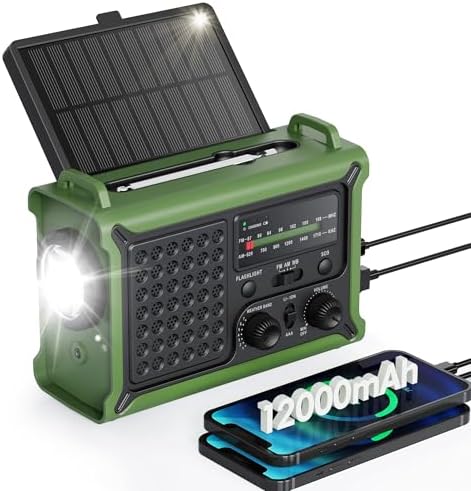
- 【Enhanced Solar Performance】Equipped with a large 8500mm² monocrystalline panel, this emergency radio captures more sunl…
- 【Fast & Efficient Hand Crank Generator】Crank just 1 minute to power emergency calls, lighting, or news updates—2× faster…
- 【Real 12000mAh Emergency Power Supply】Unlike radios with exaggerated claims, this weather radio built-in real 12000mAh b…
Frequently Asked Questions
What should you do during a flash flood?
Get to high ground immediately and never try to walk or drive through flowing water. Climb out of canyons and washes rather than trying to outrun the water along its path. Even six inches of fast-moving water can knock you off your feet, so treat any flooded crossing as impassable.
Why are flash floods so dangerous?
They form fast, often from a storm miles upstream, so the water can arrive while the sky above you is clear. The surge moves quickly, carries debris, and rises with little warning, leaving almost no time to react. This is why canyons and dry washes are so risky during unsettled weather.
How deep does water need to be to sweep you away?
Just six inches of fast-moving water can knock an adult off their feet, and about two feet can float and carry away a vehicle. Because you cannot judge the depth or current or whether the ground beneath has washed out, you should never enter flowing water. Turn around and find another way.

Written by Jake Miller · Camping & Gear
Jake grew up pitching tents before he could drive and has spent 15+ years camping, car-camping, and gear-testing his way across the country. If it can be cooked over a fire or packed into a trunk, he has an opinion on it.