
Heads up: this post contains affiliate links. If you buy through them, WildMorrow may earn a small commission at no extra cost to you. As an Amazon Associate, we earn from qualifying purchases.
⚡ Quick Answer: Trout fishing for beginners: where cold-water trout live, the ultralight spinning setup that works, catching them on spinners, bait, and flies, and how to read a trout stream.
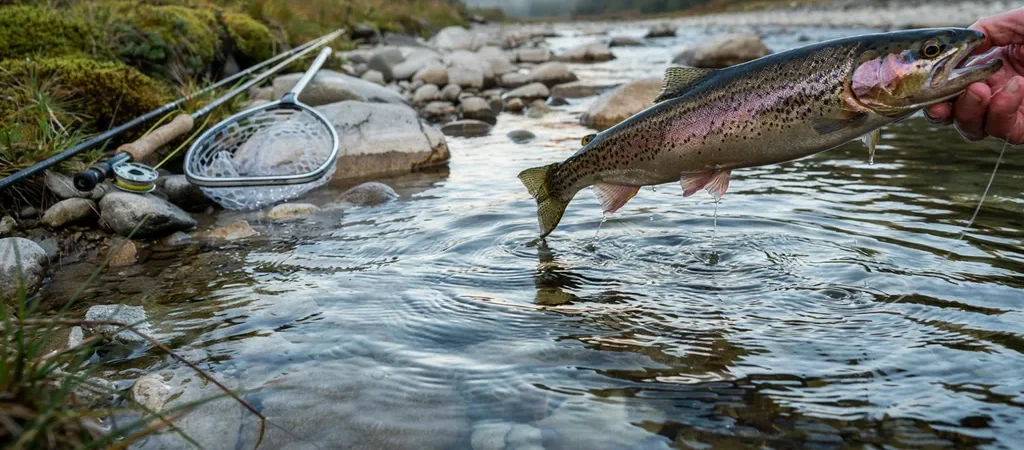
Trout are the fish that turn people into anglers for life. They live in the prettiest water imaginable, cold, clear mountain streams and stocked lakes, they’re eager biters when you know their habits, and they taste incredible over a campfire. Best of all, catching your first trout is genuinely easy with the right simple setup. Here’s how to start trout fishing.
Meet your target
Most beginners chase rainbow trout (widely stocked, aggressive, forgiving) and brook or brown trout in cooler streams. Trout are cold-water fish, so you’ll find them where the water stays chilly: mountain streams, tailwaters below dams, and stocked ponds and lakes, especially in spring and fall. Summer pushes them to deeper, cooler water.
The ultralight setup that catches trout
Trout have great eyesight and modest mouths, so go light. A light or ultralight spinning combo with 4 to 6 pound line is the perfect trout tool: sensitive enough to feel subtle bites, light enough to cast tiny lures and baits. This one setup covers streams and stocked lakes beautifully.

- Sensitive graphite composite blanks
- Aluminum oxide guide inserts
- Stainless steel hooded reel seats

- Unique spinning action
- In-line weighted body design
- Pulsating Hackle tail attracts Fish

- FRABILL FLOATING FISHING NET: Designed for anglers who need a convenient, easy-to-carry landing net, The Frabill Floatin…
- FLOATING HOOP DESIGN: This fishing net features a floating hoop design that keeps it on the water’s surface – providing …
- GENTLE ON FISH: The tangle-free rubberized micromesh netting is soft and gentle on trout and other sensitive fish. The f…
Three ways to catch them
Spinners: a small inline spinner (like a Rooster Tail) cast across a stream and retrieved is the deadliest, simplest lure for stream trout, the flash and vibration trigger strikes. Bait: a worm or a dough bait on a small hook under a bobber, or drifted along the bottom, is the classic stocked-lake method. Flies: when you’re ready, fly fishing is the trout tradition (see our fly fishing guide).
Read the water
In streams, trout hold where they can rest out of the current while food drifts past: behind boulders, in deep pools, along undercut banks, and at the seams where fast and slow water meet. Cast upstream and let your lure or bait drift naturally down to them (a drag-free drift is everything). In lakes, fish near inlets, drop-offs, and structure during the low-light hours our best times to fish guide explains.
Handle with care
Trout are delicate. If you’re releasing, wet your hands first, keep the fish in the water, and let it recover before letting go. Grab a fishing license, check special trout regulations (many waters have gear or catch limits), and net fish gently. New to fishing overall? Start with our beginner’s fishing guide, and gear up from the best fishing gear roundup.
Frequently Asked Questions
What is the easiest way to catch trout for beginners?
Stocked lakes and ponds right after a stocking run: fish PowerBait or a worm under a small bobber, or off the bottom on a sliding sinker rig, near where crowds of trout were just released. State agencies publish stocking schedules.
What lures work best for trout in streams?
Small inline spinners (size 0–2) in silver or gold are the classic — cast upstream and retrieve just faster than the current. Small spoons and single eggs shine too. In clear water, downsize everything and stay low.
Can you eat the trout you catch?
Usually, yes — trout are excellent eating, and stocked fish are raised for exactly that. Check state regulations for limits and any water-specific advisories, keep fish cold, and cook them the same day for the best flavor.
Written by Tom Rivera · Fishing & Hunting
Tom has spent four decades outdoors — on lakes, rivers, and treestands — and still fishes most weekends. These days his favorite catch is watching his grandkids reel in their first bluegill.