
Heads up: this post contains affiliate links. If you buy through one, we may earn a small commission at no extra cost to you. As an Amazon Associate, we earn from qualifying purchases.
⚡ Quick Answer: The best kayaks for beginners — sit-on-top vs. sit-inside vs. inflatable, the stability and sizing specs that matter, top Pelican and Intex picks, and safety basics.
Few purchases open up more outdoors per dollar than a kayak: sunrise paddles, quiet coves, fishing spots the bank crowd never reaches. And beginner kayaks have gotten genuinely good — stable, affordable, and light enough to car-top. Here’s how to pick your first boat without the showroom confusion.
Sit-On-Top vs. Sit-Inside
- Sit-on-top: the beginner default. Self-draining, impossible to swamp, easy to climb back on after a swim, great for warm weather and fishing. Trade-off: you will get splashed.
- Sit-inside: drier and more efficient to paddle, better in cool weather — but if you flip, the boat fills and recovery is harder. Fine for calm-water paddlers who dress for it.
- Inflatable: solves the two real problems — storage and transport. Modern inflatables are tougher than they look and fit in a closet and a trunk.
What Matters in a First Kayak
- Width = stability: 30–34 inches wide feels reassuringly steady for new paddlers.
- Length = speed and tracking: 9–10 ft boats are maneuverable and easy to handle; 12 ft+ tracks straighter for bigger water.
- Weight capacity: add your body weight + gear + a 50 lb margin; overloaded kayaks paddle terribly.
- The seat: the difference between a one-hour and four-hour paddle. Padded, adjustable backrests are worth it.
- Can you lift it? A 10 ft poly boat runs ~50 lbs. Be honest about the car-topping.
Top Beginner Kayaks
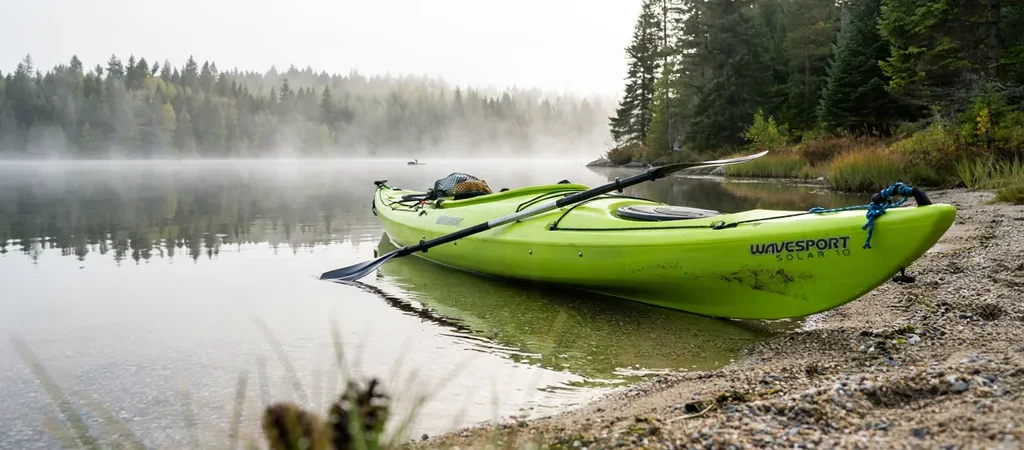
Pelican’s recreational boats are the classic first kayak — stable, light for hardshells, and budget-friendly; the Intex Explorer K2 is the wildly popular inflatable two-seater:

- Ergoform seating system : Complete comfort for anyone thanks to an adjustable backrest and a spacious seat cushion.
- Twin-arched multi-chine hull : Feel ultra stable with this trademark hull design that increases the contact area with th…
- Patented Ram-X material : Crafted from a strong and feather-light material, this kayak is ideal for any level of paddlin…

- Stable: The twin-arched multi-chine hull offers excellent stability for a secure and steady ride. It also makes it incre…
- Safe: Additional flotation in the form of foam blocks inside the kayak as well as a flatter hull ensure safety and peace…
- Lightweight: Made of an exceptionally durable high molecular weight polyethylene, our kayaks require less materials to b…
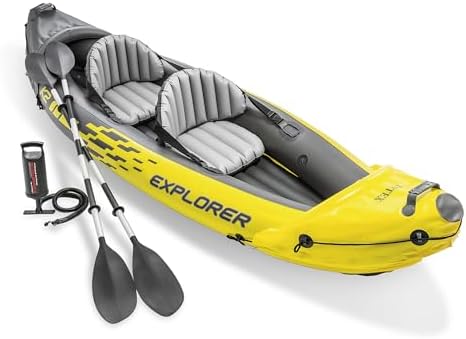
- EASY TRANSPORT – Lightweight and compact, this kayak is easy to assemble and, with the Boston valve, it inflates and def…
- READY FOR ADVENTURE – Explorer K2 Kayak is great for experiencing lakes and mild rivers with a friend, this kayak is spo…
- STABILITY – Made with rugged vinyl construction and built for performance, this sturdy kayak has an inflatable I-beam fl…
Most kayaks don’t include a decent paddle — a light, properly sized one saves your shoulders:

- The Sting Ray kayak paddle is preferred by paddlers who enjoy a more relaxed or horizontal forward stroke style. The Sti…
- The carefully engineered Sting Ray blade shape slices into and out of the water provides a silky-smooth, low flutter for…
- The 100% woven carbon fiber shaft is the lightest yet strongest material option available today. Paddling with a light a…
Non-Negotiable: The Life Jacket
What the law actually says. The U.S. Coast Guard requires a recreational vessel — a kayak or canoe included — to carry one Coast Guard–approved wearable life jacket for every person aboard. Carrying it is the federal requirement for adults; wearing it is not. The exception is children: federal law requires that when a vessel is underway, children under 13 must wear a Coast Guard–approved life jacket, unless they are below deck or in an enclosed cabin. State rules go further in many places and child age limits vary, so check your state boating agency before you launch.
A properly fitted PFD, worn — not stuffed under a bungee — is the one rule of paddling. Most drownings involve boats under 20 feet and no life jacket. Get a paddling-specific vest with big armholes and wear it every time, every season.
First Paddle Game Plan
- Pick a calm, small lake with an easy launch; avoid rivers and wind for trips one and two.
- Paddle upwind first so the trip home is easy.
- Practice getting back on/in your boat in waist-deep water once, on purpose.
- File the float plan: tell someone where and when.
For destination inspiration, see our list of the best kayaking lakes in the US — and if fishing from it is the goal, our kayak fishing guide covers the rigging.
Frequently Asked Questions
What kind of kayak is best for beginners?
A stable, sit-on-top or recreational sit-inside kayak around 10 to 12 feet is ideal for beginners, offering easy entry, forgiving stability, and simple handling on calm water. Sit-on-tops are especially beginner-friendly and easy to climb back onto, making them a popular first kayak for lakes and slow rivers.
Is a sit-on-top or sit-inside kayak better for beginners?
Sit-on-top kayaks are more stable, easier to get on and off, and simple to re-enter if you tip, which makes them great for warm-weather paddling and beginners. Sit-inside kayaks keep you drier and warmer and offer more wind protection, nice in cooler conditions. For most new paddlers, a sit-on-top is the easiest start.
What should a beginner look for in a first kayak?
Prioritize stability, a comfortable seat, and a manageable weight you can car-top and carry. A 10 to 12 foot recreational kayak balances tracking and maneuverability for calm lakes and mild rivers. Do not forget a properly fitted life jacket and a good paddle, which matter as much as the boat itself.

Written by Sarah Brooks · Hiking & National Parks
Sarah fell in love with the outdoors on a childhood trip to the Smokies and has logged thousands of trail miles across 30+ national parks since. She is happiest above treeline with a map in hand.