
Heads up: this post contains affiliate links. If you buy through one, we may earn a small commission at no extra cost to you. As an Amazon Associate, we earn from qualifying purchases.
⚡ Quick Answer: Start with one 28-inch light-power ice rod and a small spinning reel spooled with fresh 4-pound ice-rated monofilament. Add a 26-inch ultralight with an inline reel as your second setup for panfish.
An ice rod is not a shortened summer rod. It is a different tool built around a different problem: you are fishing straight down through a hole the size of a dinner plate, in cold that stiffens line and numbs fingers, chasing fish that often bite so softly you will never feel it. Everything about a good ice setup exists to solve that.
This guide covers what actually matters when you buy your first ice rod and reel, what the numbers on the blank mean, and where a beginner should and should not spend money. If you are still assembling the rest of your kit, start with our complete ice fishing gear guide and the beginner walkthrough.
Why ice rods are different
Three things separate an ice rod from anything else in your garage. First, length: most run 24 to 36 inches, because you are fishing vertically and often sitting down inside a shelter. Second, the tip is far more sensitive than a summer rod, because winter bites are frequently nothing more than a pause in the fall of your jig. Third, the guides are oversized and widely spaced so ice crystals do not bridge across them and lock your line in place.
That last point is the one nobody warns you about. A summer ultralight fished through a hole at 15 degrees will ice up in its guides within ten minutes and you will spend the day picking at it with a fingernail.
Rod length: what the numbers mean
Length controls two things: how much line you can lift on a hookset, and where you can fish comfortably.
- 24 to 26 inches — tight quarters. Ideal inside a one-man shelter or when you are fishing a hole between your boots. Very fast hooksets, but limited reach if a fish runs under the ice.
- 28 to 30 inches — the do-everything range. If you buy one rod, buy this one. Long enough to steer a fish away from the hole edge, short enough for a shelter.
- 32 to 36 inches — outside fishing, deeper water, or larger fish. More leverage to move a lot of line on the set, which matters in 30-plus feet where stretch eats your hookset.
Power and action, translated
Power is how much force it takes to bend the rod. Action is where along the blank it bends. Ice rods are usually labeled ultralight, light, medium-light, and medium, and the label means less than it should because there is no industry standard. Judge by the tip.
- Ultralight / noodle tip — panfish. Crappie and bluegill inhale a tiny jig and spit it before a stiffer rod ever loads. Pair this with our jig fishing fundamentals.
- Light — perch, small walleye, trout. The most useful single power for a beginner.
- Medium-light to medium — walleye on larger baits, pike, lake trout. Enough backbone to drive a hook through a bony jaw.
A useful in-store test: hold the rod horizontally and hang your car key from the tip. An ultralight will bow visibly. A medium will barely notice. That tells you more than the sticker.
Inline reels vs. spinning reels
This is the one real fork in the road, and it matters more in winter than any other season.
A spinning reel is what you already know. It is cheap, it is familiar, and it works. Its weakness is line twist: every time line comes off a fixed spool it takes a half-turn of memory with it, and cold line holds memory like wire. After an hour your jig is spinning slowly in place instead of hanging still, which is exactly wrong for finicky fish.
An inline reel spools line straight off the axis, so there is no added twist and your bait falls dead-straight. Fish that watch a jig helicopter down will often eat one that simply drops. The trade-off is that inline reels have weak or nonexistent drag on cheap models and they cost more. If you are buying a second setup, make it an inline.
For open-water spinning gear, our spinning reel guide covers sizes and drag ratings in more depth.
Line: where beginners actually lose fish
Undersized line is not the problem. Old, memory-stiff line is. Two-pound to four-pound monofilament is standard for panfish and six-pound for walleye, but the specific number matters less than whether the line is fresh and whether it is rated for cold. Ice-specific mono stays limp below freezing; summer mono turns into a coiled spring.
Fluorocarbon sinks and is nearly invisible, which is genuinely useful in clear water, but it is stiffer and more expensive. Braid has zero stretch and telegraphs bites beautifully, but it absorbs water and freezes solid in the guides unless you are inside a heated shelter. Beginners: fresh ice-rated mono, replaced every season.
What to buy first
Skip the twenty-dollar bin combo. It is not that the rod is bad, it is that the reel seat is usually plastic that cracks and the reel has no drag at all. Spend in this order:
- First setup, roughly forty to sixty dollars. A 28-inch light-power rod with a decent spinning reel, prespooled or spooled fresh by you. This one setup will catch perch, crappie, and walleye.
- Second setup. A 26-inch ultralight with an inline reel, dedicated to panfish. This is the one that turns slow days into good ones.
- Third setup. A 34-inch medium for pike and lakers, or a spare rigged with a different presentation so you are not re-tying in the cold.
Before you go, read the ice thickness and safety guide. No rod is worth going through.
Recommended Gear

- [The Tips] The WIDDEN ice fishing rod tips are constructed with solid fiberglass, which makes it superior sensitivity an…
- [The Rod] This ice fishing rod and reel combo adopts a hollow reel seat design, and the silver and black color combinati…
- [The Reel] To match this ice fishing pole, we also match a top-quality reel for anglers. The spinning ice fishing reel a…

- PRECISION-TAPER SOLID CARBON CONSTRUCTION: SC material blank provides superior performance
- PREMIUM SPLIT-GRIP CORK/EVA HANDLE: Comfortable cork and EVA handle ensures you maintain a strong grip on your fishing r…
- FEATURES: Custom reel seat ideal for all techniques; Sea Guide lightweight stainless-steel guides
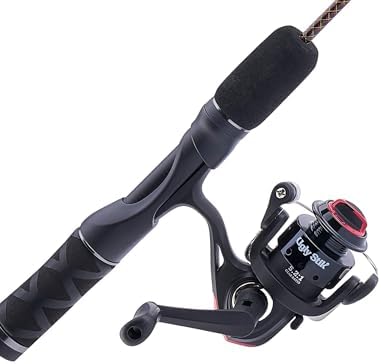
- UGLY STIK 32″ GX2 ICE SPINNING FISHING ROD AND REEL COMBO: The next-gen Ugly Stik, featuring better balance and improved…
- SIZE 20 FISHING REEL: Ported aluminum spool is lightweight and corrosion resistant with an oversized bail wire and bail …
- 5 DURABLE UGLY TUFF GUIDES: PVD-coated one-piece stainless steel guides provide excellent corrosion resistance and durab…
- UGLY STIK 36″ GX2 ICE SPINNING FISHING ROD AND REEL COMBO: The next-gen Ugly Stik, featuring better balance and improved…
- SIZE 20 FISHING REEL: Ported aluminum spool is lightweight and corrosion resistant with an oversized bail wire and bail …
- 6 DURABLE UGLY TUFF GUIDES: PVD-coated one-piece stainless steel guides provide excellent corrosion resistance and durab…
Frequently Asked Questions
What length ice fishing rod should a beginner buy?
Twenty-eight to thirty inches. It is long enough to steer a fish away from the edge of the hole and short enough to fish comfortably inside a shelter, which makes it the best single-rod choice.
Do I need an inline reel for ice fishing?
No, but it helps. Inline reels spool line straight off the axis so your jig falls without spinning, which matters when fish are inspecting the bait. A small spinning reel catches plenty of fish and costs less, so most beginners start there.
What pound test line is best for ice fishing?
Two to four pound ice-rated monofilament for panfish and six pound for walleye. Freshness matters more than the number, because cold makes old line hold coils that kill your bite detection.
Can I use my summer rod for ice fishing?
You can, but the guides are too small and too closely spaced, so they bridge with ice and lock up your line. The tip is also far too stiff to register a soft winter bite.

Written by Jake Miller · Camping & Gear
Jake grew up pitching tents before he could drive and has spent 15+ years camping, car-camping, and gear-testing his way across the country. If it can be cooked over a fire or packed into a trunk, he has an opinion on it.