
Heads up: this post contains affiliate links. If you buy through them, WildMorrow may earn a small commission at no extra cost to you. As an Amazon Associate, we earn from qualifying purchases.
⚡ Quick Answer: Cold-weather camping made comfortable: why ground insulation matters most, the layering system, fueling your internal furnace, and tent condensation tips.
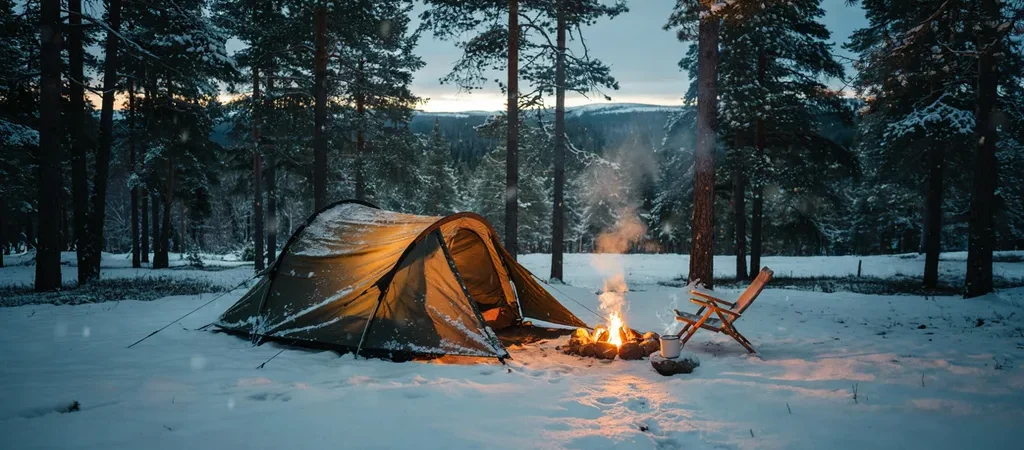
Here’s a secret the summer crowds don’t know: the best camping of the year often happens when it’s cold. No bugs, no reservations, no crowds, and a campfire that actually feels earned. Winter and shoulder-season camping just has one hard rule, and it’s this: staying warm is a system, not a single heroic sleeping bag. Get the system right and a frosty night becomes the coziest sleep of your life.
Warmth comes from the ground up
The cold that wrecks winter sleep rises from the ground, not the air. Your sleeping bag’s underside is crushed flat and does almost nothing; the pad beneath you is what actually insulates. Use a pad with a high R-value (4+ for cold nights), and when it’s truly cold, stack two pads. This one fix solves more cold-night misery than any other.

- 【COMFORT IS PRICELESS IN EVERY CAMPING TIME】The super soft and cozy memory foam camping mattress is made of high-density…
- 【CertiPUR-US CERTIFICATION PROVIDES SAFETY GUARANTEE】 The cot mattress pad has been certified by CertiPUR-US . Compared …
- 【EASY PORTABLE & WATERPROOF AND NON-SLIP BOTTOM】Free storage bag and packing straps are included. The adjustable buckle …

- Synthetic sleeping bag designed for performance, comfort, and warmth in varied climates, ideal for backpacking, paddling…
- Thermally efficient contour shape provides room to side sleep and adjust positions comfortably without adding extra weig…
- Free Flow full-length side zipper with double sliders enables custom ventilation and fully unzips to convert the bag int…

- Duration: Up to 10 hours of consistent natural heat from HOTHANDS, America’s trusted hand warmer brand for over 35 years…
- Activation: Air-activated design means these disposable hand warmers are ready to use in minutes – simply open the packa…
- Convenience: Compact and portable warmers perfect for hunting gear, camping essentials, skiing adventures, or any cold w…
Dress like an onion, sleep in dry layers
Layering is the whole game: a merino or synthetic base layer against the skin, an insulating mid-layer, and a wind/rain shell on top. The golden rule is stay ahead of sweat, because damp clothes steal heat fast. Change into dry base layers and clean dry socks specifically for sleeping; never sleep in the clothes you hiked and sweated in.


Eat, hydrate, and pre-warm the bag
Your body is the furnace, so fuel it: a warm, calorie-dense dinner and a bedtime snack keep you generating heat all night. Drink more than feels necessary (cold air is bone-dry and dehydration makes you colder). And borrow the oldest trick in the book: fill a bottle with hot water, wrap it in a sock, and toss it in the foot of your bag ten minutes before you climb in. A hand warmer in the sleeping bag pocket does the same job.
Tent and condensation tips
Crack a vent even when it’s cold; a sealed tent turns your breath into frost that rains down at dawn. A four-season or sturdy three-season tent handles wind and snow load better than a mesh-heavy summer tent. And keep tomorrow’s clothes, boots liners, and electronics inside the bag with you; frozen boots are a rough way to start a morning.
Start small, layer up your experience too
Try a late-fall night in your backyard or a nearby campground before committing to a remote winter trip. Warm-weather skills from our camping hacks still apply, and the best camping gear roundup covers the sleep system that makes cold nights comfortable.
Frequently Asked Questions
How cold is too cold to camp in a tent?
With the right system — 0–20°F bag, R-4+ pad, layered clothing — experienced campers sleep comfortably well below freezing. The honest limit is your gear’s tested rating plus your experience: try a 25°F night close to home before attempting single digits.
How do you keep a tent warm in winter?
You mostly keep yourself warm instead: full-coverage fly, smaller tent, ground insulation, and a hot water bottle in the sleeping bag foot box. Never run stoves or fuel heaters inside — carbon monoxide kills campers every winter.
What should you wear to sleep in cold weather?
Dry base layers, clean socks, and a beanie — never the damp clothes you hiked in. Add a fleece if needed, but avoid so many layers that you compress the bag’s loft. Eat a fatty snack before bed; digestion stokes the furnace.
Written by Jake Miller · Camping & Gear
Jake grew up pitching tents before he could drive and has spent 15+ years camping, car-camping, and gear-testing his way across the country. If it can be cooked over a fire or packed into a trunk, he has an opinion on it.