
Heads up: this post contains affiliate links. If you buy through one, we may earn a small commission at no extra cost to you. As an Amazon Associate, we earn from qualifying purchases.
⚡ Quick Answer: To catch trout: fish moving water’s seams and pools (or a stocked lake’s inlets), keep your line light (4–6 lb), and offer worms or PowerBait for stocked fish and spinners or flies for wild ones. Early morning and evening are best, and the colder months out-fish high summer almost everywhere.
Trout are the fish of beautiful places — cold streams, mountain lakes, misty mornings. They’re also famously line-shy, which makes them the best teacher in freshwater: catch trout consistently and you’ve learned stealth, presentation, and reading water. Here’s how, whether your water is a stocked pond or a wild creek.
First: Stocked or Wild?
It changes everything. Stocked trout (planted by the state, often weekly in season) grew up on pellets — they respond to dough baits, worms, and bright attractors, and they hold near where the truck released them. Wild trout eat insects and minnows, spook at shadows, and demand better presentation. Check your state’s stocking schedule — it’s public, and fishing a pond two days after the truck is the easiest trout fishing there is.
Reading Trout Water
- Seams: where fast current meets slow — trout hold in the soft water and eat what the fast water delivers.
- Pools: the deep, slow stretches; the head of the pool (where the riffle dumps in) feeds the most fish.
- Undercut banks and boulders: shade + cover + current break = home.
- Lakes: inlets, outlets, and drop-offs; trout cruise the cold, oxygen-rich zones.
Baits and Lures That Work
- For stocked trout: PowerBait floated off the bottom, or half a nightcrawler under a small bobber. Size 8–12 hooks, light line, small split shot.
- For wild trout: inline spinners (gold in stained water, silver in clear) cast up-and-across and retrieved through seams; small spoons in lakes.
- Fly fishing: the deepest rabbit hole in fishing — start with our beginner fly guide.

- PRECISION BALANCED HEAD: Provides controlled fall rate and natural presentation
- HI-CARBON STEEL HOOK: Built for strength, durability and reliable performance
- VERSATILE APPLICATION: Ideal for casting, vertical jigging and bottom fishing

The Stealth Rules
- Approach from downstream — trout face into the current and can’t see behind.
- Keep a low profile and avoid throwing shadows across the water.
- Light line matters more for trout than any other fish: 4–6 lb, or a fluorocarbon leader in gin-clear water.
- First cast counts most; a sloppy one puts every fish in the pool on alert.
Handle With Care
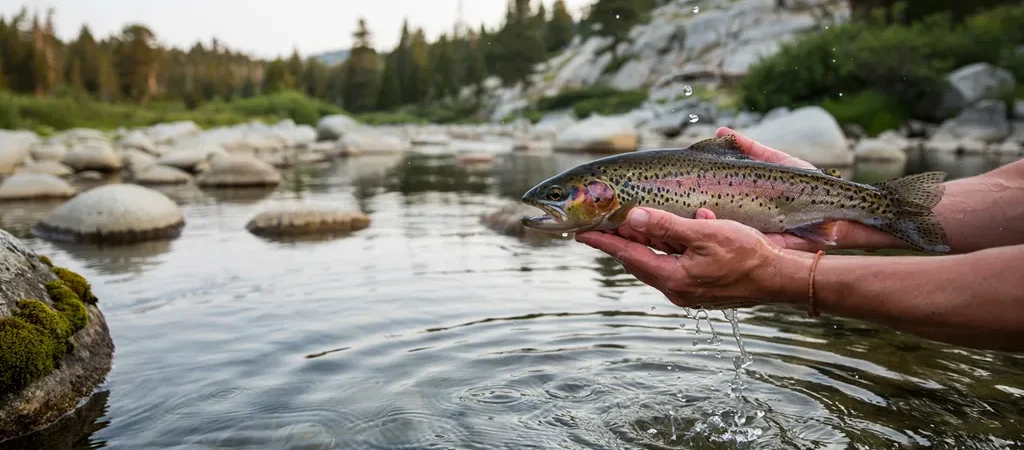
Trout are the most fragile fish you’ll catch — wet your hands, keep them in the water, and release quickly (especially wild fish in summer heat). Keeping a few stockers for dinner is great and legal; wild fisheries deserve extra gentleness.
Plan around the best times to fish, size up your line choice, and when you’re ready for a pilgrimage, our best fly fishing rivers list has your next trip.
Frequently Asked Questions
What is the best bait for trout?
For stocked trout, dough baits like PowerBait and single salmon eggs are hard to beat; for wild trout, live worms, small spinners, and flies out-fish everything. Match the food the water actually holds.
What size hook should I use for trout?
Small: size 8 to 12 for bait fishing, smaller still for eggs. Trout have excellent eyesight and soft mouths, so light line (4-6 lb) and small hooks draw far more strikes than heavy tackle.
What time of day is best for trout fishing?
Early morning and the last hour before dark, when trout feed on insects most actively. Overcast days extend the bite all day; bright midday sun pushes trout deep and makes them wary.

Written by Tom Rivera · Fishing & Hunting
Tom has spent four decades outdoors — on lakes, rivers, and treestands — and still fishes most weekends. These days his favorite catch is watching his grandkids reel in their first bluegill.