
Heads up: this post contains affiliate links. If you buy through one, we may earn a small commission at no extra cost to you. As an Amazon Associate, we earn from qualifying purchases.
⚡ Quick Answer: To set up a tent in the rain and stay dry, pick high ground away from puddles, keep the tent body in its bag until the last moment, and pitch the rainfly first if your tent allows. Work quickly, keep gear under a tarp or pack cover, and wipe down the interior before you settle in.
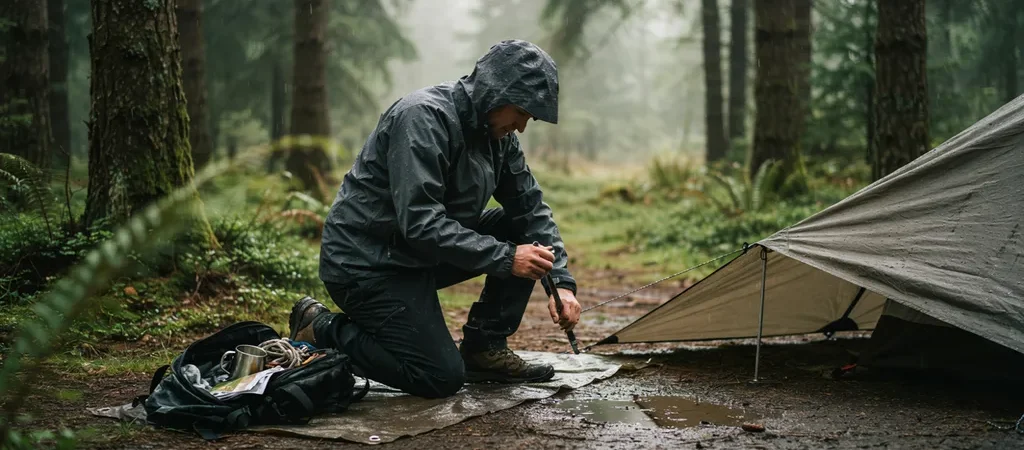
Sooner or later every camper has to make camp in the rain, and how you handle it decides whether you spend the night cozy or soggy. With a little technique and the right order of operations, you can pitch your tent in a downpour and still crawl into a dry, comfortable shelter. Here is how to do it.
Choose Your Site Carefully
Site selection matters even more in the rain. Look for slightly higher ground where water drains away rather than pools, and avoid low spots, depressions, and the base of slopes where runoff collects. Some natural shelter from trees can cut the rain while you work, but avoid dead branches overhead. Clear the spot of sharp debris so you are not fumbling once the tent is down.
Prepare Before You Unpack
Do as much as you can before exposing your gear. Put on your rain shell, get out your stakes, and if you have a companion, plan who does what. A pack cover or a small tarp strung overhead gives you a dry work zone and a place to stage gear. The goal is to minimize the time the tent and your dry items are out in the weather.
Pitch the Rainfly First When You Can
Many tents can be pitched fly-first or fly-and-body together, which keeps the inner tent dry as you set up. If your tent supports it, attach the footprint and rainfly to the poles first and raise the shelter under cover of the fly, then clip the inner body up underneath. If your tent must go body-first, work fast and get the fly over it as quickly as possible.
Keep the Inside Dry
- Keep the tent body in its stuff sack until the moment you raise it, so it does not soak on the ground.
- Stage your sleeping bag and dry clothes in waterproof bags and bring them in only once the tent is closed.
- Wipe down any moisture that got inside with a small pack towel or bandana before laying out your bed.
- Leave wet boots and rain gear in the vestibule, never inside the sleeping area.
Manage Condensation and Water Flow
Once you are set up, ventilate the tent by opening vents and cracking the fly slightly, since a sealed wet tent breeds condensation that can feel like a leak. Make sure the rainfly is taut and not touching the inner tent, which would wick water through. If you dug in, ensure any runoff channels lead away from your floor.
Stay Dry, Stay Happy
A rainy pitch is all about order and speed: pick high ground, prep under cover, keep the fly between the weather and your dry gear, and ventilate once you are in. Practice your tent in the backyard so the sequence is automatic, and a wet arrival becomes just another part of the adventure rather than a miserable night.
Recommended Gear
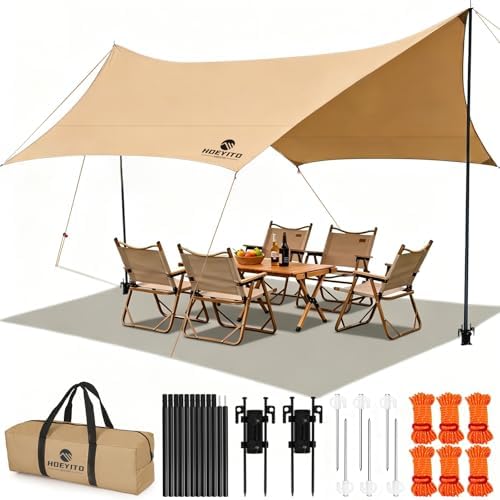
- 210D Oxford Fabric & Silver Coating
- Double Stability Design: Equipped with an enhanced dual retainer, our camping tarp locks securely onto sand, gravel, law…
- Waterproof & UV-resistant: Made of heavy-duty 210D Oxford fabric, our camping canopy outperforms ordinary thin 150D and …

- Nylon
- Imported
- All-Weather Protection for Outdoor Survival: Built with a durable 3-layer design, this all-weather survival blanket comb…

- 【FINISHED SIZE+9 Mil MEDIUM DUTY POLY TARP】The actual size used is 8×10 feet tarp.If you choose raindeway tarp you will …
- 【UV RESISTANT TARP+WEATHER PROOF】The tarps add uv,can provide uv protection in the sun,extend service life.it has 9 mil …
- 【DURABLE+SECURE】The tarp is made of pure pe material.Edges has reinforced metal grommets holes,the grommets around the e…
Frequently Asked Questions
How do you set up a tent in the rain without it getting wet inside?
Pick high ground that drains well, keep the tent body in its bag until the last moment, and pitch the rainfly first if your tent allows it. Work quickly, stage your dry gear under a tarp or pack cover, and wipe down any moisture inside before laying out your bed.
Where should you pitch a tent when it is raining?
Choose slightly higher ground where water drains away rather than pooling, and avoid low spots, depressions, and the base of slopes where runoff collects. Some tree cover can cut the rain while you work, but avoid dead branches overhead, and never pitch in a dry wash that could flood.
How do you stop condensation in a tent when it rains?
Ventilate the tent by opening vents and cracking the fly slightly, since a sealed wet tent traps the moisture from your breath and can feel like a leak. Keep the rainfly taut so it does not touch the inner tent, and never breathe down into your sleeping bag, which robs its insulation.

Written by Jake Miller · Camping & Gear
Jake grew up pitching tents before he could drive and has spent 15+ years camping, car-camping, and gear-testing his way across the country. If it can be cooked over a fire or packed into a trunk, he has an opinion on it.