
Heads up: this post contains affiliate links. If you buy through one, we may earn a small commission at no extra cost to you. As an Amazon Associate, we earn from qualifying purchases.
⚡ Quick Answer: Most bag ratings quote the lower limit, which is the temperature at which a standardised warm sleeper survives curled up, not the temperature at which you sleep well. Use the comfort rating instead, and if only the limit is published, add about 5 to 6 degrees Celsius for a realistic comfortable temperature. Then make sure your pad matches, because the pad is usually the reason people are cold.
The single most common complaint about sleeping bags is that they are colder than advertised, and the reason is not that manufacturers are lying. It is that the number on the tag usually answers a different question than the one you were asking.
Three numbers, only one of them useful
The EN 13537 and ISO 23537 test standards produce several figures by putting a heated mannequin in a bag in a climate chamber. Three get quoted.
- Comfort: a standard cold sleeper is comfortable lying relaxed on their back. This is the number you want.
- Limit: a standard warm sleeper is just warm enough while curled up. Not pleasant, not dangerous. This is the number most often printed on the bag.
- Extreme: a standard cold sleeper is at risk of hypothermia but not immediately dying. A safety comparison figure only, and irrelevant to buying decisions.
So when a bag is sold as a 20 degree Fahrenheit bag, or a minus 6 Celsius bag, that is very often the limit rating. The comfort rating for the same bag might be around 30 Fahrenheit, or about minus 1 Celsius. That gap of five or six degrees Celsius explains the vast majority of “my bag is not as warm as it says” complaints.
How to translate a tag into a real number
If the brand publishes a comfort rating, use it and stop there. If it only publishes one number, assume it is the limit and add roughly 5 to 6 degrees Celsius, or about 10 Fahrenheit, to get a temperature you will actually sleep well at. Then apply your own adjustment: if you know you sleep cold, add a few more degrees.
And be sceptical of any bag with no reference to a test standard at all. Rectangular bags, childrens bags, and cheap bags frequently carry numbers with no testing behind them.
The pad is usually the real problem
Before you buy a warmer bag, check what you are sleeping on. Insulation underneath you is compressed by your body weight and loses most of its value, so the bag can only do so much. A well-rated bag on a summer pad will be cold; a modest bag on a good winter pad often is not.
This is the highest-value thing to understand about sleeping warm outdoors, and it is covered properly in sleeping pad R-value explained. Match the pad to the conditions first, then choose the bag.
Shape, fit, and why a bigger bag is colder
A bag warms the air inside it using your body heat. Too much empty space and you spend the night heating volume you are not using. Too tight and you compress the insulation against yourself, which also costs warmth. A mummy bag that fits with room to bend your knees slightly is warmer than a roomy rectangular bag with the same fill.
Use the hood. Most heat loss in a cold bag goes out around the shoulders and head, and the draft collar and hood exist precisely to close that gap. Many people never cinch either and then conclude the bag is underrated.
Practical ways to add warmth
- Upgrade the pad. The biggest single gain available.
- Add a liner. A few degrees, and it keeps the bag cleaner, which preserves loft over time.
- Wear dry base layers to bed, not the damp ones you hiked in. See our base layer guide.
- Eat before bed. Digestion generates heat, and you cannot stay warm on an empty tank.
- Fill a bottle with hot water and put it at your feet. Check the cap twice.
- Vent before you sweat. Damp insulation is cold insulation, so open the zip before you overheat rather than after.
Buying your first bag
For general three-season use in temperate climates, a bag with a comfort rating around freezing is the versatile choice, paired with a pad in the 3 to 4.5 R-value range. That combination handles spring through autumn nights and does not force an immediate second purchase. The longer walkthrough of fill, shape, and features is in how to choose a sleeping bag, and pad options are in the sleeping pad roundup.
Recommended Gear

- WINTER-READY: This 4-season sleeping bag, the Coleman Big & Tall, serves as a warm sleeping bag with its 40″x84″ size. D…
- OPTIMUM INSULATION: As a cold-weather sleeping bag for adults, it’s filled with 5 pounds of Holofill 808 insulation. Thi…
- FEATURE-RICH DESIGN: This adult sleeping bag cold weather is equipped with smart technologies like a no-snag patented zi…

- 100% Polyester Taffeta
- Imported
- TRAPEZOIDS, MAN: Turns out this funky shape is ideal for helping sleeping bags retain heat. Trapezoidal baffle construct…

- Flannel
- Imported
- SLEEP COMFORTABLY: You’ll forget you’re camping with these comfortable sleeping bags! With a soft poly-flannel lining an…
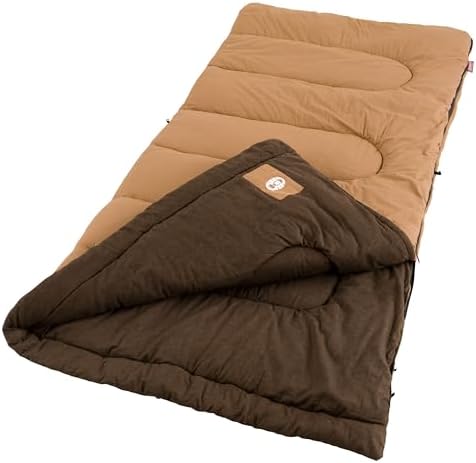
- Lining : 100 % Cotton , Cover : 100 % Cotton
- Made in the USA or Imported
- Adult sleeping bag designed to keep you cozy in temperatures as low as 20 degrees F
Frequently Asked Questions
What is the difference between comfort and limit ratings?
Under the EN and ISO test standards, comfort is the temperature at which a standard cold sleeper is comfortable lying relaxed, and limit is where a standard warm sleeper stays just warm enough curled up. Limit is a survival-adjacent figure, not a sleep-well figure, and it is the one most often printed on the tag.
What does the extreme rating mean?
It is the point at which a standard cold sleeper is at risk of hypothermia rather than comfortable. It exists for safety comparison only. Never use it to choose a bag.
Should women buy a lower rated bag?
On average women sleep colder, which is why the standards define separate comfort and limit figures and why many brands offer womens-specific bags with more insulation at the feet and hips. It is a real average difference, but individual variation is larger, so pay more attention to how you personally sleep.
Are all bags tested to the standard?
Mummy-style bags from major brands usually are. Rectangular bags, kids bags, and many inexpensive bags are exempt from or simply not submitted to the standard, and their numbers are marketing figures. Treat untested ratings with real scepticism.
Down or synthetic for a given rating?
Down gives more warmth for its weight and packs smaller, and treated down handles damp better than it used to. Synthetic is cheaper, insulates better when properly wet, and dries faster. For most three-season use either works; for wet climates or paddling trips synthetic has a real edge.
Can I extend a bags range?
Yes, meaningfully. A liner adds a few degrees, a warmer base layer helps, a higher R-value pad helps most of all, and a hot water bottle in the foot of the bag is a genuinely effective trick. Do not rely on stacking two bags; they compress each other.

Written by Jake Miller · Camping & Gear
Jake grew up pitching tents before he could drive and has spent 15+ years camping, car-camping, and gear-testing his way across the country. If it can be cooked over a fire or packed into a trunk, he has an opinion on it.