Heads up: this post contains affiliate links. If you buy through one, we may earn a small commission at no extra cost to you. As an Amazon Associate, we earn from qualifying purchases.
⚡ Quick Answer: The best beach camping in the US is at Padre Island (Texas), Assateague Island (Maryland), Cape Lookout (North Carolina), Kalaloch (Washington), Jalama Beach (California), and Bahia Honda (Florida Keys). Book state and national park sites months ahead, stake your tent for wind, and camp above the high-tide line — always.
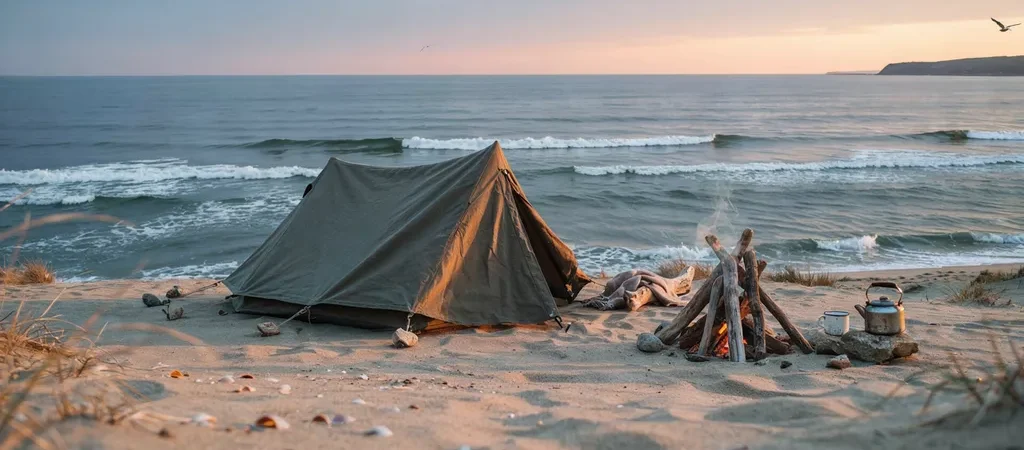
Falling asleep to surf and waking up to sunrise over the water is camping at its most vacation-like. Beach camping also comes with its own physics — wind, sand, salt, and tides — that reward a little know-how. Here’s where to go and how to make sand camping comfortable.
The Best Beach Camping in America
1. Padre Island National Seashore, Texas
Seventy miles of undeveloped barrier island where you camp free right on the sand. Drive-up primitive camping, warm Gulf water, and Kemp’s ridley sea turtle releases in summer.
2. Assateague Island, Maryland
Oceanside sites with wild horses wandering past your tent. Book the state park side for showers, the national seashore side for solitude.
3. Cape Lookout National Seashore, North Carolina
Ferry-access-only barrier islands with a black-and-white diamond lighthouse and next-to-nobody around. Pack everything in; paradise is BYO.
4. Kalaloch Campground — Olympic National Park, Washington
Bluff-top sites above a wild, driftwood-strewn Pacific beach. Moody, dramatic, and unlike any warm-water beach trip — bring layers, not sunscreen.
5. Jalama Beach County Park, California
A windswept, old-California beach park famous for surf, sunsets, and the Jalama Burger at the camp store. First-come sites go fast on weekends.
6. Bahia Honda State Park, Florida Keys
Caribbean-clear water, palm-shaded sites, and the best snorkeling of any drive-to campground in America. Book the literal minute the 11-month window opens.
Beach Camping Skills
- Camp above the wrack line (the seaweed stripe marking high tide) — and check tide tables for storm or king tides.
- Wind is the enemy of tents: regular stakes pull straight out of sand. Use sand anchors or bury deadman anchors (bags of sand tied to guylines).
- Shade or suffer: there is none on a beach. A canopy turns midday from endurance test to nap.
- Keep sand out: a doormat towel, a “shoes off” rule, and a tent broom preserve sanity.
- Rinse zippers and poles with fresh water after the trip — salt eats gear.
- Store food hard-sided: raccoons and gulls run beach campgrounds after dark.
Two Beach-Specific Upgrades
Sand-rated stakes and a real sun shelter are the difference between fighting the beach and enjoying it:

- HEAVY DUTY PERFORMANCE: Our small Orange Screw Ground Anchors, weighing just 1.8 oz with a 9 1/2″ length and 7/8″ diamet…
- VERSATILE APPLICATIONS: Perfect for firm soils, the small anchors are suitable for securing tents, tarps, small dogs, an…
- EASY INSTALLATION: The included clear T-Grip Tool allows for effortless screwing into the ground, offering increased lev…

- All-Purpose Portable Shade: Enjoy relaxing on the beach, kicking back fishing on the side of the lake, or enjoying some …
- Advanced Sun Protection: Our umbrella beach is crafted with advanced water-resistant fabric and offers UPF 50+ sun cover…
- Easy Setup: Our SUN NINJA cool cabana beach tents set up easily and come with stability poles and anchors that let you u…
Beach trips pair perfectly with a cooler done right (our cooler guide), a good camp chair, and nothing on the calendar. For more shoreline ideas, see the best swimming holes and best kayaking lakes.
Frequently Asked Questions
Where are the best places to camp on the beach?
Top beach camping is found along the Pacific coast, the Outer Banks of North Carolina, the Gulf Coast of Florida and Texas, and many coastal state parks. Some sites allow camping right on the sand, while others sit just behind the dunes, so check the specific rules.
What should I bring for beach camping?
Bring sturdy, long tent stakes or sand anchors for loose sand, a sunshade, extra water, and sun protection. Guard against wind and blowing sand, protect gear from salt and moisture, and check tide tables so you pitch above the high-tide line. A ground tarp helps keep sand out of the tent.
Do you need a permit to camp on the beach?
It varies by location. Many beaches require a permit or reservation and only allow camping in designated areas, while others prohibit overnight stays entirely. Always check with the managing agency, since rules protect both campers and sensitive coastal habitat.
Written by Jake Miller · Camping & Gear
Jake grew up pitching tents before he could drive and has spent 15+ years camping, car-camping, and gear-testing his way across the country. If it can be cooked over a fire or packed into a trunk, he has an opinion on it.