
Heads up: this post contains affiliate links. If you buy through one, we may earn a small commission at no extra cost to you. As an Amazon Associate, we earn from qualifying purchases.
⚡ Quick Answer: Falls injure more deer hunters than firearms. The three-part treestand safety system and setup habits that keep you connected to the tree every second.
Here’s a statistic every deer hunter should know: falls from treestands injure more hunters than firearms do. The good news is that treestand accidents are almost entirely preventable with the right equipment and a simple habit — staying connected to the tree from the moment your feet leave the ground until they’re back on it. Here’s how to set up safely.
The Three-Part Safety System
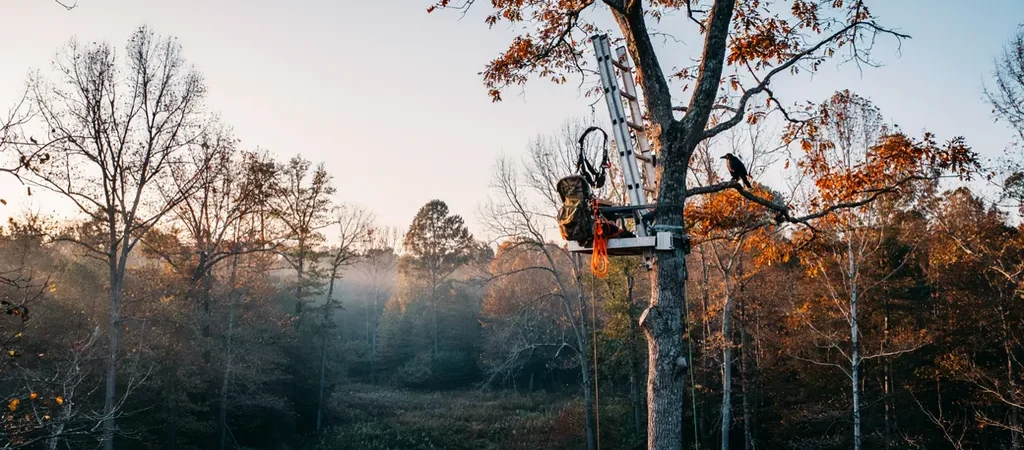
A safe treestand setup is really a connected system. A full-body safety harness (never the old single-strap belts) distributes a fall’s force safely. A lifeline rope runs from the ground to the stand so you’re clipped in the entire climb — the most dangerous moments are getting in and out. And solid climbing sticks or steps give you a stable, predictable way up. Used together, these three keep you tethered every second you’re off the ground.

- 100% Mixed Material
- Made in the USA or Imported
- MUDDY CROSSOVER HARNESS COMBO – This Muddy Crossover Harness Combo is an essential safety accessory that is necessary to…

- NON-SLIP & SECURE DESIGN: V-shaped gear bracket design can strengthen the fixation force with trees, it can increase tra…
- UPGRADED STRONG STRAPS: Come with 3Pcs high-quality straps for secure attachment, so it can support a safe and easy clim…
- ENHANCED ORGANIZATION WITH SLIDING LOCK CLIP: With the sliding lock clip to storage and silent transport design,you can …

Setting Up the Right Way
- Hang and adjust your stand with a buddy, in daylight, before the season — never in the dark on opening morning.
- Install a lifeline so you clip in at ground level and stay connected all the way up and down.
- Use a haul line to raise and lower your unloaded bow or firearm — never climb with gear in your hands.
- Always keep three points of contact on the sticks, and double-check every strap and buckle.
Before Every Hunt
Tell someone where you’ll be and when you’ll be back, carry a phone within reach (not in a pack on the ground), and give every strap a look for wear — ratchet straps degrade in sun and weather. A two-minute check is cheap insurance for a hunt you’ll walk away from.
Getting ready for the season? See our beginner hunting guides and gear up for the outdoors in our gear roundups.
Frequently Asked Questions
What is the most important treestand safety rule?
Wear a full-body harness connected from the moment your feet leave the ground — most falls happen climbing in and out, not sitting. A lineman’s belt for the climb and a lifeline system make the whole sequence continuously attached.
How do falls from treestands actually happen?
Climbing transitions, rotten straps, and complacency: the veteran who stopped wearing the harness is the statistic. Inspect straps and cables every season (squirrels chew them), replace per manufacturer dates, and never carry gear while climbing — use a haul line.
What is the 3-point rule for climbing?
Three points of contact — two hands and a foot, or two feet and a hand — at every moment on the ladder or steps. Slow is the technique. Combined with a lifeline, it makes the climb boring, which is exactly the goal.
Written by Tom Rivera · Fishing & Hunting
Tom has spent four decades outdoors — on lakes, rivers, and treestands — and still fishes most weekends. These days his favorite catch is watching his grandkids reel in their first bluegill.