
Heads up: this post contains affiliate links. If you buy through one, we may earn a small commission at no extra cost to you. As an Amazon Associate, we earn from qualifying purchases.
⚡ Quick Answer: Squirrel hunting is the best entry into hunting, period: long seasons, animals everywhere, cheap licenses, and real skills learned (stealth, marksmanship, patience). Hunt mature oak-hickory woods early morning, either sitting still until the woods forget you or still-hunting slowly. A .22 rifle teaches precision; a 20-gauge forgives movement.
Before long-range rifles and cellular trail cameras, nearly every hunter in America learned the craft the same way: in a hardwood bottom, waiting out a gray squirrel. It remains the best classroom hunting has — everything that kills squirrels consistently (wind, stealth, patience, shot discipline) transfers straight to deer and elk. And squirrel camp makes fine table fare, too.
Why Start Here
- Seasons run months long in most states with generous limits and cheap small-game licenses.
- Squirrels live in every county — the back 40 beats a destination hunt.
- High action: a good morning offers a dozen chances; a deer stand might offer none. Reps build hunters.
- Low stakes, real lessons: a spooked squirrel costs five minutes; a spooked buck costs a season.
Find the Food, Find the Squirrels
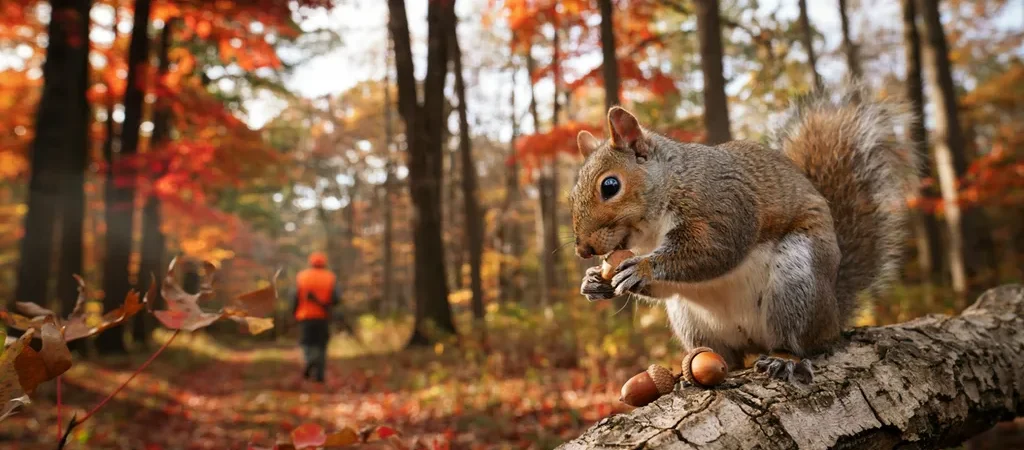
Squirrels are food-tree animals: oak, hickory, walnut, and beech. Preseason, look for “cuttings” — piles of gnawed nut shells on logs and stumps — the squirrel equivalent of a campfire ring. Creek bottoms with big mature hardwoods are classic; a woodlot with a hickory grove in September is a sure thing.
Two Ways to Hunt Them
- Sit still (the classic): settle against a wide trunk in good woods at first light and go statue for 20–30 minutes. The woods forget you and resume business — ears first (claws on bark, cutting rain from treetops), then eyes.
- Still-hunting: move painfully slow — three steps, stop, scan a full minute. Damp mornings after rain muffle your feet and get squirrels moving. This is the deer-stalking apprenticeship.
- Spooked one into hiding? Sit down and wait ten minutes; squirrels have goldfish patience and will re-emerge.
Rifle or Shotgun?
The .22 rifle with a scope is the purist’s tool — head shots only, meat unspoiled, marksmanship sharpened with every squeeze. A 20-gauge with #6 shot forgives moving targets in leafy canopy and suits beginners hunting with a mentor. Many camps carry one of each. Whatever you carry: know your backstop — .22 rounds travel far, and treetop shots need sky-safe angles.

- The 2-7×32 Crossfire II Rimfire riflescope is one of many configurations in the Crossfire II line. The V-Plex reticle is…
- With long eye relief and an ultra-forgiving eye box, you’ll be able to quickly get a sight picture and acquire your targ…
- Anti-reflective, fully multi-coated lenses provide bright and clear views for the user. Capped reset turrets are finger …
Rules and Table Notes
- Blaze orange where required (and smart everywhere in fall woods).
- Check season dates and limits — some states split early (leafy, hard) and late (bare-tree, visible) seasons.
- Field-dress promptly and chill; young squirrels fry like chicken, older ones want the slow cooker. Squirrel and dumplings is heritage food for a reason.
Squirrel woods are where hunting instincts get built — take a kid, take a .22, and take your time. When the lessons stick, they scale up: deer season prep, upland birds, and license basics are the next chapters.
Frequently Asked Questions
When is squirrel season and why start with squirrel hunting?
Most states run generous fall seasons with long hours and high limits. Squirrels teach every core skill — moving quietly, spotting game, patient observation, clean shots — with constant action and no expensive gear. It is the classic first hunt for good reason.
What gun is best for squirrel hunting?
A .22 rifle with a scope teaches marksmanship and takes squirrels cleanly with head shots; a 20-gauge with #6 shot forgives moving targets in thick canopy. Many hunters carry the .22 early season and the shotgun after leaf-fall.
What is the best time of day to hunt squirrels?
The first three hours after sunrise, when squirrels feed actively in mast trees — listen for cutting (falling nut shells) and shaking limbs. Late afternoon offers a second window. Sit still against a tree and let the woods forget you.

Written by Tom Rivera · Fishing & Hunting
Tom has spent four decades outdoors — on lakes, rivers, and treestands — and still fishes most weekends. These days his favorite catch is watching his grandkids reel in their first bluegill.