
Heads up: this post contains affiliate links. If you buy through one, we may earn a small commission at no extra cost to you. As an Amazon Associate, we earn from qualifying purchases.
⚡ Quick Answer: Shed hunting means finding the antlers bucks and bulls drop each late winter (roughly January–April). Search south-facing slopes, bedding areas, feeding fields, and fence crossings; go slow with your eyes on the ground; and grid-search when you find one — the match is often close. Check your state’s rules; some western states have seasonal closures to protect wintering herds.
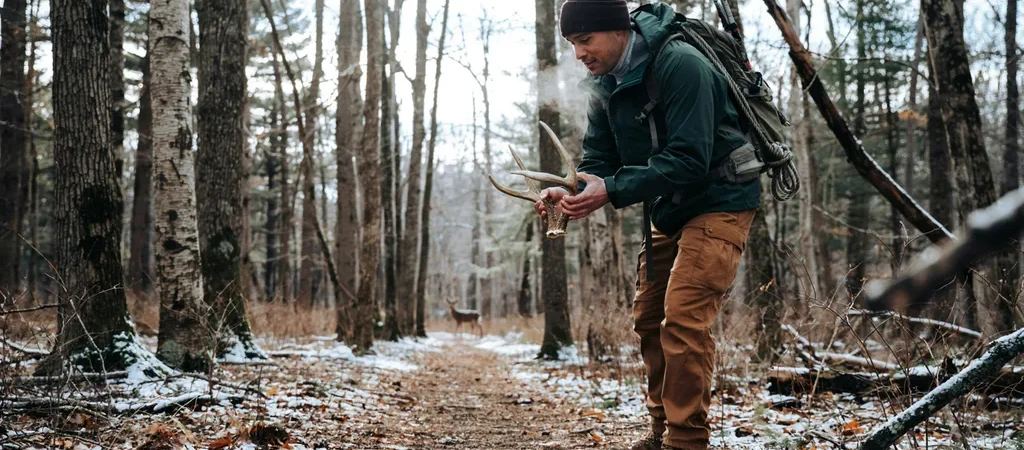
Every winter, every buck and bull in North America drops its antlers on the ground and grows new ones — which means the woods are scattered with free treasure for anyone willing to walk. Shed hunting is hiking with a lottery ticket: great exercise, killer scouting intel, and the occasional brown-gold jackpot. Here’s how to actually find them.
When Antlers Drop
Whitetails shed roughly January through March; elk hold on later, typically March into April. Post-drop timing is the sweet spot — late February through April, snow-melt permitting — before rodents chew the antlers and spring growth hides them. Fresh “brown” sheds are the prize; chalky white ones have wintered over a year or more.
Where to Look (The Big Three)
- Bedding areas: south-facing slopes, cedar thickets, and CRP grass where deer spend winter’s worst hours — more hours bedded = more chances an antler wiggles loose.
- Feed: cut cornfields, food plots, haystacks, and oak flats. Follow the winter groceries.
- The jolts in between: fence crossings, ditch jumps, and creek crossings — the impact of landing pops antlers free. Check both sides of every fence on a trail.
How to Actually Spot Them
- Walk SLOW and scan the ground 10–30 yards ahead — shed hunting is done with the eyes, not the boots.
- Look for pieces, not antlers: a tine tip, a curve of beam, the pearl of a base. Your brain finds “part,” then reveals the whole.
- Overcast days beat sun (fewer stick-shadows lying to you); after rain, wet antlers shine.
- Find one? Grid the area hard — sides often drop within a few hundred yards of each other.
- Binoculars save miles: glass distant field edges and hillsides before committing boots.
Rules and Ethics
- Several Western states close shed hunting seasonally (to protect winter-stressed herds) or require certification — check regs before you go.
- Private land needs permission, same as hunting.
- Give wintering animals space — bumping a starving March deer costs it calories it can’t spare.
- Take a picture, mark the pin: every shed is scouting gold for fall (that buck lived HERE in winter).
Why Hunters and Hikers Both Love It
For hunters, sheds are a census: which bucks survived, where they winter, how they travel — intel that feeds directly into fall scouting. For everyone else, it’s a treasure hunt that gets the family outside in the off-season (kids are shockingly good at it — closer to the ground). Either way, pack the day-hike kit, bring the dog if trained, and log the miles: the going rate among shed hunters is one antler per 5–10 miles walked. The exercise is guaranteed; the bone is the bonus.
Recommended Gear

- 【360° ROTATING CUSHIONED SEAT】Comfortable Hunting Bucket Chair: The lid converts into a quiet, 360-degree swiveling seat…
- 【FIT 5-GALLON BUCKET】Large Capacity Utility Storage: Designed to securely hold a 5-gallon bucket—simply place the bucket…
- 【SPECIALIZED GEAR & WEAPON CARRY】Easy-Access Hunting Pack: Features a secure, dedicated compartment to safely carry your…

- polyester
- Imported
- 【Lightweight & Long-lasting】TideWe hunting backpack is made of quite, long-lasting high performance polyester. The weigh…

- 【All-in-One Hunting Pack】This versatile backpack is designed to cater to all your hunting needs. With its dedicated comp…
- 【Lightweight & Durable】 Engineered with high-quality materials, YVLEEN hunting backpack provides exceptional strength an…
- 【Camo Excellence】 Blending seamlessly into the wilderness, this hunting backpack features a camo pattern that keeps you …
Frequently Asked Questions
When is the best time to go shed hunting?
Late February through April, after most bucks have dropped antlers but before spring growth hides them and rodents eat them. Going too early bumps deer off winter range; check whether your state has shed season dates.
Where do you find the most shed antlers?
Concentrate on south-facing winter feeding slopes, bedding areas, and the trails between them — especially fence crossings, ditches, and creek jumps where the jolt knocks antlers loose. Most sheds fall where deer spend winter hours: feeding and bedding.
How do you train your eyes to spot sheds?
Look for pieces, not whole antlers: a tine tip, a curve, the pearl white or bone color against leaves. Walk slowly, glass open slopes with binoculars, and re-grid the highest-odds zones. Finding your first shed rewires your search image permanently.
Written by Tom Rivera · Fishing & Hunting
Tom has spent four decades outdoors — on lakes, rivers, and treestands — and still fishes most weekends. These days his favorite catch is watching his grandkids reel in their first bluegill.