
Heads up: this post contains affiliate links. If you buy through one, we may earn a small commission at no extra cost to you. As an Amazon Associate, we earn from qualifying purchases.
⚡ Quick Answer: Scout deer by working backward from food: find the fall food source (acorns, crop fields, browse), locate bedding cover nearby, and identify the trails, rubs, and scrapes connecting them. Do heavy boots-on-ground scouting in late summer, then go low-impact (cameras and glassing from afar) as season nears — pressure moves deer more than anything you carry.
Deer hunting is decided before opening day. The hunters who fill tags every year aren’t luckier or better shots — they know where deer eat, sleep, and walk in between, because they did the homework. Here’s the scouting system, from map study to the week before the opener.
Start on the Map (E-Scouting)
- Edges: deer are edge animals — where timber meets field, swamp meets hardwoods, clearcut meets mature woods. Mark every edge intersection.
- Funnels and pinch points: creek crossings, saddles between ridges, strips of cover connecting blocks of timber — terrain that squeezes deer movement into predictable lines.
- Security cover: the nastiest, thickest, least accessible spots hold the oldest deer. Note anything a half-mile-plus from easy access.
- Aerial photos plus topo lines answer 70% of scouting questions before you burn boot leather.
Reading Sign on the Ground
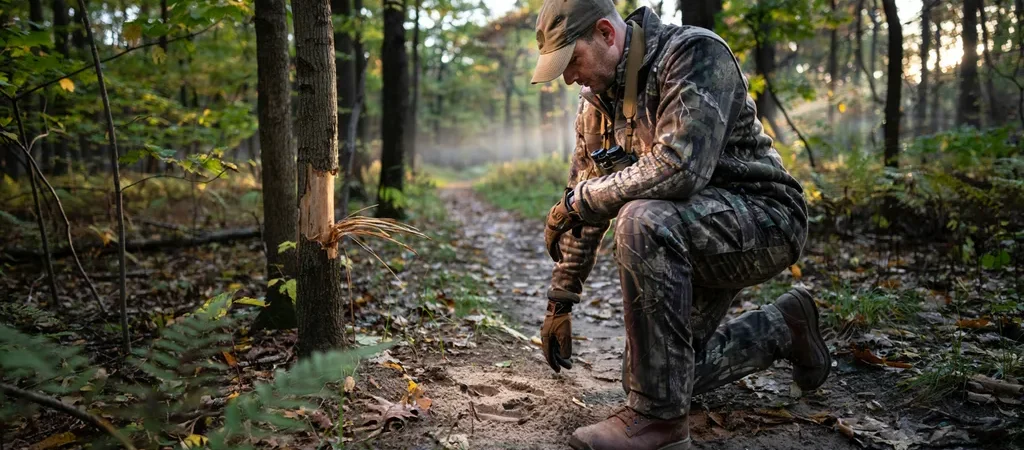
- Trails: depth and freshness tell traffic volume; multiple trails converging = staging area or pinch.
- Rubs: bucks shredding saplings — a LINE of rubs maps a buck’s travel route (he rubs facing the direction he came from).
- Scrapes: pawed-bare dirt under a licking branch — the community bulletin board, hottest in late October.
- Beds and droppings: oval depressions in thick cover; clustered fresh droppings near food mean you’re close to the action.
- The food tells the week: white oak acorns dropping trump everything — find the tree the deer chose, and it changes weekly.
The Scouting Calendar
- Summer: glass field edges at dusk (velvet bucks are visible and patternable), hang cameras, learn the property hard — pressure now is cheap.
- Early fall: shift to acorns and staging areas; scout mid-day, in and out quiet.
- Season: observation over intrusion — glass from afar, check cameras sparingly (or go cellular: our trail camera guide), and save the best spots for the best conditions.
- Post-season: the secret weapon — snow reveals every trail and bed with nothing to spook. February scouting fills October tags. (Pair with shed hunting.)
Scouting Tools That Matter
Good binoculars turn a truck cab or a distant ridge into an observation post, and cameras scout around the clock:

- A full-size binocular with 1x magnification and 42mm objective lenses, the Triumph HD delivers excellent image quality, …
- With an HD optical system and fully multi-coated lenses, these binos feature optimized glass elements that deliver excep…
- Nitrogen purged, the Triumph is both waterproof and fog proof. The polycarbonate chassis with full rubber armor not only…
The Pressure Principle
Every trip in leaves scent and sound; mature deer respond by going nocturnal or relocating. The paradox of scouting: the better your early homework, the less you need to intrude when it counts. Two quiet observation sits beat five stomping tours of the woods in October. Put it together with season prep, treestand setup, and wind discipline, and opening day stops being a guess.
Frequently Asked Questions
When should you start scouting for deer season?
Late summer is prime: bucks are in visible bachelor groups on feeding patterns, and a few evenings of glassing fields sets your fall strategy. Re-check sign again just before season, since patterns shift when velvet sheds and crops change.
What deer sign should I look for when scouting?
Trails, fresh droppings, rubs, and scrapes tell you deer are using an area; beds and food sources tell you why. Focus on transition zones between bedding cover and food — that is where daylight movement happens.
Are trail cameras worth it for scouting?
Yes — a camera on a trail or scrape inventories your deer 24/7 without adding pressure. Check cameras at midday, sparingly, and let cell cameras do the work where legal. One camera per major trail junction beats ten scattered randomly.
Written by Tom Rivera · Fishing & Hunting
Tom has spent four decades outdoors — on lakes, rivers, and treestands — and still fishes most weekends. These days his favorite catch is watching his grandkids reel in their first bluegill.