
Heads up: this post contains affiliate links. If you buy through them, WildMorrow may earn a small commission at no extra cost to you. As an Amazon Associate, we earn from qualifying purchases.
⚡ Quick Answer: Duck hunting for beginners: the license-and-stamp stack, scouting water, a no-overwhelm gear list (decoys, waders, one call), calling basics, and marsh safety.
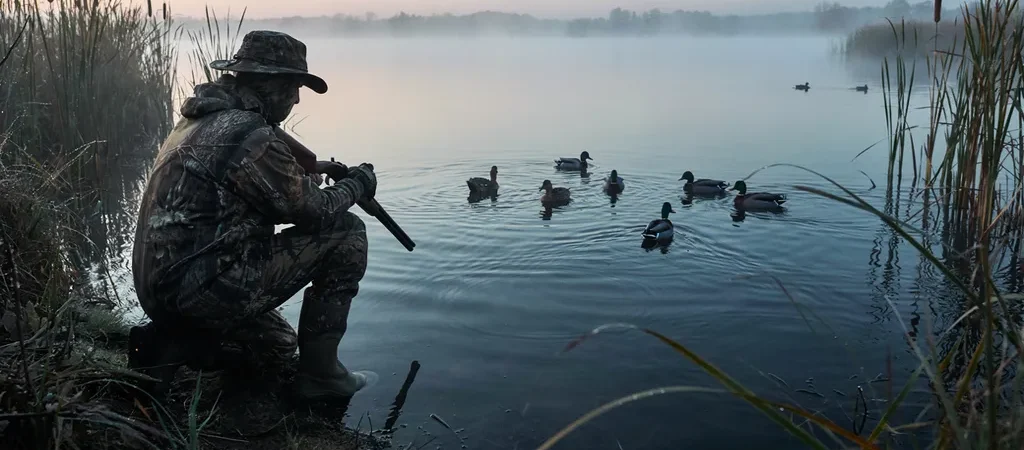
Duck hunting is the most social branch of the hunting family tree: friends in a blind at first light, dog trembling with excitement, coffee steaming, and the sky starting to move. It’s also famously gear-heavy and rule-dense, which scares off beginners who would love it. Here’s the honest starter path.
The paperwork stack (do this first)
Waterfowl has more layers than most hunting: hunter education, a state license, state waterfowl stamps where required, the federal duck stamp (every waterfowler 16+, and the dollars fund wetland conservation), plus HIP registration. Your state wildlife agency lists the bundle; buy it all at once online. Then read the season dates, bag limits, and legal shooting hours twice, because they’re enforced to the minute.
Learn the water before you hunt it
Ducks follow food, weather, and pressure. Scout public marshes, river backwaters, and flooded field edges in the weeks before season: where birds loaf at midday, where they feed at dawn, which way they approach. A morning of watching with binoculars is worth three blind mornings of guessing.
Beginner gear, minus the catalog overwhelm
You need to stay dry, stay hidden, and give ducks a reason to look: waders for cold marsh water, a small spread of quality decoys (six to a dozen mallards will do more than fifty cheap ones), and a call you’ve actually practiced. Camo matters less than stillness; hide your face and hands and stop fidgeting.

- Rugged upgraded plastic as well as an upgraded paint scheme
- Amazing feather detail provided by 17-time World Champion carver Pat Godin
- Full-size, one-piece design

- PREMIUM MATERIAL: Fishing Waders, Gift(one waterproof phone case, and one wading boot rack for drying water boots). 4mm …
- NON-SLIP BOOTS: The convenient boot-foot design allows easy on/off wear. Lightweight PVC boots with anti-slip soles prov…
- WATERPROOF SEALING: Double-stitched, taped, and sealed seams keep you completely dry. Reinforced knee pads offer added d…

- Tuned for smooth natural mallard tone
- Sport type: Hunting
- Faulk’s deluxe duck call
Calling: less is more
A few honest quacks and a feeding chuckle beat a highlight reel of hail calls. Call at passing birds’ turns, go quiet when they’re committed, and let the decoys close the deal. Practice in the truck for a week before opening day; your blind-mates will thank you.
Safety and ethics in the marsh
Cold water is the real danger in waterfowling: wear the wader belt, know your water depth, and never overload a small boat in the dark. Steel or other non-toxic shot is federally required for waterfowl. Know your effective range, pass on marginal shots, and mark downed birds immediately; a good retriever is the best conservation tool ever born.
Your first season, realistically
Expect cold hands, missed birds, and one moment (cupped wings dropping into your spread at sunrise) that explains the whole obsession. Find a mentor through your state’s waterfowl association, layer up with the cold-weather system, and compare notes with our deer season and turkey hunting guides if the hunting bug bites hard.
Frequently Asked Questions
What do you need to start duck hunting?
A 12-gauge with #2–#4 steel shot (lead is illegal for waterfowl), waders, camo, a dozen mallard decoys, a call, and the paperwork stack: license, state stamp, federal duck stamp, and HIP registration. Public marshes and a thermos complete the classic setup.
When is duck season?
Fall through early winter, set by flyway and state — typically split seasons between October and January. Migration timing means northern states peak earlier, southern states later. Check your state’s zone maps and daily limits each year.
Do you need a dog for duck hunting?
No — plenty of hunters retrieve with waders or a kayak by choosing water they can reach. A trained retriever recovers more birds and doubles the joy, but do not let dog ownership gate entry into the sport.

Written by Tom Rivera · Fishing & Hunting
Tom has spent four decades outdoors — on lakes, rivers, and treestands — and still fishes most weekends. These days his favorite catch is watching his grandkids reel in their first bluegill.