Heads up: this post contains affiliate links. If you buy through one, we may earn a small commission at no extra cost to you. As an Amazon Associate, we earn from qualifying purchases.
⚡ Quick Answer: The best camp stoves for backpacking and car camping — canister stoves, integrated boil systems, and propane two-burners compared, with top picks for each.
Hot coffee at sunrise and a real dinner after a long day — a camp stove is the difference between eating outside and just snacking outside. The right stove depends on whether you are cooking for a tailgate-style basecamp or boiling water fast on a mountainside. Here are the stoves that dominate each category, and how to pick.
The Three Types of Camp Stove
- Canister stoves: tiny burners that screw onto an isobutane canister. Featherweight and fast — the backpacking default.
- Integrated systems (Jetboil-style): stove and insulated pot in one unit. Boils water absurdly fast; perfect for dehydrated meals and coffee.
- Propane two-burners: the classic green suitcase stove. Heavy but powerful and stable — the car-camping kitchen standard for generations.
Best for Backpacking
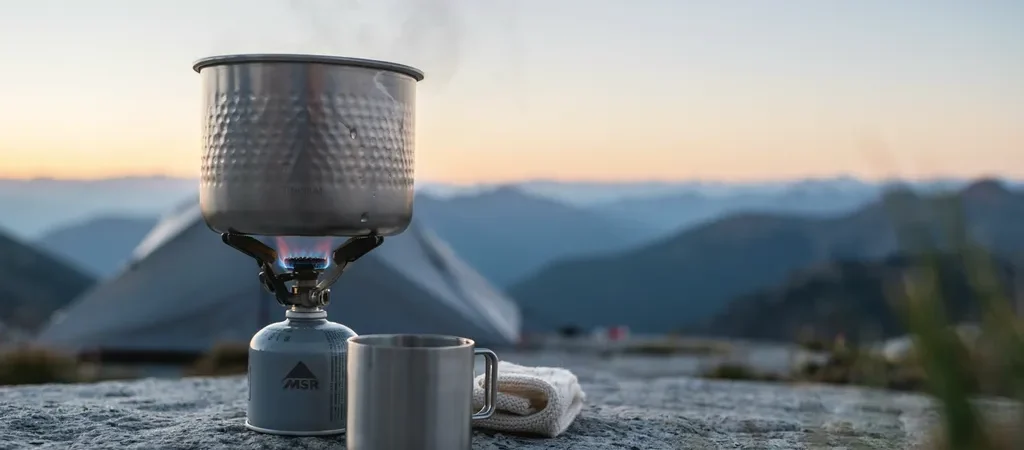
Both of these weigh about as much as a candy bar and will boil a liter in around three minutes. The SOTO handles wind noticeably better; the PocketRocket is the beloved workhorse:

- Ultralight (2.6 oz) and compact (2x2x3 in) folding canister stove for minimalist adventures, backpacking, hiking, trekki…
- Boils one liter of water in just 3.5 minutes and flame easily adjusts from a simmer to a rolling boil for gourmet cookin…
- Fueled by high-performance isobutane-propane fuel canister (not included); self-sealing threaded canister fuel is availa…
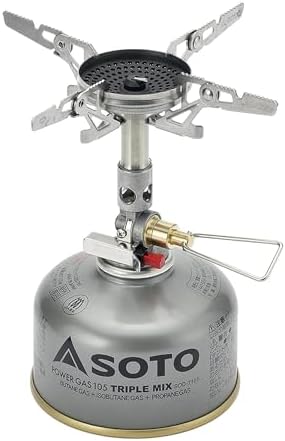
- FOR BEST PERFORMANCE: Our WindMaster Canister backpacking stove’s regulator is compatible with gas mixtures such as buta…
- SHOCK RESISTANT & ULTRA LIGHTWEIGHT: The stealth igniter installed burner post improves ignition and prevents breakage, …
- MAINTAINS A CONSISTENT OUTPUT: Maintains consistent heat or output in windy weather or even in cold or gusty conditions….
Best for Boil-and-Go Meals
If your camp cooking is mostly freeze-dried meals, oatmeal, and coffee, an integrated system is faster and more fuel-efficient than any separate pot-and-burner combo:

- 360-Degree Wind Protection: Included windscreen accessory attaches to the bottom of the 1-liter cook pot to improve fuel…
- One-Step Auto Ignition: Turn and click knob igniter works like a home stove to automatically produce a cooking flame; St…
- Easy Handling: Color-coded, rubberized zone stays cool for a comfortable and secure grip when cooking; Three locking poi…
Best for Car Camping
For real cooking — pancakes on one burner, bacon on the other — nothing beats a propane two-burner. It simmers properly, resists wind, and fits a full-size pan:
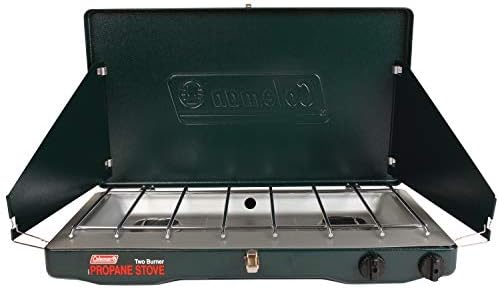
- Cooking power: Up to 20,000 total BTUs. Fits a 12-inch and 10-inch pan at the same time
- 2 adjustable burners: For precise temperature control
- Wind-blocking panels: Shield burners from wind

- CONVERTIBLE FUEL SYSTEM: Switch between propane and natural gas with the Convertible Valve System, no extra conversion k…
- 2-BURNER PERFORMANCE: Two tube burners deliver 30,000 BTUs of even heat, ideal for couples, small families, and compact …
- 440 SQ IN COOKING SPACE: A 340 sq in primary grilling area plus warming rack handles burgers, brats, and sides with room…
How to Choose
- Backpackers: canister stove + lightweight pot, or an integrated system if you mostly boil water.
- Car campers and families: propane two-burner, full stop.
- Do-both campers: the two-burner for camp, a canister stove for the trail — they cover everything between them.
- Cold-weather campers: canister performance drops near freezing; keep canisters warm in your jacket or sleeping bag.
Stove Safety Basics
- Never cook inside a tent — carbon monoxide and nylon fires are both very real.
- Set stoves on stable, level ground away from dry brush.
- Check fire restrictions: during bans, stoves with shut-off valves are often the only legal flame.
- Let everything cool before packing up.
Once the stove is sorted, level up what you cook on it: our campfire cooking guide, camping cookware picks, and Dutch oven guide will keep camp dinners interesting all season.
Frequently Asked Questions
What type of camp stove is best?
For car camping, a two-burner propane stove offers the most cooking power and convenience. For backpacking, a lightweight canister stove is compact and boils water fast, while liquid-fuel stoves perform better in extreme cold and at altitude. Match the stove to how you camp and how much you cook.
Canister or liquid fuel camp stove?
Canister stoves are lighter, simpler, and boil water quickly, which makes them ideal for most backpackers in mild conditions. Liquid-fuel stoves work better in very cold temperatures and at high altitude, and the fuel is often cheaper abroad. Casual campers are usually happiest with a canister or propane stove.
How much stove fuel do I need for a camping trip?
A rough guide is one small canister per person for a weekend of boiling water for meals and drinks, but cold weather, wind, and actual cooking increase usage. Always bring a little more than you expect to need, and test a partly used canister before relying on it so you are not caught short.
Written by Jake Miller · Camping & Gear
Jake grew up pitching tents before he could drive and has spent 15+ years camping, car-camping, and gear-testing his way across the country. If it can be cooked over a fire or packed into a trunk, he has an opinion on it.