
Heads up: this post contains affiliate links. If you buy through one, we may earn a small commission at no extra cost to you. As an Amazon Associate, we earn from qualifying purchases.
⚡ Quick Answer: A tarp is the most versatile few ounces in your pack. Three easy tarp pitches, how to rig a taut ridgeline, and the gear that makes it simple.
A simple tarp is one of the most useful — and most underrated — pieces of gear you can carry. For a few ounces and a few dollars, it gives you rain protection over a hammock, a sun shade at camp, a dry cooking spot, or even a full lightweight shelter. Learning a couple of basic pitches turns a flat sheet of nylon into a skill you’ll use on every trip.
Why Carry a Tarp?
Tarps are light, cheap, and endlessly versatile. Ultralight backpackers use them as a primary shelter to shave pounds; car campers use them as a rain fly over the picnic table; hammock campers rely on them to stay dry. Even if you never sleep under one, a tarp is the backup that turns a miserable rainy afternoon into a comfortable one.
Three Configurations to Know
- A-frame — a classic tent-like pitch over a ridgeline; sheds rain from both sides and is easy to get right.
- Lean-to — one side staked high, the other to the ground; great for blocking wind or reflecting a campfire’s warmth.
- Diamond / plow point — pitched corner-to-corner over a hammock; minimal and fast in fair weather.
How to Pitch a Ridgeline Tarp
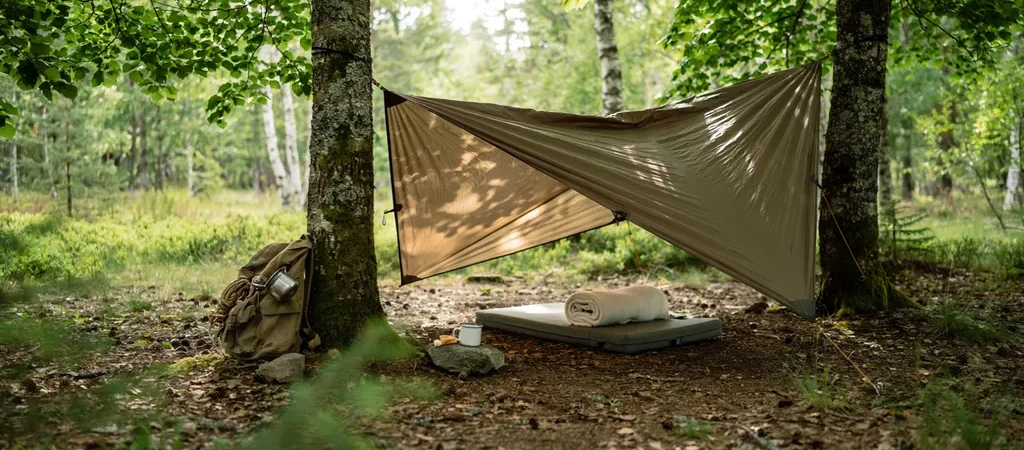
Run a taut ridgeline of paracord between two trees at about chest height. Drape the tarp over it, then stake the four corners out and away so the fabric is drum-tight — a saggy tarp collects water and flaps all night. Angle one side lower into the wind, and pitch the whole thing on a slight slope so any runoff drains away from you, not under you.

- 100% WATERPROOF: 20,000 mm rating and heat-taped seams keep you dry in sustained heavy rain and shifting winds.
- HEAVY-DUTY BUILD: 70D nylon with an extra-thick dual coating, reinforced webbing, bar-tacked tie-outs, and precision sti…
- STORM-SECURE SETUPS: Dense tie-out grid and braced corners pitch fast and low for stable shelter when the wind shifts.

- Premium Tactical Strength: Experience the unbeatable reliability of TOUGH-GRID Type IV Parachute Cord with 550 lbs (7 Tr…
- Versatile Camping Gear: Upgrade your camping experience with this heavy-duty paracord rope. Whether you’re wrapping tool…
- Trusted for Survival: Trust TOUGH-GRID Paracord Rope for critical survival situations. Made in the USA, this tactical ny…

- Choose American. Choose Certainty. Eurmax Canopy is North America’s #1 factory store, stocking all canopies, accessories…
- Comprehensive Set:This 10-piece pack includes four 10-foot ropes and one orange stopper, providing everything you need t…
- Easy to Use:Setting up your tent is effortless with these canopy stakes designed for easy installation. Pre-cut ropes sa…
Rounding out your shelter system? See our guides to choosing a tent and the full Best Camping Gear list.
Frequently Asked Questions
What is the easiest tarp shelter for beginners?
The A-frame: ridgeline between two trees at chest height, tarp over it, corners staked out. It sheds rain and wind from two sides, takes five minutes with practice, and teaches the knots every other configuration builds on.
What knots do I need for a tarp shelter?
Three cover it: a bowline or trucker’s hitch to tension the ridgeline, and taut-line hitches on guy lines so you can adjust without retying. Practice at home — learning knots in wind-driven rain is nobody’s favorite classroom.
How do you pitch a tarp in the rain?
Ridgeline first, tarp thrown over and clipped fast, then fine-tune corners from underneath your new roof. Pitch the low side toward the weather, steepen the angles so water runs instead of pooling, and stake generously — wind tests everything.

Written by Jake Miller · Camping & Gear
Jake grew up pitching tents before he could drive and has spent 15+ years camping, car-camping, and gear-testing his way across the country. If it can be cooked over a fire or packed into a trunk, he has an opinion on it.