Heads up: this post contains affiliate links. If you buy through them, WildMorrow may earn a small commission at no extra cost to you. As an Amazon Associate, we earn from qualifying purchases.
⚡ Quick Answer: A complete guide to dispersed camping (boondocking): where free camping is allowed, Leave No Trace rules, self-sufficiency for water/power/food, handling waste, and finding a safe site.
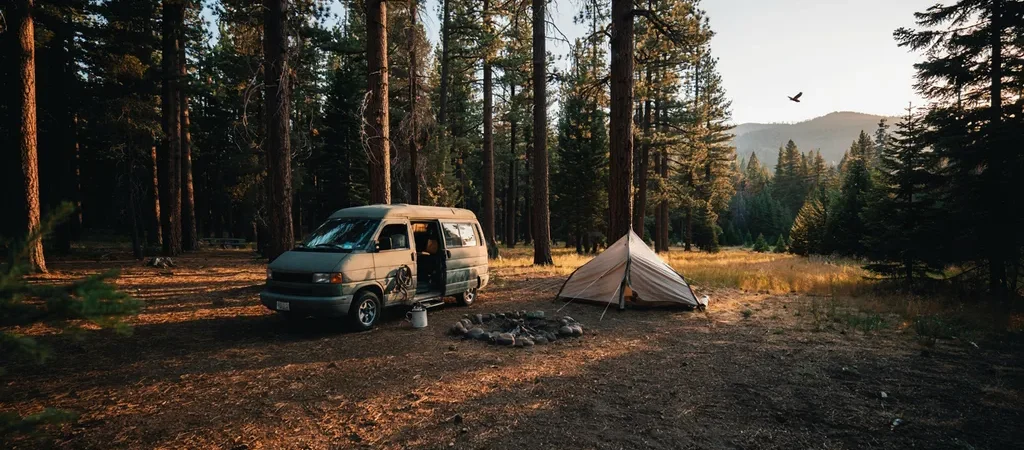
There’s a whole world of camping most people never discover: free, uncrowded, and gloriously alone, on the millions of acres of public land where you can pull off a forest road and pitch a tent wherever you like. It’s called dispersed camping (or “boondocking”), and once you try it, developed campgrounds with neighbors ten feet away start to feel like parking lots. Here’s how to do it right.
What dispersed camping is (and where it’s allowed)
Dispersed camping means camping outside developed campgrounds, with no hookups, no facilities, and usually no fee, mostly on national forest and BLM land. The general rules: camp on durable surfaces or existing sites, stay a set distance (often 100 to 200 feet) from water and roads, limit stays (commonly 14 days), and check local rules and fire restrictions first. A free motor vehicle use map from the ranger district shows exactly where it’s legal. Our best national forests guide is a great place to start looking.
The golden rule: pack in, pack out
With freedom comes responsibility. There’s no trash service, no toilets, no water spigot, so you carry in everything and carry out everything, including all trash and waste. Dispersed camping stays legal only because campers keep it pristine; one trashed site gets an entire area closed. Follow Leave No Trace religiously.
Self-sufficiency: the whole game
Off-grid means you bring your own everything. The big three to solve are water (bring plenty plus a way to filter more, see our water filtration guide), power for phones and lights, and cold food storage that survives days without ice runs. A cooler that holds ice for days and a portable shower for cleaning up transform a rough boondock into a comfortable basecamp.

- The Roadie 32 Wheeled Cooler is maneuverable, durable, and small-vehicle trunk compatible making it ready to navigate ta…
- PERISCOPE HANDLE: Retractable for convenience and built strong for extra-hefty provisions
- NEVERFLAT WHEELS: Solid, single-piece tire construction is impact and puncture-resistant

- Solar-Powered Convenience: Utilizes solar energy to heat 4.2 gallons of water in just 3 hours, offering a ready-to-use h…
- Multiple Showers: Holds enough water for 3-4 showers, ensuring you and your companions can freshen up after a day of hik…
- Leak-Free Design: Features a high-quality EVA construction with a leak-free bladder and hose, ensuring durability and re…
Human waste: do it right
This is the part beginners get wrong, and it matters most. Where there’s no toilet, dig a cat-hole 6 to 8 inches deep at least 200 feet from water, trails, and camp, and pack out toilet paper. In sensitive or high-use areas, pack out solid waste entirely with a wag bag. Nothing closes dispersed areas faster than the alternative.
Finding a site and staying safe
Arrive with daylight to find and assess a site (you can’t reserve these), have a backup location in case your first choice is taken, and download offline maps because you’ll lose signal. Tell someone where you’re going, watch fire restrictions like a hawk in dry season, and back your vehicle in for an easy exit. Then enjoy the reward: a campsite that’s entirely, blissfully yours. Plan the rest with our trip planning checklist and camping gear guide.
Frequently Asked Questions
What is dispersed camping?
Free camping on public land — usually national forest or BLM — outside developed campgrounds: no fees, no reservations, no amenities. You bring everything, take everything out, and get solitude no campground can match.
How do you find dispersed camping spots?
Motor Vehicle Use Maps from the local ranger district show legal roads; apps like FreeRoam and iOverlander crowdsource proven sites. Look for existing fire rings and pullouts — reusing established spots is both easier and lower-impact.
What are the rules for dispersed camping?
Typically: 14-day stay limits, camp 100–200 feet from water, use existing sites, pack out all trash and waste, and respect fire restrictions religiously. Rules vary by district — a five-minute call to the ranger station settles specifics.
Written by Jake Miller · Camping & Gear
Jake grew up pitching tents before he could drive and has spent 15+ years camping, car-camping, and gear-testing his way across the country. If it can be cooked over a fire or packed into a trunk, he has an opinion on it.