Heads up: this post contains affiliate links. If you buy through them, WildMorrow may earn a small commission at no extra cost to you. As an Amazon Associate, we earn from qualifying purchases.
⚡ Quick Answer: The best national forests for camping and hiking – Pisgah, White River, Inyo, Tongass, and the Green Mountains – plus how free dispersed camping works and the gear it takes.
National parks get the fame and the crowds, but America’s 154 national forests are the locals’ secret: 193 million acres of mountains, rivers, and woods where you can camp almost anywhere for free, drive to a trailhead without a timed-entry reservation, and actually find solitude. If you love the outdoors and hate the lines, national forests are your happy place. Here are the best for camping and hiking, plus how dispersed camping works.
1. Pisgah National Forest, North Carolina
Waterfalls, the Blue Ridge Parkway, and Looking Glass Rock. Sliding Rock’s natural waterslide and hundreds of miles of trail make this the Southeast’s crown jewel of forest recreation.
2. White River National Forest, Colorado
The most-visited national forest in the country for good reason: the Maroon Bells, ten wilderness areas, and alpine hiking that rivals any national park, with more room to breathe.
3. Inyo National Forest, California
Home to the Ancient Bristlecone Pines (the oldest living things on earth), the Mount Whitney trailhead, and Eastern Sierra lake basins that make backpackers weep. Our beginner backpacking guide starts here for a reason.
4. Tongass National Forest, Alaska
The largest national forest in the US: temperate rainforest, glaciers, bears, and bald eagles by the hundred. Wild on a scale that recalibrates what “big” means.
5. Green Mountain National Forest, Vermont
The Long Trail, sugar maples in October, and swimming holes tucked into every valley. New England hiking at its most classic and accessible.
The national forest superpower: dispersed camping
Here’s what national parks can’t offer: on most national forest land, you can camp for free outside developed campgrounds (called dispersed or “boondock” camping), typically for up to 14 days. Follow the rules: camp on durable surfaces or existing sites, stay 200 feet from water, pack out everything, and check for fire restrictions. A motor vehicle use map (free from the ranger district) shows where it’s allowed.
Gear for self-reliant forest camping
Dispersed camping means no camp store and no water spigot, so self-sufficiency is the theme: a hatchet or folding saw for processing downed wood where fires are allowed, and a good paper map because cell signal disappears fast out here.
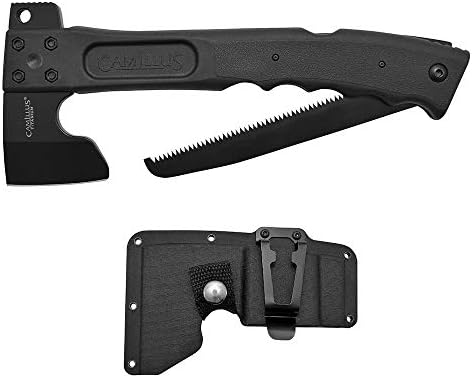
- 3-in-1 Hatchet: 12″ overall length with 7″ lockback folding saw, titanium bonded blade.
- Blade Features: Black, smooth edge with Scandi grind, axe/saw style.
- Handle: Black glass-filled nylon, left and right-hand orientation.

- PORTABLE FOLDING HANDSAW: This professional handsaw combines superior performance and ergonomics with high-quality desig…
- A VARIETY OF USES: You can use this versatile blade for a number of jobs, including pruning, trimming, branch cutting, a…
- LIGHTWEIGHT BLADE: This carbon-steel blade attachment was designed to be light enough to provide a smooth cut through ha…
Plan your forest escape
Find the forest nearest you at the US Forest Service site, call the local ranger district for current conditions and fire rules, and pack with our camping trip planning checklist. Practice Leave No Trace religiously; dispersed camping is a privilege that stays open only if we keep it clean. Gear gaps? The camping gear roundup has you covered.
Frequently Asked Questions
What is the difference between a national forest and a national park?
Parks preserve; forests are working lands with far fewer rules: dispersed camping is free, dogs run trails legally, and crowds thin dramatically. The scenery line between them is often just a boundary sign.
Can you camp for free in national forests?
Yes — dispersed camping is allowed in most national forests for up to 14 days, no reservation, no fee. Use existing sites, camp 100-plus feet from water, and check the ranger district’s fire rules. It is America’s best-kept camping bargain.
Which national forests are worth a trip on their own?
Sawtooth in Idaho out-alps most parks; White Mountain in New Hampshire owns the East’s best ridgelines; Coconino holds Sedona’s red rock; and Pisgah/Nantahala anchor Appalachian waterfall country. Each borders famous parks’ scenery at a fraction of the crowds.

Written by Sarah Brooks · Hiking & National Parks
Sarah fell in love with the outdoors on a childhood trip to the Smokies and has logged thousands of trail miles across 30+ national parks since. She is happiest above treeline with a map in hand.