
Heads up: this post contains affiliate links. If you buy through one, we may earn a small commission at no extra cost to you. As an Amazon Associate, we earn from qualifying purchases.
⚡ Quick Answer: The best trail cameras for hunting and wildlife — cellular vs. SD card, the specs that matter (trigger speed, no-glow IR), top picks, and placement tips.
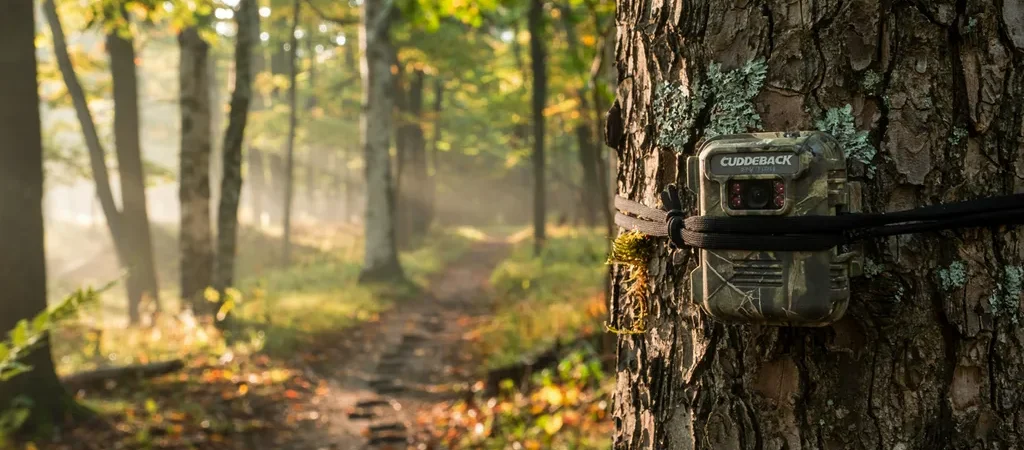
A trail camera is a scout that never sleeps — it patterns deer while you’re at work, confirms which trails get used at 2 a.m., and occasionally photographs something you never expected. Whether you’re hunting, managing land, or just curious what walks through the back forty, here’s how to pick a camera that delivers.
Cellular vs. Standard: The First Decision
- Cellular cameras send photos to your phone over LTE. No more walking in to pull SD cards (and leaving scent everywhere). They need a monthly data plan, but for hunting properties the scent savings alone justify it.
- Standard SD cameras cost less with no subscription — perfect for camp security, backyard wildlife, and spots you visit anyway.
Specs That Matter (And One That Doesn’t)
- Trigger speed: 0.5s or faster catches walking deer mid-frame instead of empty pictures of tails.
- No-glow IR flash: invisible to game (and trespassers); low-glow is fine for most wildlife but can spook wary bucks.
- Detection range: 60–80 ft covers trails and food plots.
- Battery life: lithium AAs last months; solar-topped models run essentially forever.
- Megapixels: mostly marketing. Interpolated “48MP” images come from small sensors — trigger speed and IR quality matter far more.
Top Trail Cameras
The Tactacam Reveal X is the cellular favorite for the price, and solar no-glow models handle set-and-forget duty:

- AUTO-CONNECT MULTI-CARRIER LTE — AT&T AND VERIZON — An integrated SIM automatically locks onto whichever carrier has the…
- BEST-IN-CLASS BATTERY LIFE — UP TO 6+ MONTHS — Independent testing confirms the X Gen 3.0 runs longer than any cellular …
- BUILT-IN GPS + NO SD CARD REQUIRED — GPS tracks your camera’s location in the REVEAL app at all times. Built-in storage …

- Capture Clear Wildlife Images Day and Night: This Meidase P200 trail camera features a Sony Starvis sensor that records …
- Effortless In-Field Media Downloads: No more climbing trees, pulling SD cards, or disrupting your hunting spots. The WiF…
- Record Wildlife Activity as It Happens: Designed with a 0.1-second trigger speed and up to 100ft motion detection range,…

- 【8K Ultra HD Videos & 60MP Photos】Featuring a premium optical lens, advanced image sensor and 2 cutting-edge large 850nm…
- 【65FT Hyper Night Vision & 0.1S Motion Activated】The Cokque trail camera is equipped with the AI-ISP algorithm and featu…
- 【Solar Powered & Long Battery Life】This wildlife camera can be powered by solar panels, It is equipped with a built-in 7…
Cameras don’t include memory — grab name-brand SD cards (cheap cards corrupt photos and lock up cameras):

Placement That Gets Photos
- Face cameras north or south — sunrise/sunset glare whitewashes east–west setups.
- Mount 3 feet up, angled slightly down, 10–15 feet off the trail.
- Clear branches in front — one windy twig equals 4,000 empty photos.
- On food plots, set the camera back for wide coverage; on trails, tight and perpendicular.
- Check local rules: some states restrict cellular cameras during hunting seasons.
Put your camera intel to work with our guides on deer season prep and treestand setup — or just enjoy the nightly parade of raccoons. Both are valid.
Frequently Asked Questions
How do trail cameras work?
A trail camera is a weatherproof, motion-triggered camera that automatically photographs or films wildlife when an animal passes its sensor. It runs on batteries for weeks or months in the field, letting you scout game, monitor property, or observe wildlife without being present.
What should I look for in a trail camera?
Consider image and video quality, trigger speed and detection range, battery life, and how it stores or sends images, whether to an SD card or over cellular. Fast trigger speed captures fast-moving animals, and long battery life reduces how often you must visit the camera.
What is a cellular trail camera?
A cellular trail camera sends photos to your phone or an app over a cellular network, so you can monitor activity without hiking in to swap the SD card. This reduces disturbance and gives near real-time updates, though it requires cell coverage and usually a data plan for the images.

Written by Tom Rivera · Fishing & Hunting
Tom has spent four decades outdoors — on lakes, rivers, and treestands — and still fishes most weekends. These days his favorite catch is watching his grandkids reel in their first bluegill.