Heads up: this post contains affiliate links. If you buy through one, we may earn a small commission at no extra cost to you. As an Amazon Associate, we earn from qualifying purchases.
⚡ Quick Answer: To start canoeing: rent before you buy, launch on a small calm lake with no wind, sit (don’t stand), and learn two strokes — the forward stroke and the J-stroke (which keeps the boat straight without switching sides). Wear the life jacket, keep weight low and centered, and you’ll be comfortable within an hour.
The canoe is the pickup truck of paddlecraft: it hauls kids, dogs, coolers, and camping gear places no trail reaches, and it’s been doing it for a thousand years. It’s also easier to learn than its tippy reputation suggests. Here’s your first-season guide.
Canoe vs. Kayak (Since You’re Wondering)
Kayaks are easier solo and faster in wind; canoes carry double the load, work better with partners, kids, and dogs, and are far easier to camp out of. If your dream is gear-hauling lake trips and family paddles, canoe. If it’s zipping around solo, see our kayak guide. Many paddlers end up with both.
First-Time-Out Basics
What the law actually says. The U.S. Coast Guard requires a recreational vessel — a kayak or canoe included — to carry one Coast Guard–approved wearable life jacket for every person aboard. Carrying it is the federal requirement for adults; wearing it is not. The exception is children: federal law requires that when a vessel is underway, children under 13 must wear a Coast Guard–approved life jacket, unless they are below deck or in an enclosed cabin. State rules go further in many places and child age limits vary, so check your state boating agency before you launch.
- Getting in: keep three points of contact, stay low, and step onto the centerline — never the gunwale (the side rail). Most swims happen at the dock.
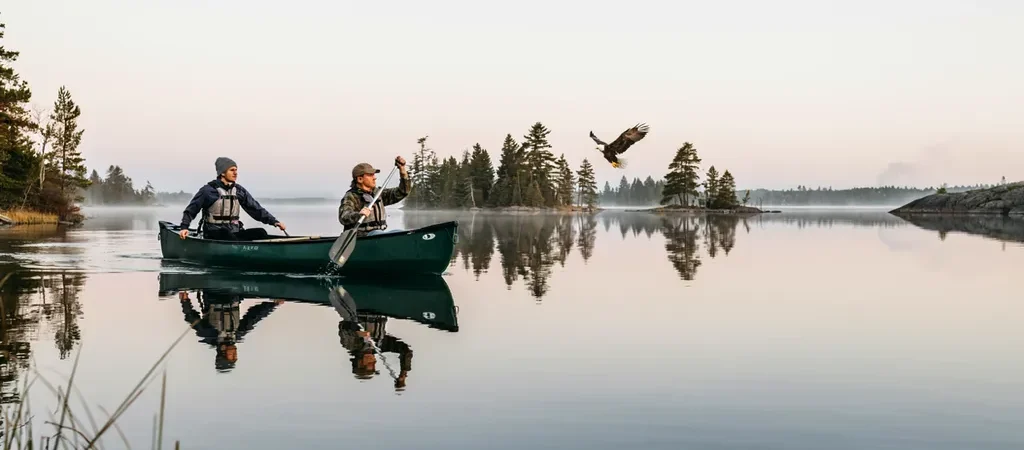
- Positions: the stern (rear) paddler steers; the bow paddler provides power and calls out rocks. The heavier partner usually takes stern.
- Trim: keep weight low and centered; a canoe with gear balanced fore-and-aft handles wind dramatically better.
- Kneeling against the seat edge lowers your center of gravity instantly in chop — the old-timers’ stability trick.
The Two Strokes That Matter
- Forward stroke: rotate your torso, plant the blade fully, pull past your hip — power comes from the core, not the arms.
- J-stroke (stern): finish the forward stroke by turning the blade and pushing slightly away, tracing a “J”. This corrects the boat’s natural veer so you stop zigzag-paddling. Ten minutes of practice, lifetime of straight lines.
- Bonus: the draw stroke (reach out, pull water toward you) slides the canoe sideways for docking.
Wind and Water Judgment
- Wind is the canoe’s enemy: start into the wind so the ride home is easy, and hug shorelines rather than crossing open water.
- Whitecaps = get off the water. A loaded canoe and rough chop is how swims happen.
- Cold water changes everything — dress for the water temperature, not the air (see our hypothermia guide).
- Life jackets worn, always. A canoe swamps rarely, but when it does there’s no warning.
Gear Notes
Rentals include everything at first. When you buy: a 16–17 ft recreational tandem suits families, and a proper paddle (sized so the grip reaches your chin when stood upright) beats the aluminum rental club:

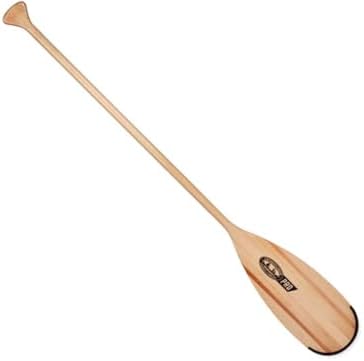
- Crooked Creek PRO Paddle, Clear, 5.0′, Beaver Tail
Where to point the bow next: our best paddling lakes list works perfectly for canoes, and paddle fishing basics translate directly.
Frequently Asked Questions
Is canoeing hard for beginners?
Canoeing is beginner-friendly, especially on calm flatwater, and you can learn the basic strokes in a single outing. Practice steering and paddling on both sides, and if paddling with a partner, coordinate your strokes. Start on calm, protected water before tackling rivers or wind.
What do you need to go canoeing?
You need a canoe, a paddle sized to you, and a personal flotation device for each paddler, plus a bailer or sponge and dry bags for gear. Dress for the water temperature. Learning a few basic strokes and how to enter and exit safely rounds out the essentials.
How do you steer a canoe?
Steering comes from your paddle strokes. A J-stroke lets a solo or stern paddler go straight, while sweep strokes turn the canoe. With a partner, the stern paddler mainly steers. Practice on calm water, and remember that small, smooth corrections work better than big, jerky ones.
Written by Jake Miller · Camping & Gear
Jake grew up pitching tents before he could drive and has spent 15+ years camping, car-camping, and gear-testing his way across the country. If it can be cooked over a fire or packed into a trunk, he has an opinion on it.