
Heads up: this post contains affiliate links. If you buy through one, we may earn a small commission at no extra cost to you. As an Amazon Associate, we earn from qualifying purchases.
⚡ Quick Answer: Ten beginner-friendly snowshoeing trails across the US — from Rocky Mountain National Park to Acadia — plus the snowshoes, poles, and cold-weather gear you need to start.
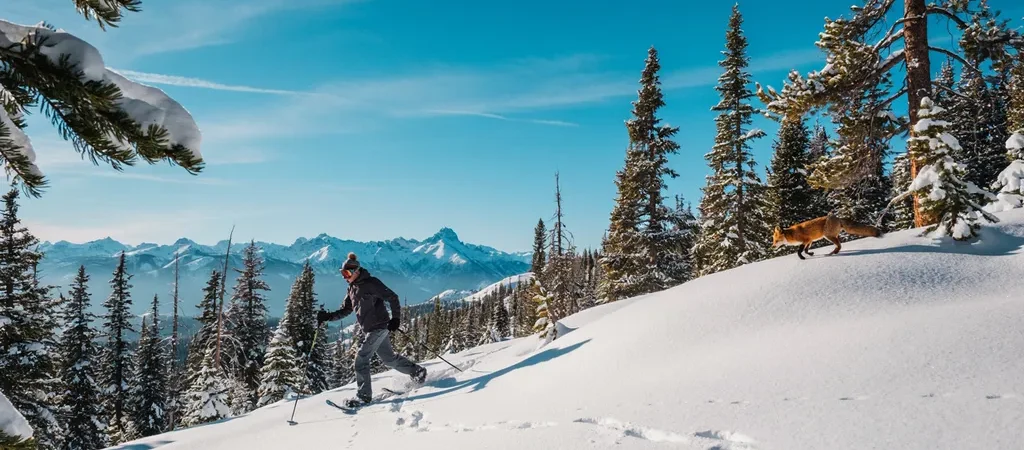
Snowshoeing is the friendliest way into winter adventure. If you can walk, you can snowshoe — there is almost no learning curve, the gear is inexpensive, and it opens up quiet, snow-covered trails that most people never see. The hardest part is simply choosing where to go. Below are ten beginner-friendly snowshoe trails across the US, plus the handful of gear pieces that make your first outings warm and fun.
New to the sport entirely? Start with our beginner’s guide to snowshoeing for technique and fit basics, then pick a trail below.
What Makes a Trail Beginner-Friendly
The best first snowshoe outings share a few things in common. Look for routes that are:
- Gentle and rolling, with minimal steep climbs
- Under about 5 miles round-trip so you are not overcommitted
- Popular or clearly marked, where the path is easy to follow in snow
- Low avalanche exposure — valley floors, meadows, and forest roads rather than steep open slopes
- Served by a trailhead you can actually reach and park at in winter
10 of the Best Beginner Snowshoeing Trails in the US
1. Bear Lake Loop — Rocky Mountain National Park, Colorado
A nearly flat 0.6-mile loop around a frozen alpine lake, ringed by dramatic peaks. The trailhead is plowed and popular, making it one of the most reliable first-timer routes in the Rockies.
2. Taylor Creek — Lake Tahoe, California
Flat meadow and marsh trails just steps from the lakeshore. Wide-open terrain, gentle grades, and easy access off Highway 89 make this a classic beginner spot.
3. Paradise Area — Mount Rainier National Park, Washington
Some of the deepest, most dependable snow in the country sits below the volcano. Rolling meadows, marked winter routes, and weekend ranger-led walks make Paradise ideal for learning.
4. Dewey Point via Badger Pass — Yosemite National Park, California
A gentle forest route that ends at a rim viewpoint high above Yosemite Valley. The Badger Pass area is built for winter travel, with a groomed trail network nearby.
5. Zealand Road — White Mountains, New Hampshire
A flat, snowed-over forest road that eases you into classic New England winter without any real climbing. Quiet, scenic, and very hard to get lost on.
6. Carriage Roads — Acadia National Park, Maine
Miles of gently graded gravel carriage roads turn into perfect snowshoe highways once the snow flies, with a rare mix of forest and ocean views.
7. Taggart Lake — Grand Teton National Park, Wyoming
A rolling 3-mile round-trip through forest to a lake beneath the Teton skyline. Popular enough that the trail is usually well broken-in.
8. Apgar & Lake McDonald — Glacier National Park, Montana
Flat lakeside terrain on the west side of Glacier, with the park quiet and snowbound. Ranger-led snowshoe walks run here in season.
9. Mount Van Hoevenberg — Lake Placid, New York
Home to groomed Olympic-legacy trails in the Adirondacks. Gentle loops and rentals on site make it a stress-free place to try snowshoeing for the first time.
10. Crater Lake Rim — Crater Lake National Park, Oregon
One of the snowiest places in the country, with the impossibly blue lake framed by white. Stick to the flatter rim-village routes and ranger-led walks as a beginner.
Snowshoe Gear You Actually Need
You do not need much to get started. Snowshoes are sized to your total weight (body plus pack and clothing), so heavier folks and deep, powdery snow call for larger frames. A pair of well-reviewed snowshoes to consider:

- Strong injection-molded ExoTract deck with steel crampon and perimeter teeth provides torsional flex and excellent grip …
- Paraglide binding stretch mesh hugs feet securely and is compatible with nearly any footwear, from light hikers to snowb…
- Glove-friendly binding straps and buckle tabs are easy to use and make getting in and out quick and simple

- Lightweight Aluminum Frame: Crafted with a high-strength aluminum frame, these snowshoes for men and woman are designed …
- Dual Cleat Crampons: Equipped with aggressive dual cleat crampons that provide superior traction on icy and uneven surfa…
- Dual Ratchet Bindings: Features dual ratchet bindings that offer quick, easy, and secure adjustments for a customized fi…

- The Recreational crampon is great for secure uphill, downhill, and side hill grip on packed snow conditions
- The fit-step frame reduces musculoskeletal impact on hip, knee and ankle joints
- Soft Tec decking provides durable, lightweight flotation and has a smooth, soft texture
Round out your kit with adjustable poles for balance, gaiters to keep snow out of your boots, and a couple of toe warmers for the coldest days:
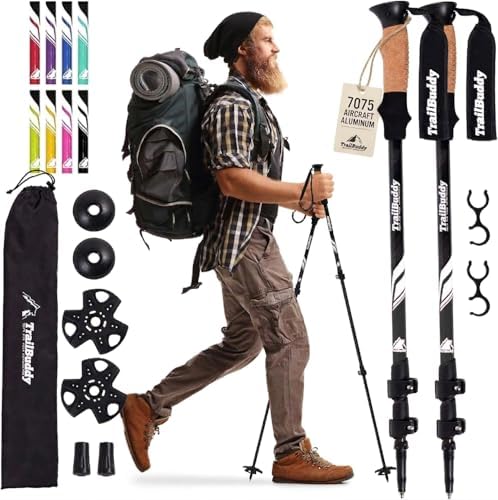
- BUILT TO LAST: Whether you’re hiking on rugged terrain or snowshoeing on fresh powder, you need hiking gear that can kee…
- PREMIUM QUALITY: Crafted from elite aircraft-grade 7075 aluminum, each 9.7 ounce trekking pole is designed to be lighter…
- ADJUSTABLE: Set to your desired height in seconds, from the 54″ max height down to just 24.5″ when fully collapsed. They…

- 【Protection】Our snow boots gaiters for men and women provide exceptional protection against various weather conditions. …
- 【Waterproof durable material】 Built from 900D Anti-Tear Waterproof coated Oxford Fabric, our gaiters for hiking boots bo…
- 【ERGONOMIC DESIGN】 Designing according to human ankle curve, the gaiters fit comfortably snug around your legs and calve…

- Quick, long-lasting heat
- Simply open the package and they heat up
- Adhesive – It stays where you stick it!
Winter Trail Safety
Winter travel is safe and simple when you respect a few basics:
- Check the regional avalanche forecast at avalanche.org and avoid steep open slopes
- Tell someone your route and expected return time
- Dress in layers and pack a headlamp, water, and snacks — winter days are short
- Stay off groomed cross-country ski tracks; walk to the side of them
- Turn around earlier than you think — breaking trail through snow is tiring work
Start Small, Then Explore
Snowshoeing rewards you for keeping it simple: pick a short, gentle trail, dress in warm layers, and give yourself plenty of daylight. After a couple of easy loops you will be ready for longer routes and deeper backcountry. For more cold-weather know-how, see our cold-weather camping guide and our tips on what to wear outdoors.
Frequently Asked Questions
What are the best places to go snowshoeing?
Great snowshoeing is found in Rocky Mountain National Park, the White Mountains of New Hampshire, Yellowstone, and many groomed nordic areas across the northern US. Look for winter trails with reliable snow, marked routes, and manageable terrain, and many state parks and ski areas offer beginner-friendly options.
Is snowshoeing hard for beginners?
Snowshoeing is one of the easiest winter sports to learn, since if you can walk you can snowshoe. Start on flat or gently rolling terrain, use poles for balance, and pace yourself, as walking on snow is more of a workout than it looks. Beginners can enjoy it on the very first outing.
What do I need to go snowshoeing?
You need snowshoes sized to your weight and the snow conditions, waterproof insulated boots, warm layers, and gaiters to keep snow out. Adjustable poles help with balance and add an upper-body workout. Dress in layers you can adjust, since snowshoeing generates a lot of heat.
Written by Sarah Brooks · Hiking & National Parks
Sarah fell in love with the outdoors on a childhood trip to the Smokies and has logged thousands of trail miles across 30+ national parks since. She is happiest above treeline with a map in hand.