
Heads up: this post contains affiliate links. If you buy through one, we may earn a small commission at no extra cost to you. As an Amazon Associate, we earn from qualifying purchases.
⚡ Quick Answer: Buy an EPA-registered bear spray with 1 to 2 percent capsaicinoids, at least 7.9 ounces of contents, and a spray range of 25 feet or more. Carry it in a chest or hip holster you can reach in one motion, replace it at the expiration date, and practice drawing with an inert canister. Bells and ultrasonic gadgets do not work.
Bear spray is the rare piece of safety gear where the evidence is unambiguous. It works, it works better than most people expect, and it works better than the alternative most people imagine is stronger. It is also the piece of gear most commonly carried in a way that guarantees it will be useless.
This covers what to look for, how to carry it, how to use it, and which of the other deterrents on the shelf are worth anything. If you want the encounter protocols themselves, our guide to mountain lion versus bear encounters covers how the correct response differs by species.
Why it works so well
Bear spray is a capsaicin fog, not a stream. It creates a wall of aerosolized irritant that a charging animal has to run through, and it overwhelms the eyes, nose, and respiratory tract of an animal whose entire world is built around smell. The effect is immediate and temporary.
Field research on encounters in Alaska found bear spray stopped the undesirable behavior in the great majority of cases, across brown bears, black bears, and polar bears, and that people carrying it were very rarely injured. It also compares favorably to firearms in practice, not because it is more powerful, but because it demands far less accuracy from someone whose hands are shaking during a two-second event.
What to look for on the label
- EPA registration as a bear deterrent. This is the non-negotiable one. It means the product was tested for this purpose. A can of personal pepper spray is not a substitute.
- 1 to 2 percent major capsaicinoids. This is the registered range. Marketing that emphasizes a bigger number is selling you the wrong metric.
- At least 7.9 ounces of net contents, and preferably more. You want enough for multiple bursts and, ideally, a second animal.
- A spray distance of 25 feet or greater, and a discharge time of at least six seconds.
- A wide fog pattern, not a stream. The barrier is the point.
- An expiration date you check. Propellant leaks slowly over years, and an expired can may not reach its rated distance. Replace at expiry, roughly every three to four years.
Carry, which matters more than the brand
Almost all of the practical failure in bear spray is carry failure. An encounter at close range gives you somewhere between two and four seconds. Anything inside your pack is not available in that window.
Use a chest holster on your sternum strap or a hip holster on your belt, outside all layers. Practice drawing it, removing the safety clip, and pointing it, until you can do it without looking down. Buy an inert practice canister and actually discharge it once outdoors so the noise and the recoil are not a surprise.
If you are hiking with a partner, both of you carry. The person with a clear line of sight is not always the person carrying.
How to use it
- Start at 30 to 60 feet if the animal is approaching, and do not wait for it to be close. You are building a cloud it has to enter.
- Aim slightly downward, at the ground just in front of the animal. The fog rises into its face, and this compensates for a low or high point of aim.
- Use short bursts of one to two seconds, not one continuous discharge, so you keep reserve.
- Mind the wind. A strong headwind will blow the cloud back onto you and reduce range badly. Adjust your angle if you can, and accept that you may need to be closer.
- After it breaks off, leave the area promptly but calmly. Do not stay to watch, and report the encounter to a ranger if you are in a managed area.
Do not spray it on yourself, your tent, or your gear as a preventive measure. Capsaicin residue is a food-like attractant once the volatiles dissipate, so this achieves the opposite of what people intend.
The deterrents that are not worth your money
- Bear bells. Too quiet, too high-pitched, and there is no evidence they reduce encounters. Your voice carries far better and is free.
- Ultrasonic and electronic repellers. No credible evidence of effectiveness on large mammals.
- Air horns. Mixed at best. They may startle an animal off, or may startle it toward you. Not a substitute for spray.
- Firearms, for most hikers. Not a moral argument, a practical one. Stopping a charging bear requires precise shot placement in a couple of seconds, wounding an animal frequently makes the situation worse, and the field data does not show better outcomes than spray for average users.
The deterrents that genuinely help
- Your voice and travelling in a group. The highest-value prevention available, and it costs nothing. Most serious incidents are surprise encounters, and groups of three or more almost never have them.
- Proper food storage. A hard-sided canister or a correct hang, well away from where you sleep, plus cooking away from the tent. A bear that never associates people with food is a bear you never meet at close range.
- An electric fence for base camps in high-density country. Overkill for a weekend, standard practice for extended stays in some regions.
- A way to call for help. If something does go wrong far from a road, communication is what determines the outcome. Our satellite messenger guide covers the options.
Regional reality check
What you should carry depends on where you are. Bear spray is close to mandatory practice in grizzly country in the northern Rockies and Alaska, sensible in black bear country across most of North America, and useful anywhere mountain lions are present. Our wildlife safety by region guide covers which species you are actually likely to meet where you hike, and our mountain lion safety guide covers cats specifically.
Recommended Gear

- Specifications and storage:flying distance 2-5 m, maximum spraying time 9 seconds
- Safe ingredients:The main ingredients in this product are derived from natural chilli peppers and are safe. Although the…
- Designed to help improve personal safety awareness in emergency situations. – our max strength Pepper Spray is strong en…

- STOPS MORE ANIMALS: The ONLY bear spray approved Federally Registered with EPA to deter for Bear, Mountain Lion, Coyote,…
- FIRES UP TO 40 FEET: Protection with a 40 foot / 12-meter spray range to stop Bears, Mountain Lions, Coyotes, Dogs, & Mo…
- UNIQUE FOG DEPLOYMENT – Other brands spray a slower forming, narrow fog of bear repellent spray. UDAP Griz Guard Bear Sp…
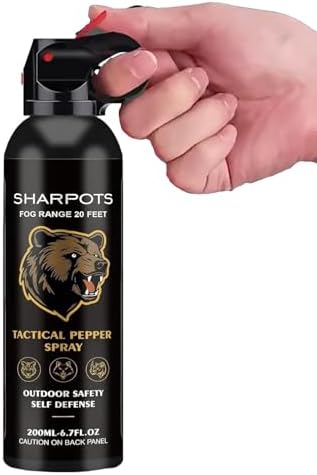
- Specifications and storage:flying distance 2-5 m, maximum spraying time 9 seconds
- Safe ingredients:The main ingredients in this product are derived from natural chilli peppers and are safe. Although the…
- Designed to help improve personal safety awareness in emergency situations. – our max strength Pepper Spray is strong en…
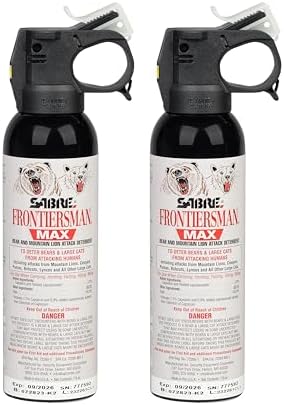
- EPA-REGISTERED BEAR & MOUNTAIN LION SPRAY: Approved to deter bears and mountain lions; maximum strength 2.0% Major Capsa…
- PROTECTION FROM A SAFE DISTANCE: Powerful spray deploys a dense fog with an effective range up to 40 feet (12 m), with 6…
- FAST ACCESS IN BEAR COUNTRY: Sabre’s bear spray can fits in any cup holder, holster, or backpack pocket, and includes a …
Frequently Asked Questions
Does bear spray actually work?
Yes, and the field research is strong. Studies of encounters in Alaska found bear spray stopped undesirable behavior in the large majority of cases, and people carrying it were rarely injured. It performs at least as well as a firearm in the hands of most users, largely because it requires far less precision under stress.
What percentage of capsaicin should bear spray have?
Between 1 and 2 percent major capsaicinoids, which is the range the EPA registers for bear deterrent use. A higher number is not better. What matters more is the spray volume, the range, and how long the canister discharges.
Is bear spray the same as pepper spray?
No. Personal defense pepper spray fires a narrow stream at a person’s face from a few feet away. Bear spray discharges a wide, dense fog designed to create a barrier a charging animal must pass through, from a much greater distance, and holds several times more product.
Where should I carry bear spray?
On a chest or hip holster, on the outside of your clothing and pack, where you can draw it with either hand without looking. Bear spray in a pack lid is functionally not carried at all, since encounters typically give you two to four seconds.
Do bear bells work?
No. Bells are too quiet and too high-pitched to alert a bear at any useful distance, and there is no evidence they reduce encounters. Your voice works far better. Talk, call out at blind corners, and make noise near running water where sound does not travel.
Can you fly with bear spray?
No. Bear spray is prohibited in both carry-on and checked baggage on commercial flights in the United States. Buy it at your destination, which is easy near most parks and trailheads.
Written by Jake Miller · Camping & Gear
Jake grew up pitching tents before he could drive and has spent 15+ years camping, car-camping, and gear-testing his way across the country. If it can be cooked over a fire or packed into a trunk, he has an opinion on it.