
Heads up: this post contains affiliate links. If you buy through one, we may earn a small commission at no extra cost to you. As an Amazon Associate, we earn from qualifying purchases.
⚡ Quick Answer: With a mountain lion, face it, make yourself look as large as possible, hold eye contact, back away slowly, and fight back hard if attacked. With a bear, avoid a hard stare, speak calmly, and back away. If a surprised grizzly makes contact, play dead. If a black bear attacks, fight back. Never run from either animal.
Most wildlife safety advice gets flattened into a single set of rules, and that is where it becomes dangerous. The correct response to a mountain lion and the correct response to a grizzly are, in places, opposites. Play dead for the wrong animal and you have made a serious mistake. Fight the wrong animal and you have made a different one.
Here is what separates them, and the small number of rules that hold for both. For deeper coverage of one species, see our mountain lion safety guide and what to do in a mountain lion encounter.
Start with what they want
This explains every difference that follows.
A mountain lion that is watching you is evaluating you as prey. It is an ambush predator that relies on surprise and on targets that behave like prey: small, low to the ground, moving away. Nearly everything in lion protocol is about not resembling that.
A bear, in the overwhelming majority of encounters, is not hunting you. It is surprised, or it is defending cubs, or it is defending a food source, or it is curious. Bear protocol is mostly about de-escalation, about convincing the bear you are a person and not a threat, and then leaving.
So: with a lion you assert yourself. With a bear you defuse. Those are genuinely different postures.
Mountain lion: assert
- Stop. Do not run. Running is the single worst option, because it converts you into fleeing prey and lions are built to catch that.
- Face the animal and hold eye contact. Being seen ruins an ambush. A lion that knows you have spotted it usually loses interest.
- Make yourself large. Raise your arms, open your jacket wide, lift your pack above your head.
- Do not crouch or bend down. This is the mistake people make while reaching for a rock or a child. Crouching makes your silhouette read as a four-legged animal. Pick children up rather than bending to them, and lift them straight onto your hip.
- Speak loudly and firmly. Not a scream, which can sound like a wounded animal. A deep, loud, confident voice.
- Back away slowly, keeping the animal in view. Never turn your back.
- If it attacks, fight. Attack the eyes, face, and nose with anything you have, including a trekking pole, a knife, a rock, or your hands. Lions do break off when met with real resistance.
Black bear: stand your ground, then leave
- Do not run, and do not climb a tree. Black bears climb better than you do.
- Identify yourself as human. Talk in a calm, firm voice and wave your arms slowly. Bears have poor eyesight and often need a moment to work out what you are.
- Make yourself look big and stay grouped up if you are with others.
- Back away slowly and give the bear an obvious escape route. Never corner one, and never get between a sow and cubs.
- Do not play dead. This is the critical distinction. If a black bear makes contact, fight back, concentrating on the face and muzzle.
Grizzly or brown bear: defuse, and know when to go down
- Do not run. A grizzly can exceed thirty miles per hour.
- Avoid a hard, direct stare. Watch the bear, but do not lock eyes, because a fixed stare can be read as a challenge.
- Speak calmly and low so it identifies you as human, and move your arms slowly.
- Back away sideways if you can, which is non-threatening and lets you watch your footing.
- If a surprised or defensive grizzly makes contact, play dead. Lie face down, hands laced over the back of your neck, elbows in, legs spread wide so you are harder to roll. Stay still and stay down until you are certain it has left the area. Defensive attacks stop once the bear no longer perceives a threat.
- Fight back if the attack is predatory. That means a bear that has been stalking you, that shows no defensive cues, or that comes into a tent at night. In that case, resist with everything you have.
Distinguishing defensive from predatory is the hardest judgment in this whole subject. A useful shorthand: a startled bear at close range on a trail, huffing, swatting the ground, with cubs nearby, is defensive. A bear that approaches with focus, silently, or that comes into camp at night is not.
The rules that apply to every species
- Never run. True for all of them, without exception.
- Carry bear spray where you can reach it in one motion, on a hip or chest holster. It works on cats as well as bears. Deploy in short bursts at roughly thirty to sixty feet, aiming slightly downward so the cloud rises into the animal’s face. Our bear spray and deterrents guide covers the specifics.
- Make noise while you move, especially near streams, in thick brush, and on blind corners. Most bad encounters are surprise encounters.
- Never approach a carcass. A dead animal is a food source a predator will defend hard.
- Store food properly in a canister or hung well away from where you sleep.
- Keep children and dogs close. Both are the most common trigger in lion encounters, and a loose dog can bring a bear straight back to you.
- Hike in a group when you can. Groups of three or more almost never have serious incidents.
Keep the odds in perspective
Fatal attacks by either animal are genuinely rare, and the number of people who hike in lion and bear country every year without ever seeing one is enormous. The reason to learn this is not that an encounter is likely, it is that the correct response has to be automatic, because you will have a few seconds and no time to look anything up.
If you often hike by yourself, the calculus shifts somewhat, and our guide to hiking alone safely covers what changes when there is nobody else there. Regional differences also matter, and our wildlife safety by region guide breaks down which species you should actually be preparing for where you hike.
Recommended Gear

- 𝙐𝙡𝙩𝙧𝙖𝙡𝙞𝙜𝙝𝙩 𝙈𝙞𝙣𝙞 𝙈𝙚𝙙 𝙆𝙞𝙩: Made from durable rip-stop nylon, the Micro Med Kit is extremely lightweight, compact, and easy…
- 𝙐𝙡𝙩𝙧𝙖𝙡𝙞𝙜𝙝𝙩, 𝘾𝙤𝙢𝙥𝙖𝙘𝙩 & 𝙏𝙧𝙖𝙫𝙚𝙡-𝙁𝙧𝙞𝙚𝙣𝙙𝙡𝙮 & 𝙏𝙎𝘼-𝘼𝙥𝙥𝙧𝙤𝙫𝙚𝙙: The Micro Med Kit measures 5” x 4.5” x 1” and weighs only 6.7 oz, …
- 𝙀𝙨𝙨𝙚𝙣𝙩𝙞𝙖𝙡 𝙁𝙞𝙧𝙨𝙩 𝘼𝙞𝙙 𝘾𝙤𝙫𝙚𝙧𝙖𝙜𝙚, 𝙎𝙢𝙖𝙡𝙡 𝙗𝙪𝙩 𝙈𝙞𝙜𝙝𝙩𝙮: The Micro Med Kit is compact yet fully equipped with 50 essential medica…

- Specifications and storage:flying distance 2-5 m, maximum spraying time 9 seconds
- Safe ingredients:The main ingredients in this product are derived from natural chilli peppers and are safe. Although the…
- Designed to help improve personal safety awareness in emergency situations. – our max strength Pepper Spray is strong en…
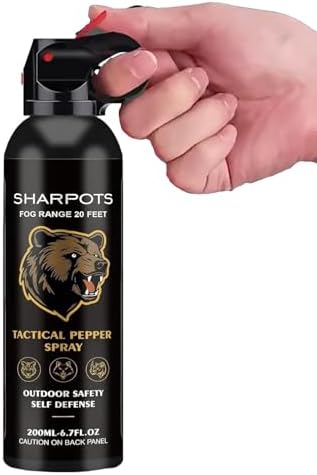
- Specifications and storage:flying distance 2-5 m, maximum spraying time 9 seconds
- Safe ingredients:The main ingredients in this product are derived from natural chilli peppers and are safe. Although the…
- Designed to help improve personal safety awareness in emergency situations. – our max strength Pepper Spray is strong en…

- GRAIN STORAGE CONTAINER: This dishwasher safe grain storage container features a silicone seal that keeps rice, beans, q…
- FUNCTIONAL DESIGN: This container has a hinged lid that flips back for a better fit in the dishwasher, a wide opening fo…
- MEAL PREP MADE EASY: Our food storage containers enhance the convenience of everyday meal preparation for the busy home …
Frequently Asked Questions
Should you make eye contact with a mountain lion or a bear?
Hold eye contact with a mountain lion. It signals that you have seen the animal and that you are not prey, which is what breaks off most stalking behavior. With a bear, avoid a hard, direct stare, because bears can read it as a challenge. Watch the bear without locking eyes and speak in a calm voice.
When should you play dead?
Only for a surprised or defensive grizzly or brown bear that makes physical contact. Lie face down, cover the back of your neck with your hands, and spread your legs to make it harder to be rolled over. Never play dead for a mountain lion or a black bear, and never play dead for any bear that is behaving predatorily, such as one stalking you or entering a tent at night.
Does bear spray work on mountain lions?
Yes. Capsaicin-based bear spray is effective on mountain lions and most other large mammals. Carry it accessible on a hip or chest holster, not buried in your pack, because an encounter gives you seconds rather than minutes.
Why should you never run from a predator?
Running triggers a chase response in both cats and bears, and neither animal can be outrun. A mountain lion is built specifically to catch fleeing prey, and bears can sprint far faster than any person. Backing away slowly while facing the animal keeps you from looking like something to pursue.
Is it safe to hike in areas with both bears and mountain lions?
Yes. Encounters are uncommon and attacks are rare. The practical approach is to make noise while moving, hike in a group when possible, keep children close, store food properly, and carry bear spray where you can reach it in one motion.
Written by Jake Miller · Camping & Gear
Jake grew up pitching tents before he could drive and has spent 15+ years camping, car-camping, and gear-testing his way across the country. If it can be cooked over a fire or packed into a trunk, he has an opinion on it.