
Heads up: this post contains affiliate links. If you buy through one, we may earn a small commission at no extra cost to you. As an Amazon Associate, we earn from qualifying purchases.
⚡ Quick Answer: For catch and release that fish actually survive: land them fast (don’t play to exhaustion), keep them IN or over water, wet your hands, minimize air exposure to under 10 seconds, and back the hook out with pliers — or cut the line on deep hooks. Skip the vertical “hero shot” for big fish; support them horizontally, snap fast, and hold them in current until they kick away strong.
Most anglers release most of their fish — but a released fish isn’t automatically a surviving fish. Handling determines whether that bass spawns next spring or feeds the turtles by Thursday. The good news: fish survival is mostly about a few simple habits, and none of them cost you the photo. Here’s the science-backed version.
The Big Four
- Fight fast: playing a fish to total exhaustion builds lactic acid it may not recover from — use adequate tackle and land them with energy to spare.
- Keep them wet: a fish’s gills collapse in air. The 10-second rule: if YOU can’t hold your breath comfortably for the time the fish is out, it was out too long.
- Wet hands, no towels: the slime coat is the fish’s immune system; dry hands and cloth strip it off.
- Hook removal: back it out with pliers or a hook remover. Deep-hooked? CUT THE LINE — studies consistently show gut-hooked fish survive far better with the hook left in than with surgery on the bank.
Gear That Raises Survival Rates
- Barbless hooks (or pinched barbs): seconds saved on removal, damage reduced, and you lose fewer fish than you think.
- Circle hooks for bait: they hook the jaw corner instead of the gut — the single biggest upgrade for bait anglers.
- Rubber nets: knotted nylon shreds fins and slime; rubber mesh is why every trout guide switched.
- Pliers/hook remover on your person, not in a box somewhere:
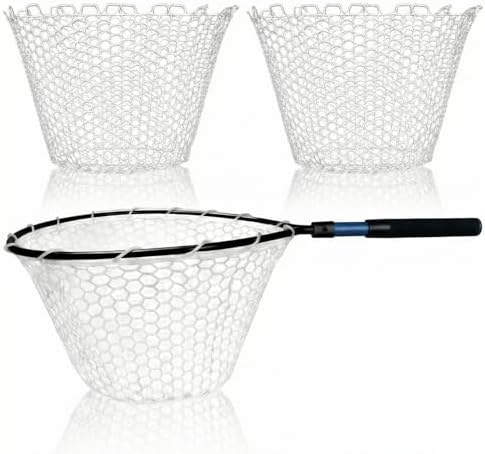
- 2 Pack Rubber Net Replacement Set: you will receive 2 soft rubber fishing net replacements designed to fit standard land…
- Adaptable Size for Many Net Frames: each replacement netting measures about 39.4 inches in circumference with a 9.8 inch…
- Durable and Fish Safe Rubber Material: made from non absorbent rubber that is resistant to wear and saltwater corrosion;…

- [Single Hand Operation] The ergonomic plastic handle can fit your palm perfectly. Nice for twisting wrist and single han…
- [Remove Hooks Swallowed Deeply] Getting those troublesome hooks out , such as gut hook
- [More Protection] Don’t worry about those fish with sharp teeth, such as trout and snapper etc, the hook remover will ke…
The Photo, Done Right
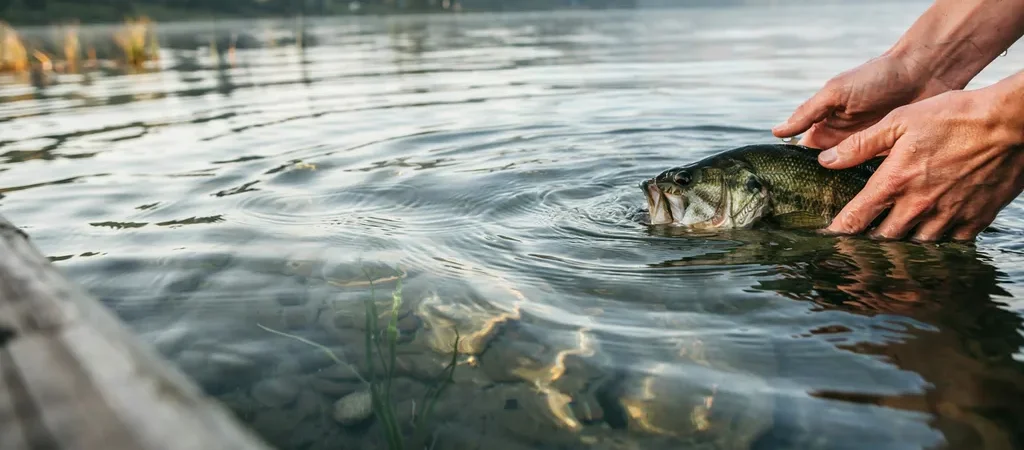
Keep the fish in the net in the water while the camera gets ready. Lift horizontally — one hand under the head, one under the belly; never vertical by the jaw for anything heavy, and never fingers in gills. Shoot over water so a flop means a splash, not concrete. Fifteen seconds, back in the drink.
Reviving and Special Cases
- Hold fish upright facing into gentle current (or move them in slow figure-eights in still water) until they kick off strong — let THEM decide when.
- Heat matters: warm summer water carries less oxygen — land trout extra fast in August, or fish for something heat-tolerant instead.
- Deep-water fish (walleye, bass from 25+ ft) can suffer barotrauma; fish shallower when releasing, and learn descending devices for deep releases.
- Cold-water species (trout especially) are the most fragile — see our trout guide for handling notes.
Selective harvest is part of the ethic too: keeping a legal limit of eaters is conservation working as designed — release the big spawners, keep the mid-sizers, and the fishery improves in both directions. More foundations in the beginner’s guide and license guide.
Frequently Asked Questions
How do you release a fish so it survives?
Land the fish quickly, keep it in the water as much as possible, wet your hands before touching it, and remove the hook gently with pliers. Support the fish horizontally, avoid squeezing it, and if it is tired, hold it upright in the water until it swims off on its own. Minimize air exposure.
Do barbless hooks help catch and release?
Yes. Barbless hooks, or hooks with the barb pinched down, come out far more easily and cause less damage, which speeds release and improves survival. They also make unhooking yourself easier. Many anglers who practice catch and release use barbless or circle hooks for these reasons.
How long can a fish be out of water?
As briefly as possible, ideally just a few seconds. Every second out of water stresses a fish and lowers its chance of survival, so keep it wet, have your camera and pliers ready before lifting it, and get it back quickly. Think of it like holding your own breath.

Written by Tom Rivera · Fishing & Hunting
Tom has spent four decades outdoors — on lakes, rivers, and treestands — and still fishes most weekends. These days his favorite catch is watching his grandkids reel in their first bluegill.