
Heads up: this post contains affiliate links. If you buy through one, we may earn a small commission at no extra cost to you. As an Amazon Associate, we earn from qualifying purchases.
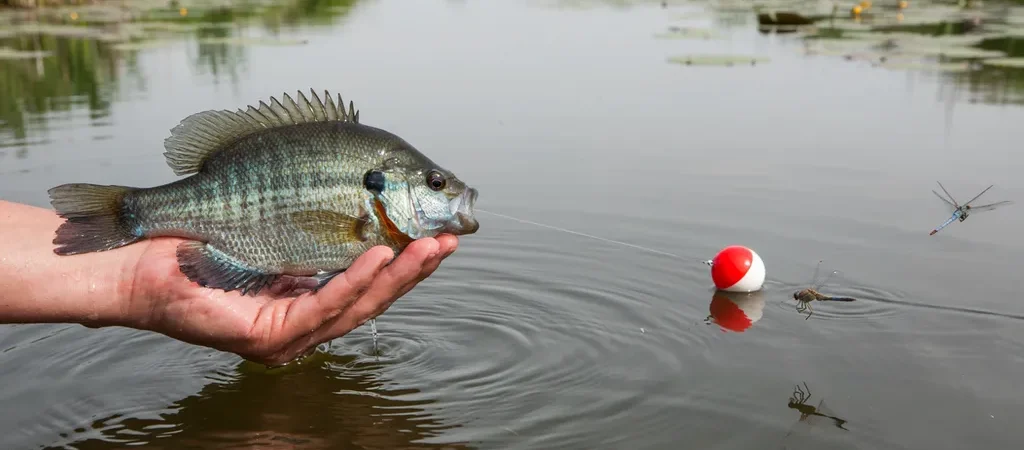
⚡ Quick Answer: To catch bluegill: fish a small hook (size 8–10) with a piece of worm under a bobber near weed edges, docks, or brush in 2–8 feet of water. Late spring spawning season is peak — look for the honeycomb of beds in shallow coves. Keep the bait small and the hooks smaller; bluegill have tiny mouths and giant enthusiasm.
Every angler’s story starts somewhere, and for millions it starts with a bluegill pulling a bobber under. But don’t file them away as kids’ fish — big “bull” bluegill are wary, hard-fighting, and delicious, and specialists chase them with the same obsession as bass anglers. Here’s the full guide, first bobber to trophy bull.
Finding Bluegill Year-Round
- Late spring (the glory weeks): water hits the upper 60s and bluegill colonize shallow coves to spawn, fanning honeycomb clusters of beds you can SEE. Polarized glasses turn it into sight-fishing.
- Summer: dawn and dusk shallow; midday they slide to weed lines and deeper docks. Big bulls hold deeper than the dinks — fish past the first fish you find.
- Fall: follow weed edges as they die back; bluegill group up in remaining cover.
- Winter: deep basins and standing timber — tiny jigs fished dead slow (and premier ice-fishing targets; see our ice fishing guide).
The Setup: Small Wins
- Hook size 8–10 — the single biggest factor. Bluegill mouths are dime-sized; big hooks feed them for free.
- Light line (2–6 lb) on an ultralight rod turns palm-sized fish into sport and detects the soft bites.
- The classic rig: small bobber, split shot, baited hook 18–36 inches down. Adjust depth until the bites start.
- Baits: a PIECE of worm (not the whole thing), crickets, waxworms. Artificials: 1/32 oz jigs and tiny spinners for covering water.
Bed-Fishing Etiquette
Spawning colonies make easy fishing — enjoy it with a light touch. Keep the mid-size males for the pan (they’re the most numerous), and release the biggest bulls: those genetics build trophy ponds, and studies show big-bull harvest shrinks a lake’s bluegill size over time.
Why Bluegill Are the Perfect Teacher
Instant feedback, visible strikes, forgiving of imperfect technique, and present in every pond in America — no species builds angler skills (or angler kids) faster. Our teaching kids to fish guide is basically a bluegill delivery system. A simple panfish kit covers everything:

- 【Unique Design】 All of these jig heads have unique 3D eyes, making them so attractive to most species of fish. Bright co…
- 【V Shape Hook】It’s sharp hook, making it penetrate the fish very quickly. And the high carbon steel makes it very hard t…
- 【Install Bait Firmly】: Fishing jig heads are equipped with bait keeper to securely hold your live bait or soft plastic l…

- 12 FISHING BOBBERS FISHING ASSORTMENT LARGE & SMALL / 12 FISH BOBBERS RED AND WHITE! Always looking for the right size b…
- MULTIPLE PERFECT SIZED FISHING FLOATS AND BOBBERS – Sizes included: 3 (1 Inch Bobbers), 3 (1 and 1/4 inch bobbers), 3 (1…
- CLASSIC COLOR FISH BOBBERS RED AND WHITE – This pack of fishing gear bobbers have a specially designed top and bottom th…
And when the bluegill lessons stick, the same spots hold their big cousins — graduate to our crappie guide and largemouth playbook.
Frequently Asked Questions
What is the best bait for bluegill?
Live bait like worms, crickets, and mealworms is deadly on bluegill, fished under a small bobber. Tiny jigs, small spinners, and flies also work well. Bluegill have small mouths, so use small hooks and baits. They are eager biters, which makes them perfect for beginners and kids.
Where do you catch bluegill?
Bluegill hold near cover in warm, shallow water, around docks, weed beds, fallen trees, and brush, especially in ponds and lake edges. In late spring they spawn in shallow beds and bite aggressively. Look for structure and shade, and you will usually find bluegill nearby.
When is the best time to catch bluegill?
Bluegill bite well through the warm months, with late spring during the spawn being especially productive as they gather in the shallows. Early morning and evening are prime, though bluegill will bite throughout the day. Their willingness to bite makes them a great target any warm day.

Written by Tom Rivera · Fishing & Hunting
Tom has spent four decades outdoors — on lakes, rivers, and treestands — and still fishes most weekends. These days his favorite catch is watching his grandkids reel in their first bluegill.