
Heads up: this post contains affiliate links. If you buy through one, we may earn a small commission at no extra cost to you. As an Amazon Associate, we earn from qualifying purchases.
⚡ Quick Answer: A 6-inch hand auger covers most beginners chasing panfish through early and mid-season ice. Step up to an 8-inch electric auger if you drill lots of holes, fish late-winter ice over a foot thick, or target walleye and pike. Gas still rules all-day drilling marathons, but modern electrics have closed most of the gap with none of the fumes.
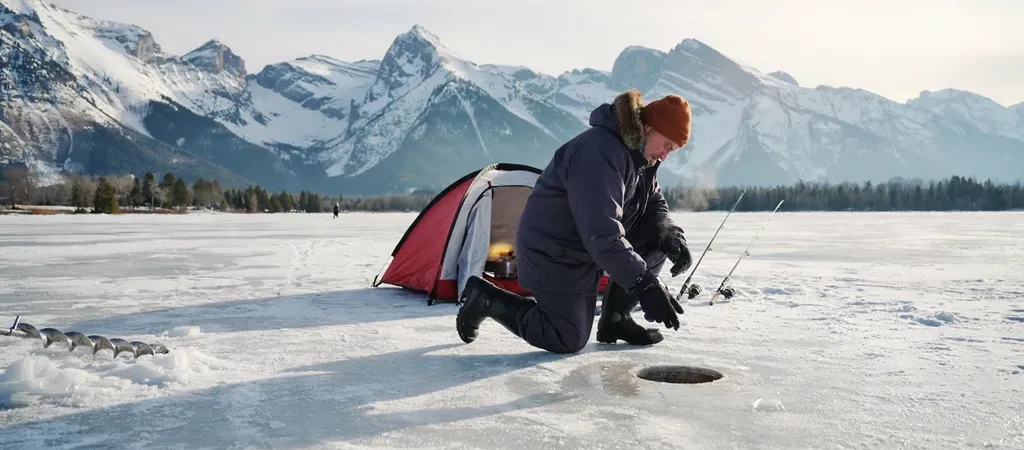
Nothing shapes an ice fishing day like your auger. It decides how many holes you are willing to drill, and the number of holes you drill decides how many fish you find — mobility is the whole game under the ice. Here is how to pick the right one the first time.
This guide is part of our ice fishing series — see the best ice fishing gear for beginners for the full kit, and our ice thickness safety guide before you head out.
Hand Augers: Cheap, Light, and Honest Work
A hand auger is two blades on a crank, and it is all most beginners need. Through 6 to 10 inches of early-season ice, a sharp 6-inch hand auger opens a hole in under a minute and costs a fraction of powered options. It never runs out of battery, weighs a few pounds, and fits across a sled without a second thought.
The honest downside arrives in February: two feet of ice turns every hole into a workout, and hole-hopping — the tactic that actually finds fish — stops being fun. If you fish a handful of times a year on early ice, a hand auger is the right buy. If you fish hard all winter, it becomes the backup.
Electric Augers: The Modern Default
Lithium-battery augers have taken over the sport for good reason: push a button, and an 8-inch hole appears in seconds, quietly, with no fumes and no pull cord. Most current models drill dozens of holes per charge — plenty for a full day of searching. They shine inside shelters, where running gas is a genuine safety problem.
Two cold-weather habits keep them reliable: store the battery inside your coat or a warm pocket between drilling runs (cold kills lithium output), and always carry the battery at least half charged. Budget for a second battery if you fish dawn to dark.
Gas Augers: Still the Marathon King
For resort operators, guides, and anyone punching fifty holes through late-season concrete, gas augers still deliver unlimited runtime with a fuel can in the sled. The trade-offs are weight, noise, exhaust, and maintenance — carburetors and cold mornings have a complicated relationship. Most recreational anglers no longer need one, but nothing else drills all day without counting electrons.
What Size Hole?
- 6-inch: panfish, trout, and fast drilling — the mobility choice.
- 8-inch: the versatile standard — walleye, bass, and pike fit, and so does every sonar transducer.
- 10-inch: big pike and lake trout country — but each hole takes noticeably more effort and ice.
When in doubt, choose 8 inches. The extra capacity costs little with a powered auger, and no fish of your life ever escaped because the hole was too big.
Blade Care Is Half the Auger
A dull auger makes even a powered unit feel broken. Keep the blade cover on for travel — one bounce across a truck bed chips edges — and dry the blades after every trip so they don’t rust in the case. Hand-auger blades can be professionally sharpened or replaced for the cost of lunch, and most anglers swap them every season or two. If your auger suddenly drills slowly and skates on the ice, the blades are telling you something.
The Bottom Line
Buy the 6-inch hand auger to find out whether ice fishing grabs you — for many anglers it does, hard. When the sport sticks, the 8-inch electric is the upgrade that changes how you fish, because drilling stops being a cost and starts being a strategy.
Recommended Gear
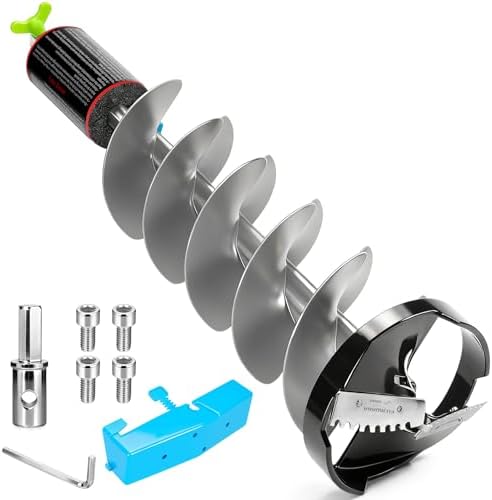
- 【Universal Fit】: Designed for the ice angler’s convenience, our universal ice auger bit works seamlessly with most stand…
- 【SK5 high-carbon steel blade】: 1.3x harder than standard stainless steel, stays sharp in cold. Dense-tooth design ensure…
- 【Safety by Design】 : Our auger bits are engineered for safety. The integrated non-sink system, featuring a buoyant foam …
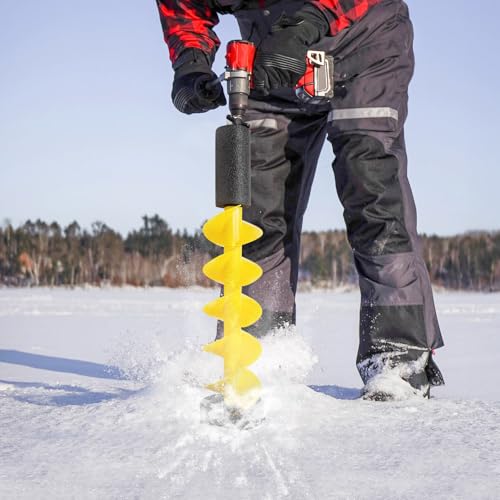
- 【Durable Construction for Longevity】Crafted from high-class aluminum alloy, nylon, and stainless steel with precise die …
- 【Efficient Ice Penetration】Featuring a spiral design and positioning point, this auger quickly penetrates ice layers, si…
- 【Universal Compatibility & Safety】With a universal adapter, this drill bit fits various electric drills, and its float d…

- WEIGHS LESS THAN 5LB – Features high-strength composite flite material to reduce weight while maintaining flexibility an…
- TURBO HIGH-SPEED CUTTING SYSTEM – An aggressive multi-edge cutting system that smoothly and efficiently falls through th…
- AUGER CENTERING POINT – Allows ultra-precise blade positioning when opening new holes or re-opening frozen ones.
Frequently Asked Questions
What size ice auger should a beginner get?
A 6-inch hand auger is the classic starter: light, affordable, and quick through early-season ice, with holes big enough for panfish and trout. If you know you’ll chase walleye or fish all winter, start at 8 inches — ideally electric — so late-season ice doesn’t bench you.
Are electric ice augers worth it?
For anyone who fishes more than a few times a winter, yes. Modern lithium augers drill dozens of 8-inch holes per charge, run quietly and fume-free (critical inside shelters), and make the hole-hopping strategy that finds fish effortless. Keep the battery warm between uses and carry a spare for full days.
How many holes can an electric auger drill on one charge?
Most current 8-inch lithium models advertise 50 to 100+ holes through a foot of ice, and real-world winter numbers land lower but still cover a full day of searching. Cold is the variable — storing the battery in a pocket between runs preserves a surprising amount of capacity.

Written by Jake Miller · Camping & Gear
Jake grew up pitching tents before he could drive and has spent 15+ years camping, car-camping, and gear-testing his way across the country. If it can be cooked over a fire or packed into a trunk, he has an opinion on it.