
Heads up: this post contains affiliate links. If you buy through one, we may earn a small commission at no extra cost to you. As an Amazon Associate, we earn from qualifying purchases.
⚡ Quick Answer: To signal for rescue, use the universal distress pattern of three: three whistle blasts, three fires, or three flashes of light, repeated. A signal mirror, a bright whistle, and a satellite messenger are the most effective tools. Make yourself big and visible in an open area, and keep signaling until help arrives.
When something goes wrong far from help, your ability to attract attention can make the difference between a short wait and a desperate one. Rescuers scan for anything that stands out from nature, so your job is to be seen and heard. Here are the proven ways to signal for rescue and the small, light tools that dramatically improve your odds.
The Universal Signal: Three of Anything
Across the world, three of a signal means distress. Three whistle blasts, three gunshots, three fires in a triangle, or three flashes of light tell anyone who notices that you need help, while a single sound reads as normal. Pause, then repeat the set of three at regular intervals. Rescuers are trained to recognize this pattern, so make your signals deliberate and repeated rather than random.
Carry a Whistle and Use It
A whistle is the cheapest, lightest, and most effective audible signal you can carry, and it belongs on every pack strap. It carries far farther than your voice and takes almost no energy to use, so you can keep signaling for hours without going hoarse. Blow three sharp blasts, wait, and repeat. In poor visibility, when searchers cannot see you, sound may be your best chance of being found.
Signal Mirrors and Light
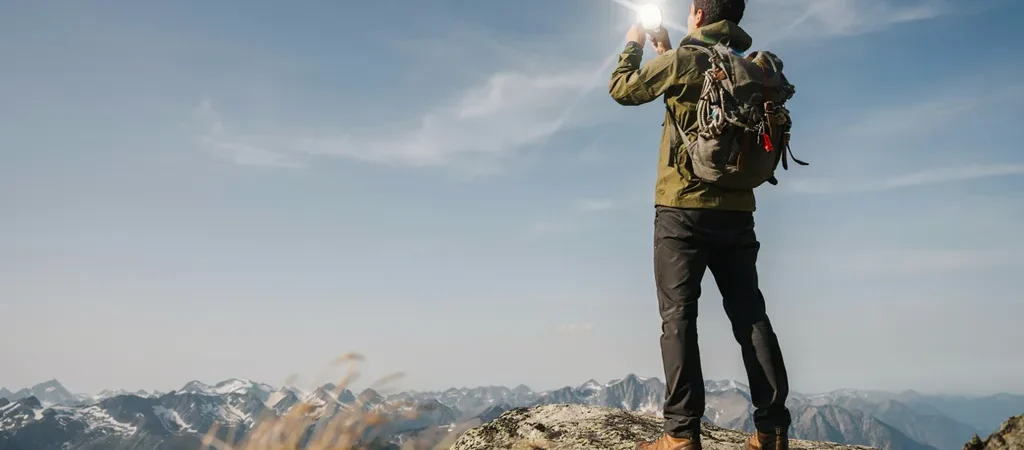
On a sunny day a signal mirror is astonishingly powerful, flashing sunlight that can be seen for many miles, even by aircraft. Aim the reflected flash toward any person, vehicle, or plane you see, sweeping the horizon if you are not sure where help is. After dark, a headlamp or flashlight flashed in threes, or aimed at a passing aircraft, serves the same purpose. Keep a mirror and a light in your kit at all times.
Make Yourself Big and Visible
- Move to an open area like a clearing, ridge, or shoreline where you can be seen from a distance and from the air.
- Lay out bright gear, clothing, or a tent, and use contrast against the ground such as dark items on snow or bright items on rock.
- Build large ground symbols: a big X means need help, and an arrow can show your direction of travel.
- Add motion, since movement catches the eye. Wave bright fabric rather than standing still.
Fire and Smoke
A fire is a strong signal day and night: flames stand out after dark, and by day you can throw green vegetation onto the fire to make thick smoke that shows against the sky. Three fires spaced in a triangle are a recognized distress sign. Build signal fires only where it is safe and legal to do so, well clear of anything that could spread, and never risk starting a wildfire.
The Modern Lifeline: Satellite Messengers
The surest way to summon help beyond cell range is a satellite messenger or personal locator beacon, which can send your exact location to rescuers with the push of a button. For any remote trip these devices are worth their weight many times over. Combine one with traditional signals so that once help is on the way, you can guide them to your precise position with sound and light.
Be Found
Signaling is about standing out and staying consistent. Carry a whistle, a mirror, a light, and ideally a satellite messenger, position yourself where you can be seen, and use the rule of three. Keep signaling and stay put, and you give rescuers every chance to bring you home.
Recommended Gear

- Package Includes: you will receive 50 emergency whistles, along with an equal number of lanyards and keychains for easy …
- Practical Material: our survival whistles are made of aluminum alloy, making them sturdy and wear-resistant, suitable fo…
- Multiple Styles: our whistles with keychain come in five bright colors: red, green, purple, gold, and blue; The colors a…

- Abundant Quantity: This bulk whistle set includes 120 orange emergency whistles, providing ample supply for daily use an…
- Quality and Reliable: Crafted from quality plastic, these survival whistles are sturdy, lightweight, and waterproof. The…
- Powerful Sound Projection: Featuring a dual-tube design, these emergency whistles produce a high-pitched sound that cuts…

- Super Loud: Our emergency whistle is double tubes design. The kayak whistle can provide you powerful dual sound up to 12…
- Rescue Design: The marine whistle and lanyard are all in eye-catching orange, easy to find by others. You can hang the e…
- Wide Use: The storm whistle is small in size and portable, no matter you are hiking, exploring, rowing, hunting, hiking,…
Frequently Asked Questions
What is the universal signal for help?
Three of anything: three whistle blasts, three fires in a triangle, or three flashes of light, repeated at intervals. A single sound reads as normal, but a set of three signals distress, and rescuers are trained to recognize it. Pause between sets and keep repeating them.
What is the best tool to signal for rescue?
A whistle is the cheapest and most effective audible signal, carrying far farther than your voice with little effort. A signal mirror can flash sunlight for miles, even to aircraft, and a satellite messenger or personal locator beacon is the surest way to summon help beyond cell range. Carry all of them for remote trips.
How can I be seen by search and rescue?
Move to an open area like a clearing, ridge, or shoreline where you can be seen from a distance and the air. Lay out bright gear, build a large ground X, and add motion by waving bright fabric. Contrast helps, so place dark items on snow or bright items on rock.
Written by Jake Miller · Camping & Gear
Jake grew up pitching tents before he could drive and has spent 15+ years camping, car-camping, and gear-testing his way across the country. If it can be cooked over a fire or packed into a trunk, he has an opinion on it.