
Heads up: this post contains affiliate links. If you buy through one, we may earn a small commission at no extra cost to you. As an Amazon Associate, we earn from qualifying purchases.
⚡ Quick Answer: For hiking rain gear, prioritize a waterproof-breathable shell jacket with pit zips over a cheap non-breathable one — you get soaked from sweat otherwise. Add rain pants for sustained rain and cold, and always line your pack with a trash bag (pack covers leak). A packable shell lives in your daypack year-round, rain or shine, because wind is reason enough.
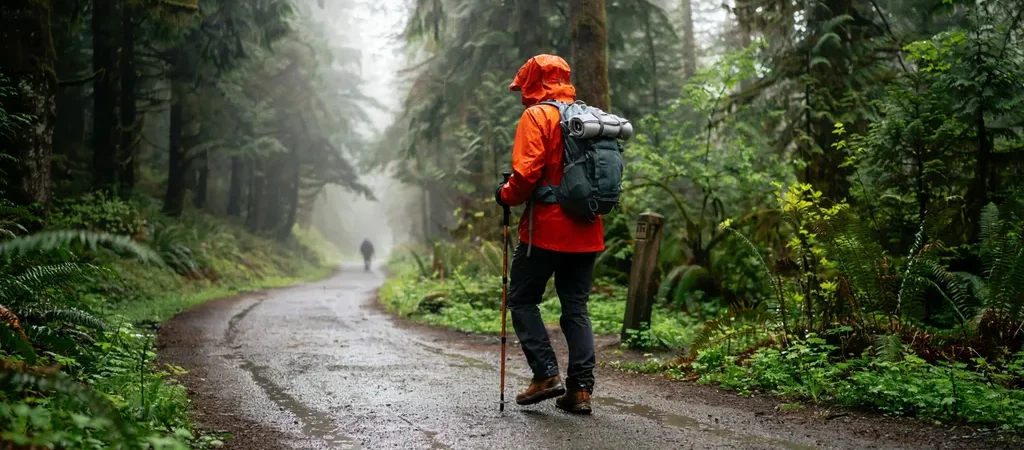
Weather turns fast in the mountains, and being wet plus wind is the recipe for a miserable — sometimes dangerous — day. Good rain gear is less about staying bone-dry (nothing does in a downpour) and more about staying warm and functional. Here is what actually matters and the pieces worth carrying.
What Makes a Good Rain Shell
- Waterproof AND breathable: the whole game. A cheap non-breathable rain jacket traps sweat until you are soaked from the inside. Look for a membrane (or quality coating) plus ventilation.
- Pit zips: underarm vents dump heat and moisture on climbs — arguably more important than the fabric rating.
- Adjustable hood, cuffs, and hem: a hood that turns with your head and cinches down keeps rain off your face and out of your collar.
- Packability: if it stuffs into its own pocket, you will actually carry it every trip — which is the point.
The Layer That Earns Its Keep Year-Round
A rain shell is also your wind shell. Even on dry days, a windproof layer doubles the warmth of everything under it — which is why the shell lives in the pack from spring through fall. Top picks that balance protection, breathability, and weight:


- 100% recycled polyester ripstop with non-PFC durable water-repellent (non-PFC DWR) finish
- Imported
- WHEN THE WEATHER TURNS: Featuring waterproof, breathable, and seam-sealed recycled fabric, the Women’s Antora Waterproof…
Rain Pants: When You Actually Need Them
Skip them for warm summer showers (you dry fast). Bring them for cold rain, sustained downpours, wet brushy trails, and shoulder-season backpacking, where wet legs mean real heat loss. Full-zip or half-zip versions go on over boots without a wrestling match:

The Free Upgrade Everyone Skips
Line your pack with a trash compactor bag. Pack covers leave the back panel exposed and blow off in wind; a liner keeps your sleeping bag and layers bone-dry no matter what. It weighs nothing and works better than a $40 cover — a core trick from our packing guide and rain camping guide.
Care and Reproofing
- Wash rain gear when it stops beading (dirt clogs breathability), using a tech wash, not detergent.
- Restore the water-repellent finish (DWR) with a wash-in or spray-on treatment once a season.
- A jacket that “wets out” (soaks the outer face) usually just needs reproofing, not replacing.
Pair rain gear with the right base layer (our base layer guide) and know the hypothermia warning signs — wet and windy is exactly when they matter most.
Frequently Asked Questions
What rain gear do I need for hiking?
At minimum, a waterproof-breathable rain jacket with a hood, and ideally rain pants for sustained downpours. Pack covers and gaiters help keep gear and legs dry. Look for taped seams and pit zips, which let you dump heat so you do not soak yourself in sweat from the inside.
What is the difference between water-resistant and waterproof?
Water-resistant gear repels light rain for a while but soaks through in a sustained downpour, while waterproof gear with a membrane and sealed seams keeps water out much longer. For serious hiking in wet conditions, choose waterproof-breathable gear rather than merely water-resistant.
How do you stay dry hiking in the rain?
Wear a waterproof-breathable jacket and pants, use a pack cover or liner, and manage sweat by venting with pit zips and pacing yourself. Avoid cotton, which stays wet, and carry a dry layer sealed in a bag. Managing internal moisture is just as important as blocking the rain.
Written by Sarah Brooks · Hiking & National Parks
Sarah fell in love with the outdoors on a childhood trip to the Smokies and has logged thousands of trail miles across 30+ national parks since. She is happiest above treeline with a map in hand.