
Heads up: this post contains affiliate links. If you buy through one, we may earn a small commission at no extra cost to you. As an Amazon Associate, we earn from qualifying purchases.
⚡ Quick Answer: A 12-inch (6-quart) cast iron camp Dutch oven with three legs and a flanged, coal-holding lid is the classic buy — it feeds 4–6 people, bakes as well as it stews, and outlives its owner. Add a lid lifter and welding gloves. Skip legless kitchen Dutch ovens for campfire cooking; the legs and lid rim are the whole design.
The camp Dutch oven is the oldest piece of outdoor cooking gear that has never been improved — because it hasn’t needed to be. The same three-legged cast iron pot that fed wagon trains bakes cobbler at modern campgrounds, and one good oven becomes the pot your grandchildren argue over. Here is how to buy the right one the first time.
Once you have the pot, our Dutch oven camp cooking guide covers the coal-counting method, and the cast iron care guide keeps it beautiful for decades.
Camp vs. Kitchen: The Legs Are the Point
A camp Dutch oven has three stubby legs and a flat lid with a raised flange around the rim. The legs hold the pot above a bed of coals so heat circulates underneath; the flanged lid holds a second layer of coals on top. Together they turn the pot into a true oven — heat from above and below — which is why camp models bake bread, biscuits, and cobblers that legless kitchen pots simply cannot manage over a fire. The flat lid also flips into a bonus griddle on many models.
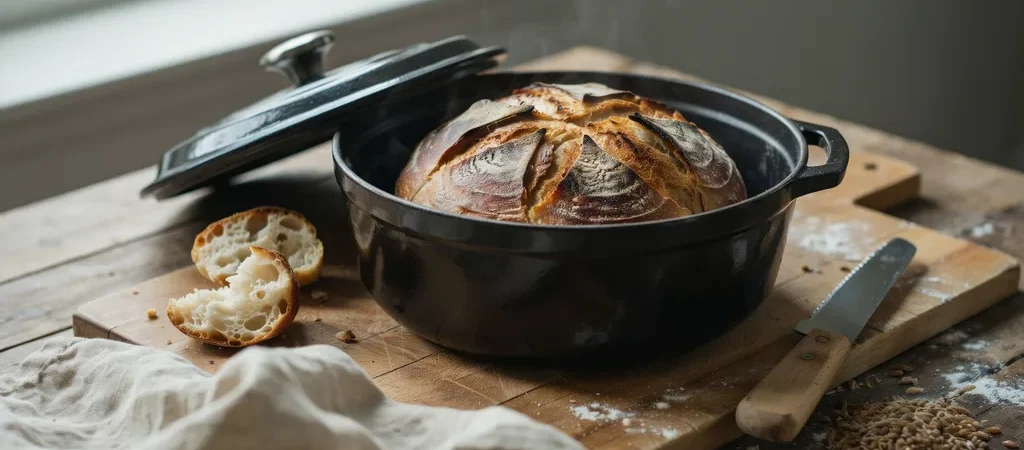
A kitchen (flat-bottom, domed-lid) Dutch oven is a wonderful tool on a stove or in an RV oven, but set it in a campfire and you are stewing, not baking. If you camp, buy the legs.
What Size Feeds Your Crew
- 10-inch (4-quart): couples and small families — most recipes for two to four, lighter to pack.
- 12-inch (6-quart): the universal answer — feeds four to six, fits whole chickens and full cobbler recipes, and is the size most camp recipes assume.
- 14-inch (8+ quart): group camp and scout-troop territory — wonderful for crowds, heavy enough that it lives wherever you put it down.
If you will only own one, own the 12. Cast iron does not mind being half full, but a 10-inch oven cannot grow when friends show up.
Cast Iron vs. Aluminum
Traditional cast iron holds and evens out heat like nothing else, shrugs off abuse, and builds a nonstick seasoning that improves with every meal — at the cost of serious weight (a 12-inch runs around 20 pounds) and a little maintenance. Cast aluminum versions weigh roughly a third as much and never rust, which makes them genuinely attractive for canoe trips and packing-space wars, but they run hotter and less evenly and will never develop that black-glass seasoning. Car campers: cast iron. Weight-counters: aluminum, with a watchful eye on the coals.
The Accessories That Actually Matter
- Lid lifter: lifting a coal-covered lid with pliers is how cobbler gets gravel in it — a proper lifter is non-negotiable.
- Leather welding gloves: better than any ‘grill glove’ for moving hot iron and rearranging coals.
- Lid stand or small trivet: gives the lid a clean landing spot mid-recipe.
- Charcoal chimney: briquettes are the easy, repeatable heat source — the chimney has them glowing in 15 minutes.
- Long tongs: for placing coals exactly where the recipe wants them.
A 60-Second Buying Checklist
- Three legs, flanged lid, snug lid fit with no rocking.
- Pre-seasoned is fine — every major maker ships ready to cook.
- Casting reasonably smooth inside; minor texture disappears under seasoning.
- A bail handle that stands up on its own (small thing, endlessly useful).
- 12-inch unless you’re certain your crowd is smaller forever.
Then go cook something. The first pot of campfire chili is the moment the purchase explains itself — and the recipes coming to our Food & Camp Cooking section this month will keep it busy all season.
Recommended Gear

- Heavy-Duty Camping Cookware: Designed for campfire coals, the Lodge Seasoned Cast Iron Camp Dutch Oven uses a flanged li…
- Heavy-Duty Camping Cookware: Designed for campfire coals, the Lodge Seasoned Cast Iron Camp Dutch Oven uses a flanged li…
- Bail Handle Convenience: A sturdy bail handle makes this portable cast iron pot convenient to carry, hang from a tripod,…
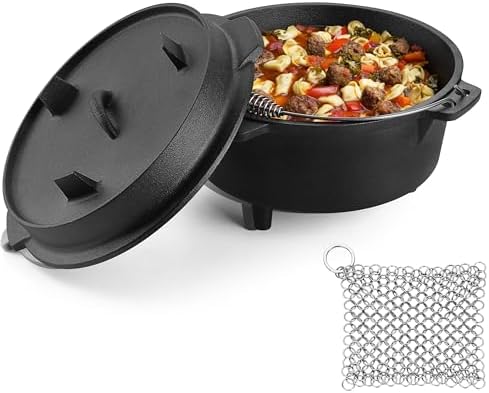
- [Pre Seasoning Cookware] – HaSteeL cast iron dutch oven is processed with food grade vegetable oil, Contains no syntheti…
- [Cheerful & Simple Cooking] – Our camping pot has excellent even heat distribution and retention, Keep food warming even…
- [Flexible & Safe to Use] – The deep pot has integrated handles on both side for convenient transfer, Also with a metal h…

- Heavy-Duty Camping Cookware: Designed for campfire coals, the Lodge Seasoned Cast Iron Camp Dutch Oven uses a flanged li…
- Versatile Lid: The Dutch oven lid also holds hot coals and inverts for use as a griddle
- Bail Handle Convenience: A sturdy bail handle makes this portable cast iron pot convenient to carry, hang from a tripod,…
Frequently Asked Questions
What is the difference between a camp Dutch oven and a regular Dutch oven?
A camp Dutch oven stands on three legs and wears a flat, flanged lid designed to hold coals on top — heat from above and below makes it a true outdoor oven that can bake. Kitchen Dutch ovens are flat-bottomed with domed lids, built for stovetops and indoor ovens, and can only stew over a fire.
What size Dutch oven is best for camping?
The 12-inch, roughly 6-quart size is the sweet spot: it feeds four to six people, handles whole chickens and full cobbler recipes, and matches what most camp recipes assume. Couples can drop to a 10-inch; groups step up to a 14 — but if you own only one, own the 12.
Should I get cast iron or aluminum for a camp Dutch oven?
Cast iron for most campers: unmatched heat retention, indestructibility, and a seasoning that improves for decades — the cost is about 20 pounds in a 12-inch. Cast aluminum weighs a third as much and never rusts, making it right for paddlers and tight packers, but it runs hotter and never builds true seasoning.

Written by Jake Miller · Camping & Gear
Jake grew up pitching tents before he could drive and has spent 15+ years camping, car-camping, and gear-testing his way across the country. If it can be cooked over a fire or packed into a trunk, he has an opinion on it.