
Heads up: this post contains affiliate links. If you buy through one, we may earn a small commission at no extra cost to you. As an Amazon Associate, we earn from qualifying purchases.
⚡ Quick Answer: A plain-English guide to picking trekking poles: aluminum vs carbon, flip vs twist locks, cork vs foam grips — plus three solid pairs to consider.
Trekking poles look like a small thing until the first time a pair saves your knees on a long descent. They add two points of contact for balance on stream crossings and loose rock, take real load off your joints downhill, and help set a steady rhythm on the climbs. If you’re shopping for your first pair, here’s what actually matters.
Aluminum vs Carbon Fiber
Aluminum poles are heavier by a few ounces but bend rather than snap under a hard load, which makes them forgiving for beginners and rough backcountry use. Carbon fiber is lighter and dampens trail buzz nicely, but it can crack if you pinch it between rocks. If you’re unsure, aluminum is the safe, budget-friendly default; carbon is a treat for weight-counters.
Locking Systems: Flip vs Twist
Lever (flip) locks are external clamps you can open and adjust with gloves on, and they rarely slip — the modern standard. Twist locks are lighter and cleaner-looking but can seize or slip over time. For reliability, look for flip locks.
Grips: Cork, Foam, or Rubber
Cork molds to your hand and wicks sweat, making it the favorite for hot, long days. Foam is soft and cheap and also handles sweat well. Rubber insulates against cold, which is nice for shoulder-season and snow but gets clammy in summer. Many good poles pair a cork or foam grip with a foam extension below it for choking down on steep traverses.
How to Size Trekking Poles
Set the pole so that when the tip is on the ground, your elbow bends at roughly 90 degrees. Adjustable poles let you lengthen them a touch for descents and shorten them for climbs. If you’re between sizes, adjustable poles remove the guesswork entirely.
Three Pairs to Consider
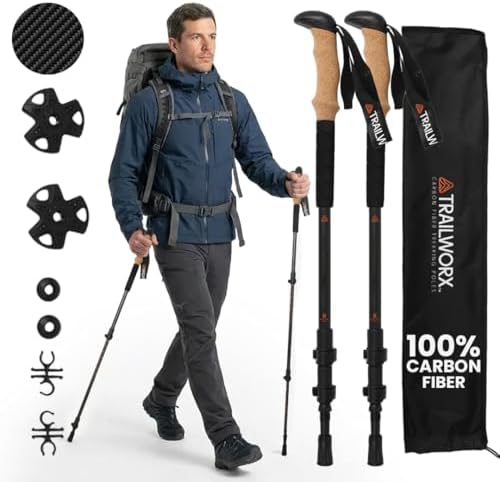
- ULTRALIGHT 3K CARBON FIBER, JUST 7.7 OZ PER POLE: Each pole weighs 7.7 oz (218g), over 30% lighter than aluminum poles, …
- 40% LESS VIBRATION THAN ALUMINUM: Aluminum poles bend under stress and send shock straight to your wrists and elbows; ou…
- CORK GRIP + 5″ EVA EXTENSION FOR STEEP CLIMBS: The 1.25″ contoured cork handle wicks sweat and molds to your hand to pre…

- Built to Last: Made of 3k 100% Carbon Fiber, each pole weighs only 7.6 oz allowing you to keep your backpacking gear lig…
- Added Comfort: We use moisture-wicking ergonomic cork grips that conform to your hand shape for the ultimate fit! A nons…
- Premium Stability: With our flip lock lever technology, our hiking poles are easy to adjust & lock in place securely. Mo…

- Easy Installation and Longevity: These cork handle attachments are simple to install on various hiking poles and designe…
- Comfortable Anti-Skid Grip: The cork hiking pole grips provide a soft and comfortable touch with an anti-slip surface to…
- Multi-Purpose Replacement: Designed as a versatile hiking stick handle grip replacement compatible with trekking poles, …
Poles are one piece of the puzzle — see the rest in our Best Hiking Gear guide, and if a bigger trip is on the horizon, our first backpacking trip walkthrough covers the whole load-out.
Frequently Asked Questions
Do trekking poles actually help?
Yes — studies show they reduce knee load noticeably on descents and improve balance on rough ground, stream crossings, and with heavy packs. Your legs still do the work; poles just distribute the abuse.
How do I size trekking poles?
Elbow at 90 degrees with the tip on the ground — that is your baseline length. Shorten 5–10cm for sustained climbs, lengthen for descents. Adjustable poles make this a ten-second habit rather than a purchase decision.
What is the difference between cheap and expensive trekking poles?
Weight and locking mechanisms, mostly: $30 aluminum poles with flick locks do the job for most hikers and survive abuse. Premium carbon saves ounces for long-milers but cracks where aluminum bends. Skip twist locks at every price.

Written by Sarah Brooks · Hiking & National Parks
Sarah fell in love with the outdoors on a childhood trip to the Smokies and has logged thousands of trail miles across 30+ national parks since. She is happiest above treeline with a map in hand.