
Heads up: this post contains affiliate links. If you buy through them, WildMorrow may earn a small commission at no extra cost to you. As an Amazon Associate, we earn from qualifying purchases.
⚡ Quick Answer: Wilderness first aid basics: why prevention is 90 percent of it, how to build a real kit, handling blisters, sprains, cuts and bites, and the serious few (hypothermia, heat stroke, bleeding) to know cold.
Most outdoor emergencies aren’t dramatic. They’re a rolled ankle two miles from the car, a blister that turns a hike into a hobble, a kid’s split knee, a sudden chill after an unexpected soaking. Wilderness first aid is less about heroics and more about handling the small stuff before it becomes big, and knowing the few genuinely serious situations cold. Here are the basics every hiker, camper, and angler should carry in their head and their pack.
Prevention is 90 percent of first aid
The best emergency is the one that never happens. Hydrate and fuel before you’re depleted, tape hot spots the moment you feel them (not after they blister), layer to avoid getting cold and wet, and turn around with daylight to spare. Most rescues trace back to a small ignored problem plus fading light. Our outdoor safety guide covers the habits that prevent trouble.
Build (or buy) a real kit
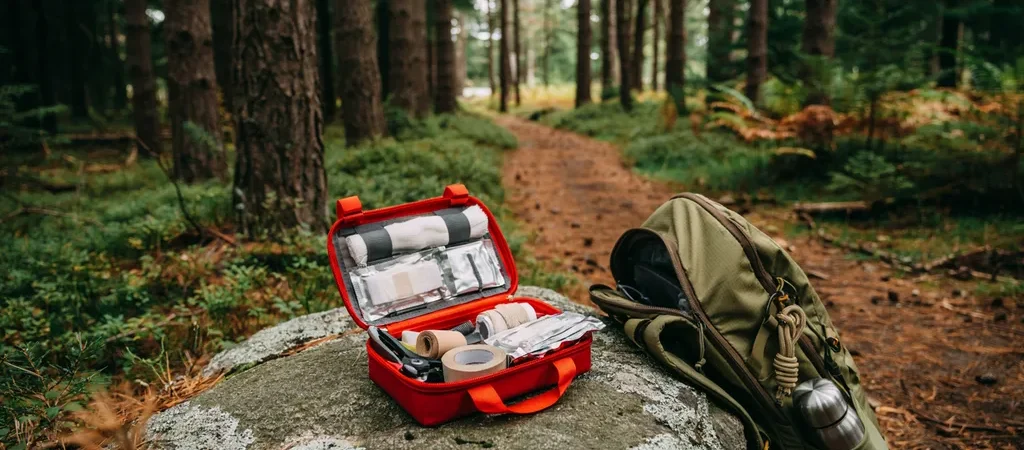
A pre-assembled kit sized to your group and trip is the easiest start, then customize it. Non-negotiables: blister care (moleskin or blister bandages), assorted bandages and gauze, medical tape, antiseptic wipes, tweezers, pain and antihistamine meds, and any personal prescriptions. Add an emergency blanket and a splint for backcountry trips. Know how to use everything before you need it.

- Kit measures approximately 6 x 8.5 x 1.5 inches; accommodates 1-4 people for 1 day
- Coated nylon outer bag with a waterproof inner plastic storage pouches work in any weather
- Contains a wide array of medications to treat pain, inflammation, and common allergies

- Polyethylene
- Hop in this emergency shelter and improve your odds of survival when you and a partner are forced to spend an unexpected…
- Made from tear-resistant polyethylene, this bivvy reflects 90% of body heat back to you, keeping you warm.

- SUPPORT AND STRENGTH – Treat injured and fractured limbs with this lightweight and flexible splint.
- CONVENIENT SIZE – Rolled splints are much more easy to store and transport than a planular design. The unrolled split me…
- SUPERIOR ALUMINUM INTERIOR – The aluminum core housed between the outer foam shell is substantially lighter and more fle…
The common problems, handled
Blisters: cover hot spots early; once blistered, pad around (not on) them. Sprains: remember RICE (rest, ice or cold water, compression, elevation) and improvise a splint for support out. Cuts: stop bleeding with direct pressure, clean with treated water, close and cover. Bites and stings: antihistamine, cold, and watch for allergic reactions. Small burns: cool with water, cover loosely, never pop blisters.
The serious few: know these cold
Hypothermia (shivering, confusion, clumsiness): get dry, insulated, and add warm calories and fluids immediately; it kills in conditions people underestimate. Heat exhaustion/stroke: cool aggressively and hydrate; stroke (confusion, no sweating) is a true emergency. Severe bleeding: hard direct pressure, and know how to improvise a tourniquet as a last resort. When something is beyond your skill, your job is to stabilize, keep the person warm and calm, and get help. Three of anything (whistle blasts, signals) means distress.
Learn it for real
This article is a primer, not a certification. A one-day Wilderness First Aid course from NOLS, the Red Cross, or a local outfitter is the single best outdoor investment you can make, and it’s genuinely fun. Carry the knowledge and the kit on every trip, from a day hike to a backpacking weekend. This is general information, not medical advice.
Frequently Asked Questions
What first aid skills matter most in the wilderness?
Bleeding control (direct pressure, wound packing), sprain stabilization, recognizing hypothermia and heat illness, and the judgment call of when to self-evacuate versus send for help. A weekend Wilderness First Aid course teaches all four better than any article.
What should be in a wilderness first aid kit?
Beyond bandages: irrigation syringe, gauze rolls and trauma pad, elastic wrap, tape, blister care, tweezers, gloves, pain relievers and antihistamines, and any personal medications. Knowledge weighs nothing — the kit exists to support skills.
When should you call for rescue instead of hiking out?
Suspected spine or head injury, uncontrolled bleeding, chest pain, breathing trouble, or any condition worsening despite treatment. When in genuine doubt, activate help early — rescues at 2pm end better than rescues begun at dusk.

Written by Sarah Brooks · Hiking & National Parks
Sarah fell in love with the outdoors on a childhood trip to the Smokies and has logged thousands of trail miles across 30+ national parks since. She is happiest above treeline with a map in hand.