
Heads up: this post contains affiliate links. If you buy through them, WildMorrow may earn a small commission at no extra cost to you. As an Amazon Associate, we earn from qualifying purchases.
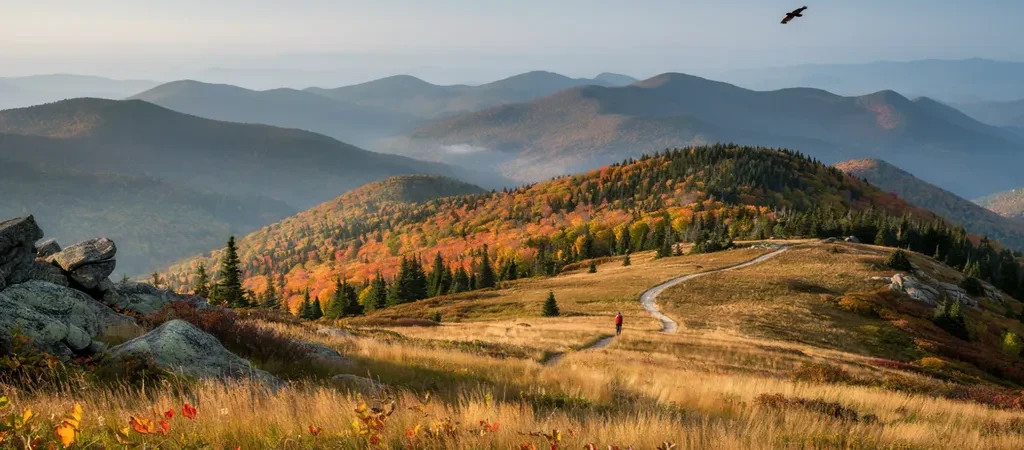
⚡ Quick Answer: Where to hike this fall: the best fall foliage hikes in America from the White Mountains and Smokies to Maroon Bells and the Ozarks, timed week by week to peak color.
Fall hiking is the sport’s victory lap: the bugs retreat, the air turns crisp, and entire mountain ranges catch fire in red and gold. But peak color is a moving target that sweeps south and downhill for six weeks, so timing matters as much as destination. Here’s where to chase it, north to south, plus how to dress for weather that can’t make up its mind.
1. White Mountains, New Hampshire (late September to early October)
The Kancamagus Highway is the most famous leaf drive in America, and the trails above it (Artist Bluff, Zealand Falls, the Franconia Ridge if you’re fit) put you inside the postcard instead of parked at it.
2. Adirondacks, New York (early October)
Forty-six high peaks and endless smaller summits above lakes that double every color. Cascade Mountain is the classic first 46er with a summit view worth double its effort.
3. Porcupine Mountains, Michigan (early October)
The Lake of the Clouds overlook is the Midwest’s single best fall view, and the old-growth forest below it glows like stained glass on a sunny afternoon.
4. Shenandoah National Park, Virginia (mid to late October)
Skyline Drive with a hundred overlooks, plus trails like Hawksbill and Stony Man that summit in under two hours. Weekends peak with the leaves; go midweek if you can.
5. Great Smoky Mountains, Tennessee/North Carolina (mid October to early November)
The most biodiverse forest in the country runs a six-week color show from ridge to valley floor. Pair the classic Smokies hikes with an apple-cider stop in the foothill towns.
6. Maroon Bells, Colorado (mid to late September)
Golden aspens under purple peaks: the most photographed mountain scene in North America, for good reason. Shuttle reservations are typically required in fall; book ahead.
7. Columbia River Gorge, Oregon (late October)
Waterfalls plus big-leaf maples in gold. Latourell and Multnomah deliver maximum color for minimum miles.
8. Ozarks, Arkansas (late October to early November)
The season’s encore: bluff-top trails at Whitaker Point and along the Buffalo National River glowing while the rest of the country rakes leaves.
Dressing for fall’s mood swings
Fall trailheads are freezing, summits windy, and afternoons t-shirt warm, which makes it layering season (the full system is in our what to wear outdoors guide). Waterproof boots for frosty mud, a wool base layer, and a rain shell close the loop.


Chase the color
Watch your state’s foliage tracker, aim a week early rather than a week late, and keep the day hike checklist in the car door. Golden hour in a golden forest is the best light of the hiking year.
Frequently Asked Questions
Where are the best places to hike in the fall?
Fall shines in New England and the Appalachians for foliage, the Great Smoky Mountains, the Blue Ridge, and aspen country in Colorado and Utah. Cooler temperatures also make fall the perfect season for desert and canyon hikes that are too hot in summer.
Why is fall a good time to hike?
Fall offers cool, comfortable temperatures, fewer bugs, thinner crowds after summer, and often spectacular foliage. Wildlife is active and the light is beautiful. The main trade-offs are shorter days and variable weather, so start early and carry layers and a headlamp.
What should I pack for a fall hike?
Bring layers for cold mornings and warm afternoons, rain gear, plenty of water, and a headlamp for early darkness. Wet leaves make trails slick, so wear good traction. Check the forecast and trail conditions, and start early to make the most of the shorter daylight.
Written by Sarah Brooks · Hiking & National Parks
Sarah fell in love with the outdoors on a childhood trip to the Smokies and has logged thousands of trail miles across 30+ national parks since. She is happiest above treeline with a map in hand.