
Heads up: this post contains affiliate links. If you buy through one, we may earn a small commission at no extra cost to you. As an Amazon Associate, we earn from qualifying purchases.
⚡ Quick Answer: How to choose camp cookware that nests small, heats evenly, and cleans up easy — materials explained, how many pieces you need, and sets worth considering.
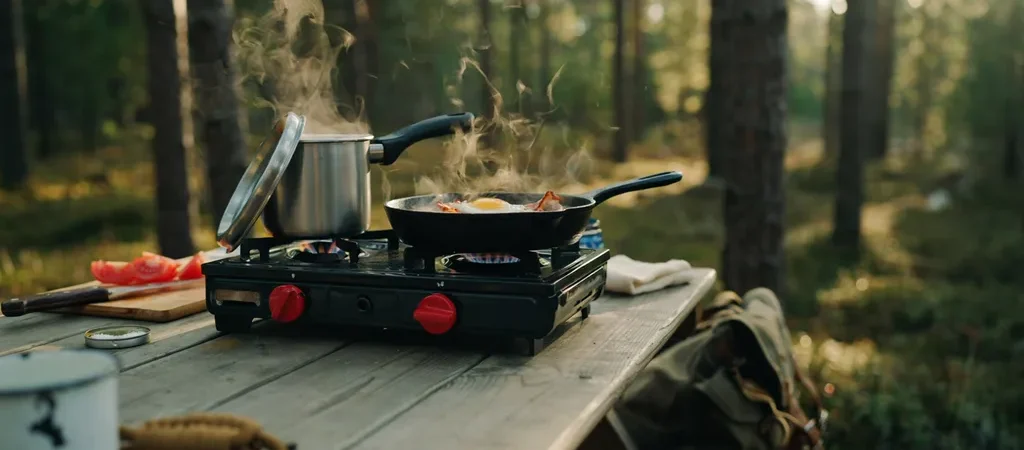
Camp cooking is half the fun of a trip — but only if your cookware cooperates. The right set nests down small, heats evenly over a camp stove or fire, and cleans up without a fight. Here’s what actually matters when you’re choosing camp cookware, and a few sets that hit the sweet spot.
What to Look For in Camp Cookware
Material sets the tone. Anodized aluminum is light and heats fast, making it the go-to for backpackers. Stainless steel is heavier but tougher and easy to clean — great for car camping. Cast iron is the champion for flavor and even heat but weighs a ton, so save it for the base camp. Whatever the material, look for pots and pans that nest together, lids that double as plates or strainers, and folding or removable handles that pack flat.
How Many Pieces Do You Need?
Solo and ultralight? A single pot, a lid, and a spork will get you through most freeze-dried and one-pot meals. Cooking for a family at a drive-in site? You’ll want a couple of pots, a real frying pan, and a proper utensil set. Buy for the trips you actually take, not the ones you imagine — an oversized kit just means more weight and more to wash.
Camp Cookware Worth Considering

- Stainless Steel: Lightweight, sharp, and easy to clean. Made from food-grade, 18/8 stainless steel material, offer excel…
- Upgrade Carry Case: Add the elastic band to prevent the cutlery from rattling while in transit and ensures your bag will…
- 5 PCS Utensils Set: The minimalist set comes with an adult-sized fork, spoon, knife, chopsticks, and carrying case. The …
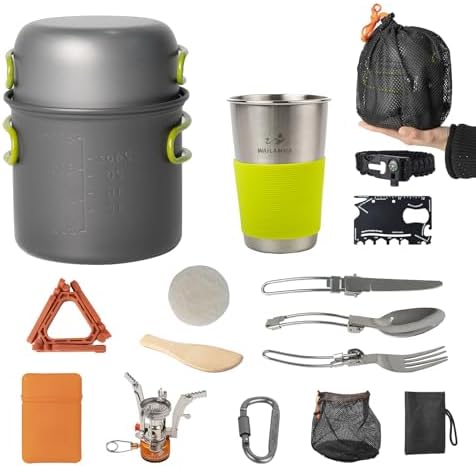
- High-Quality Material: Crafted from premium hard-anodized aluminum, our camping cookware set ensures exceptional durabil…
- Anti-Scalding Design: The cookware set features a high-temperature resistant, anti-scalding pot lid and silicone ring ha…
- Easy to Clean: Enjoy hassle-free cooking and cleaning with our camping pots and pans. The smooth, non-stick surfaces and…

- COMPLETE CAMP KITCHEN: This 26-piece camping accessories set is the ultimate travel kit, with everything you need to pre…
- ULTRA-DURABLE CONSTRUCTION: Built to withstand the rigors of camp life, this pan set includes an 8-inch fry pan, 4-quart…
- CLEVER NESTING DESIGN: This space-saving set features a cooking pot, stainless steel pan, and plate set that nest togeth…
Care Tips That Make Gear Last
- Let cookware cool before washing to protect nonstick coatings and your hands.
- Pack a small scraper and biodegradable soap; wash well away from water sources.
- Dry everything fully before nesting it away to prevent rust and odors.
Cooking with cast iron? Don’t miss our cast iron care guide, and see the full kitchen in our Best Camping Gear roundup.
Frequently Asked Questions
What cookware do I need for camping?
A basic kit includes a pot, a pan, and a way to eat and drink, such as a plate, bowl, mug, and utensils. Car campers can bring larger, heavier cookware and even cast iron, while backpackers want lightweight, nesting pots. Choose a set sized to how many people you cook for.
Is nonstick or stainless camping cookware better?
Nonstick cookware is easy to cook with and clean, which is great for eggs and delicate foods, but the coating can wear over time. Stainless steel and titanium are more durable and handle high heat and scrubbing, though food can stick. Backpackers favor light titanium, while car campers often prefer stainless or cast iron.
How do you clean cookware while camping?
Wipe out food scraps first, then wash with a little biodegradable soap and water well away from any water source, straining and packing out food bits. For stuck-on food, boil a little water in the pot to loosen it. Dry cookware before packing to prevent rust and odors.
Written by Jake Miller · Camping & Gear
Jake grew up pitching tents before he could drive and has spent 15+ years camping, car-camping, and gear-testing his way across the country. If it can be cooked over a fire or packed into a trunk, he has an opinion on it.