Heads up: this post contains affiliate links. If you buy through one, we may earn a small commission at no extra cost to you. As an Amazon Associate, we earn from qualifying purchases.
⚡ Quick Answer: The best first aid kits for hiking and camping — pre-built vs. DIY, what a trail kit must handle, top Adventure Medical Kits picks, and the items worth adding.
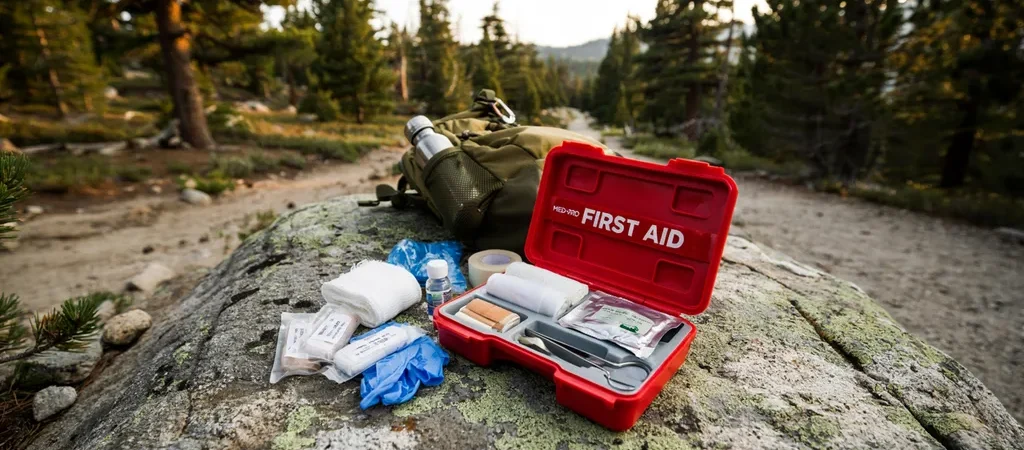
Most outdoor injuries are boring: blisters, scrapes, splinters, headaches, a rolled ankle. A good first aid kit handles the boring stuff well and gives you a fighting chance at stabilizing something serious until help arrives. Here’s what a real outdoor kit needs, the best pre-built options, and the items worth adding yourself.
Pre-Built vs. DIY
Pre-built kits win on organization — everything labeled, packed in a logical order, in a pouch that survives a pack. Build-your-own wins on knowing exactly what you have. The smart play: buy a quality pre-built kit, then customize it. You get the organization and the fit.
What Your Kit Must Handle
- Blisters: the #1 trail injury. Moleskin or blister bandages, and tape.
- Cuts and scrapes: assorted bandages, gauze, antiseptic wipes, antibiotic ointment.
- Sprains: an elastic wrap turns a trip-ending ankle roll into a slow walk out.
- Aches and allergies: ibuprofen, antihistamine, and any personal meds.
- Tools: tweezers (splinters, ticks), small scissors, nitrile gloves, safety pins.
- Serious bleeding: a trauma pad or compression bandage for the emergencies you hope never happen.
Top Outdoor First Aid Kits
Adventure Medical Kits builds the gold-standard outdoor kits, and compact 100+ piece kits cover day hikes and glove boxes:

- ESSENTIALS FOR EMERGENCY: Everything you need is in this first aid kit! Our kit includes over 150 professional-grade med…
- PORTABLE DESIGN: 6.4″ x 4.9″ x 2.7″ compact size, 0.73 lbs lightweight, features a compact, travel-friendly design, Prem…
- SMART AREA CLASSIFICATION DESIGN: We’ve separated the whole emergency bag into small independent compartments, which is …

- Limited Edition – This mini medical won’t be around forever. Collect and keep them all as new styles are introduced year…
- Designed for Casual Outdoors – This mini medical kit is perfect for casual hikes, bikes, and day-trips
- Treatment for cuts, scrapes – Treat cuts and scrapes with basic first aid supplies, including adhesive bandages, butterf…

- ESSENTIALS FOR EMERGENCY-This first aid kit includes 216 pieces of essential supplies to handle emergencies in daily …
- ORGANIZED EMERGENCY FIRST AID KIT-This first aid bag features divided compartments with labeled sections, keeping sup…
- PORTABLE FIRST AID KIT-The Homestockplus first aid kit features a compact design (5.9″ x 7.9″ x 3.6″) and weighs ju…
What to Add to Any Kit
- Your personal medications — the item no pre-built kit can include.
- More blister care than you think you need.
- A tick key or fine-tip tweezers in tick country.
- Electrolyte packets for heat and long climbs.
- A small card with emergency contacts and any allergies.
The Kit Is Half; Knowledge Is the Other Half
A kit you don’t know how to use is just weight. Our wilderness first aid basics guide covers the skills side, and a weekend wilderness first aid course is one of the best investments any outdoorsperson can make. Check the kit each season: replace what you used, swap expired meds, and re-stock blister supplies. Pack it at the top of your bag — first aid buried under the tent is first aid you can’t reach.
Frequently Asked Questions
What should be in an outdoor first aid kit?
A solid kit includes adhesive bandages, gauze and tape, blister care, antiseptic wipes, tweezers, pain relievers, antihistamines, any personal medications, and gloves. Add supplies matched to your trip length and group size, plus knowledge of how to use them, which matters as much as the contents.
Do I need a special first aid kit for hiking?
A purpose-built outdoor or wilderness kit is worth it because it emphasizes blister care, wound cleaning, and compact, durable, waterproof packaging suited to the trail. You can also build your own, but a dedicated kit ensures you have the essentials organized and ready when you need them.
How big should my first aid kit be?
Match the kit to your trip. A small personal kit covers day hikes, a mid-size kit suits weekend group trips, and longer or more remote expeditions call for a comprehensive kit and ideally wilderness first aid training. A kit you actually carry beats one left at home.

Written by Sarah Brooks · Hiking & National Parks
Sarah fell in love with the outdoors on a childhood trip to the Smokies and has logged thousands of trail miles across 30+ national parks since. She is happiest above treeline with a map in hand.