
Heads up: this post contains affiliate links. If you buy through one, we may earn a small commission at no extra cost to you. As an Amazon Associate, we earn from qualifying purchases.
⚡ Quick Answer: To cast a baitcaster without backlash, set the spool tension so a lure falls slowly and the spool stops when it lands, start the brakes high, and use a smooth, controlled motion. Feather the spool with your thumb as the lure flies and thumb it down as the lure lands. Practice with a heavier lure first.
A baitcasting reel gives you power, casting accuracy, and control that spinning gear cannot match, which is why serious anglers love them. The catch is the learning curve, and specifically the backlash, that maddening bird-nest of tangled line. The good news is that backlash comes from a few fixable causes, and with the right setup and a little practice anyone can cast a baitcaster smoothly. Here is how.
Understand Why Backlash Happens
Backlash occurs when the spool spins faster than line is leaving the reel, so the extra line piles up and tangles. It usually happens at the end of a cast when the lure slows down but the spool keeps spinning. Almost every backlash traces back to too little braking, too little spool tension, or too little thumb control, and all three are easy to dial in.
Set the Spool Tension Knob
Start with the small tension knob near the handle. Clip on your lure, hold the rod up, and press the spool release. Adjust the knob so the lure falls slowly to the ground and the spool stops the instant the lure lands, without the spool continuing to spin. This baseline setting prevents most backlash while you learn, and you can loosen it later for distance as your thumb improves.
Dial In the Brakes
Baitcasters have a braking system, either magnetic or centrifugal, that slows the spool during the cast. Start with the brakes set high, near maximum, which sacrifices a little distance but gives you a very forgiving cast. As you get comfortable and stop backlashing, gradually reduce the braking to gain casting range. Match the brakes to conditions too, adding brake when casting into a headwind.
Master the Thumb
Your thumb is the most important brake of all. Rest it lightly on the spool throughout the cast, feathering the line as the lure flies to keep the spool speed in check. As the lure approaches the water or the ground, press your thumb down to slow and then stop the spool just as the lure lands. This thumb control is the real skill, and it becomes second nature with practice.
Practice Steps for Beginners
- Tie on a heavier lure of half an ounce or more, which is far easier to cast than a light one.
- Practice on grass or open water with plenty of room and no wind at first.
- Use a smooth, gentle lob rather than a hard snap, letting the rod load and do the work.
- Aim for controlled accuracy over distance until backlashes become rare, then loosen the settings.
From Frustration to Finesse
A baitcaster rewards patience. Set your tension and brakes conservatively, keep your thumb on the spool, and practice with a heavier lure until the motion feels natural. Loosen the settings step by step as your control grows, and before long you will be placing lures with an accuracy and power that make the learning curve well worth it.
Recommended Gear
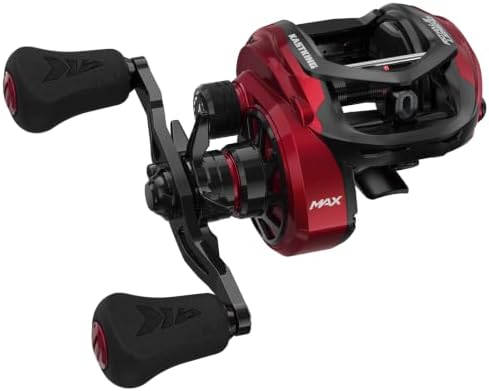
- Large Capacity CNC Aluminum Spool – The CNC-machined aluminum spool delivers lightweight strength and impressive line ca…
- 35 LB Max Drag for Freshwater & Inshore Fishing – Featuring up to 35 lbs of smooth drag, the Royale Legend Max 300 provi…
- Power Through Every Fight – Built with ultra-durable 85 HRB manganese brass gears, this baitcasting reel delivers superi…

- HaganeBody – The HAGANE Body is a metal reel body with high rigidity. The body stiffness and impact resistance virtually…
- SVS Infinity – Shimano’s newest innovation in brake system technology, SVS Infinity provides easy-to-manage, consistent …
- S3D Spool – This technology leads to reduced spool vibration. By designing a balanced and uniform thin wall aluminum con…

- DualBalance Magnetic Braking System: The DualBalance Magnetic Braking System is engineered with evenly balanced magnetic…
- High-Speed 8.0:1 Hybrid Gear System: Featuring an 8.0:1 high-speed gear ratio, this Spartacus II Plus Baitcasting Reel p…
- Ultra-Lightweight Nylitech Frame with Short Shaft Spool: Constructed with a Nylitech frame and side cover, this baitcast…
Frequently Asked Questions
How do you cast a baitcaster without backlash?
Set the spool tension so your lure falls slowly and the spool stops when it lands, start the brakes high, and keep your thumb resting lightly on the spool to feather the line. Thumb the spool down as the lure lands. Practice with a heavier lure first, and loosen the settings as your control improves.
Why does my baitcaster keep tangling?
Backlash happens when the spool spins faster than line leaves the reel, usually at the end of a cast. It traces back to too little braking, too little spool tension, or not enough thumb control. Tighten those settings, keep your thumb on the spool, and use a smooth cast rather than a hard snap.
Is a baitcaster harder to use than a spinning reel?
Yes, a baitcaster has a steeper learning curve, mainly because of backlash. But once you master the setup and thumb control, it offers more power, casting accuracy, and control than a spinning reel. Start with conservative settings and a heavier lure, and the skill comes quickly with practice.

Written by Tom Rivera · Fishing & Hunting
Tom has spent four decades outdoors — on lakes, rivers, and treestands — and still fishes most weekends. These days his favorite catch is watching his grandkids reel in their first bluegill.