Heads up: this post contains affiliate links. If you buy through one, we may earn a small commission at no extra cost to you. As an Amazon Associate, we earn from qualifying purchases.
⚡ Quick Answer: To plan your first backpacking trip, choose a short, well-marked route of a few miles with a reliable water source, check the weather and any permits, pack the ten essentials plus shelter and food, and tell someone your plan. Start small and easy, and build up from there.
Your first backpacking trip is a milestone: carrying everything you need on your back and sleeping under the stars is deeply satisfying. It can also feel intimidating when you are staring at a wall of gear lists and trail options. The trick is to start small, keep it simple, and cover the essentials. Here is a friendly, step-by-step way to plan a first overnight you will actually enjoy.
Pick an Easy, Beginner-Friendly Route
For a first trip, choose a well-marked, popular trail with a total distance of just a few miles to your campsite and modest elevation gain. Look for a route with a reliable water source along the way and an established campsite or shelter. An out-and-back or a short loop close to the trailhead means you are never far from your exit if plans change. Save the ambitious mileage for after you know how your body and gear perform.
Check Permits, Regulations, and Weather
Many popular areas require a permit or reservation for overnight camping, and some cap the number of visitors, so check the managing agency well ahead. Read up on the local rules for campfires, food storage, and where you may pitch a tent. Then watch the forecast in the days before you leave, and be willing to postpone for severe weather. A little research here prevents most first-trip surprises.
Nail the Big Three, Then the Rest
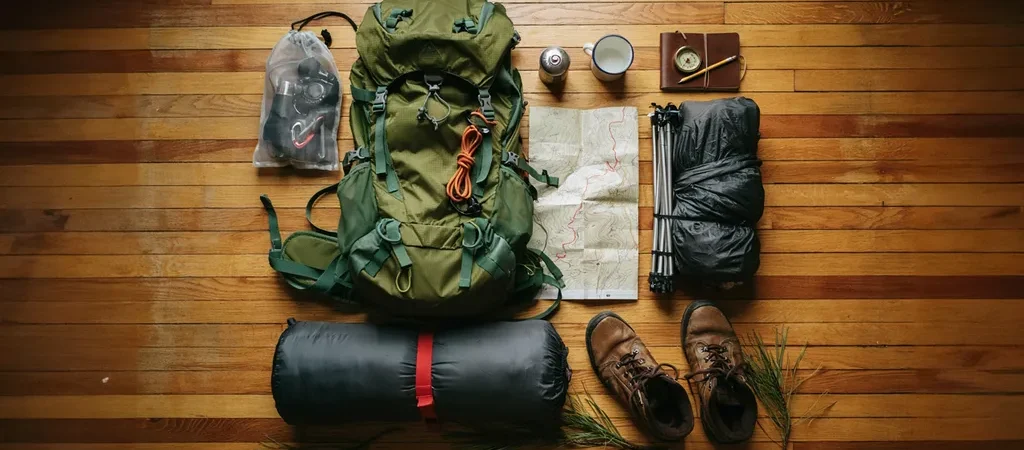
Your heaviest and most important gear is the big three: a backpack, a shelter such as a tent, and a sleep system of a sleeping bag and pad rated for the expected temperatures. Get those sorted first. Then fill in clothing you can layer, a stove and simple food, and the ten essentials. Borrow or rent gear for a first trip rather than buying everything, so you can learn what you actually like.
Plan Your Food and Water
Pack simple, calorie-dense food that needs little cooking, such as instant meals, nuts, bars, and dried fruit, plus a hot breakfast and dinner if you bring a stove. Plan roughly two to three liters of water per person per day, and map out where you will refill along the trail. Always carry a way to purify water, since even clear streams need treating.
The Ten Essentials
- Navigation: a map and compass, and a charged phone or GPS as backup.
- Sun protection: sunscreen, lip balm, sunglasses, and a hat.
- Insulation: extra warm layers beyond what you expect to need.
- Illumination: a headlamp with fresh batteries.
- First aid: a compact kit plus blister care.
- Fire: a lighter and a backup fire starter.
- Repair kit and tools: a knife and a little duct tape and cord.
- Nutrition: extra food for an unplanned night out.
- Hydration: water and a means to purify more.
- Emergency shelter: an emergency bivy or space blanket.
Tell Someone and Start Small
Before you go, leave your route, campsite, and expected return time with a trusted person, and let them know when you are safely back. On the trail, set an easy pace, drink often, and turn around if anything feels wrong. Your first trip is about learning the rhythm of backpacking, not setting records. Nail a short, simple overnight and you will be planning bigger adventures before you know it.
Recommended Gear

- RUGGED, CLASSIC RUCKSACK: Women’s fit with adjustable torso length, top-loading pack features up-specc’d durable fabrics…
- DESIGNED SIMPLICITY: Offers side-zip secondary main compartment access, a fixed top lid with zippered pocket, stretch si…
- RAINCOVER INCLUDED: Be prepared for any weather with a waterproof, 100% recycled nylon ripstop raincover stored in its o…

- RUGGED, CLASSIC RUCKSACK: Men’s fit with adjustable torso length, top-loading pack features up-specc’d durable fabrics, …
- DESIGNED SIMPLICITY: Offers side-zip secondary main compartment access, a fixed top lid with zippered pocket, stretch si…
- RAINCOVER INCLUDED: Be prepared for any weather with a waterproof, 100% recycled nylon ripstop raincover stored in its o…

- Included raincover made with PFAS-free DWR and bluesign approved materials
- Curved zip access on one side of panel
- Floating top lid with lash points
Frequently Asked Questions
How do I plan my first backpacking trip?
Choose a short, well-marked trail of just a few miles with a reliable water source and an established campsite. Check permits and the weather, pack the ten essentials plus shelter, a sleep system, and simple food, and tell someone your route and return time. Start small and build up from there.
What are the ten essentials for backpacking?
They are navigation, sun protection, insulation or extra clothing, illumination, a first aid kit, fire, a repair kit and tools, extra food, extra water and a way to purify it, and emergency shelter. Carrying all ten means you are prepared for an unexpected night out or a change in the weather.
How much water should I carry backpacking?
Plan for roughly two to three liters per person per day, more in hot weather or at altitude. Rather than carrying it all, map out reliable water sources along your route and refill as you go, always treating the water first. A filter or tablets let you top up safely from streams and lakes.
Written by Sarah Brooks · Hiking & National Parks
Sarah fell in love with the outdoors on a childhood trip to the Smokies and has logged thousands of trail miles across 30+ national parks since. She is happiest above treeline with a map in hand.