Heads up: this post contains affiliate links. If you buy through one, we may earn a small commission at no extra cost to you. As an Amazon Associate, we earn from qualifying purchases.
⚡ Quick Answer: To prevent blisters, wear moisture-wicking socks and well-fitted boots, and stop to treat any hot spot the instant you feel it with tape or a blister patch. If a blister forms, protect it with a cushioned dressing and keep it clean. Address friction early and most blisters never form at all.
Few things end a hike faster than a painful blister. They form when heat, moisture, and friction combine to separate layers of skin, and once one appears every step becomes a chore. The great news is that blisters are largely preventable, and treated properly a hot spot never has to become a trip-ending wound. Here is how to keep your feet happy on the trail.
Why Blisters Form
Blisters are caused by repeated rubbing, made worse by heat and moisture. A boot that slips at the heel, a wrinkle in a sock, or a bit of grit all create friction points, and sweaty skin blisters more easily than dry skin. Understanding these three ingredients, friction, heat, and moisture, points straight to how you prevent them.
Prevention Starts With Fit and Socks
Well-fitted footwear is the foundation. Boots should hold your heel in place without pinching your toes, and they should be broken in before a big hike. Wear moisture-wicking wool or synthetic socks, never cotton, and consider a thin liner sock under a thicker one to move friction between the socks rather than against your skin. Keep your feet as dry as you can, changing damp socks and airing your feet at breaks.
Catch Hot Spots Early
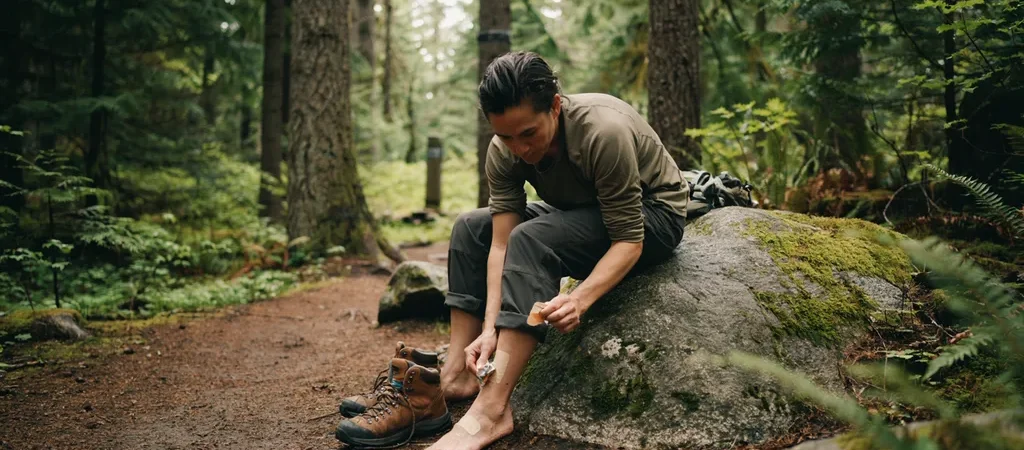
The single most important habit is to stop the instant you feel a hot spot, that warm, tender patch that warns a blister is coming. Do not push on hoping it will fade. Take off the boot, dry the area, and cover it with athletic tape, a blister-specific bandage, or a piece of moleskin to kill the friction. Two minutes now saves a miserable limp later.
How to Treat a Blister
If a small blister has already formed and is not painful, leave it intact and cover it with a cushioned dressing, since the skin is a natural barrier against infection. If it is large and painful, you may carefully drain it: clean the area, sterilize a needle, prick the edge, press out the fluid, and leave the roof of skin in place. Then apply antibiotic ointment and a protective bandage.
Keep It Clean and Protected
- Cover the blister with a hydrocolloid or padded dressing to cushion it and reduce further rubbing.
- Change the dressing daily and any time it gets wet or dirty.
- Watch for signs of infection such as increasing redness, warmth, pus, or red streaks, and seek care if they appear.
- Give torn skin time to heal and keep protecting the area until new skin forms.
Happy Feet, Longer Hikes
Blister care comes down to good fit, dry wicking socks, and treating hot spots the moment you feel them. Carry a small foot-care kit with tape and blister patches on every hike, tend to your feet early, and you will spend your miles enjoying the view instead of nursing your heels.
Recommended Gear

- Advanced Blister Prevention & Fast Healing.Hydrocolloid bandages utilize medical-grade gel technology to deliver 25% mor…
- Strong Adhesion, No Residue Left Behind. Engineered with a superior adhesive layer, these blister bandages stay securely…
- Waterproof & Second-Skin Comfort. The ultra-thin hydrocolloid material creates a protective yet flexible barrier that’s …

- Premium Quality Moleskin Pads: Made from high-quality flannel with a strong yet gentle adhesive, these moleskin for blis…
- Reliable Foot Protection: Soft moleskin padding relieve pain caused by friction from new shoes or long walks. The multi-…
- Strong, Long-Lasting Adhesion: These mole skin for blisters stay firmly in place when you need them most. When blister p…
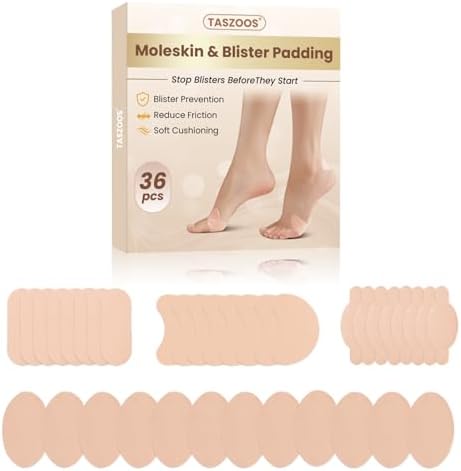
- [Effective Blister Prevention]: Tired of blisters? Our moleskin for blisters reduces friction between your feet and shoe…
- [Strong & Reliable Adhesion]: These moleskin for feet feature a strong adhesive that stays firmly in place on both skin …
- [4 Shapes for Different Foot Areas]: Each pack includes 36 moleskin pads for blisters in 4 practical shapes, designed to…
Frequently Asked Questions
How do you prevent blisters when hiking?
Wear well-fitted, broken-in boots and moisture-wicking wool or synthetic socks, never cotton. Keep your feet dry, and the moment you feel a hot spot, stop and cover it with tape or a blister patch. Catching friction early, before a blister forms, is by far the most effective prevention.
Should you pop a blister?
If a blister is small and not painful, leave it intact, since the skin protects against infection, and just cover it with a cushioned dressing. If it is large and painful, you can carefully drain it: clean the area, sterilize a needle, prick the edge, press out the fluid, leave the skin in place, and apply ointment and a bandage.
What is a hot spot when hiking?
A hot spot is the warm, tender patch of skin that warns a blister is about to form. It is your cue to act immediately by stopping, drying the area, and taping it to kill the friction. Treating a hot spot takes two minutes and prevents the blister that would otherwise end your hike early.

Written by Sarah Brooks · Hiking & National Parks
Sarah fell in love with the outdoors on a childhood trip to the Smokies and has logged thousands of trail miles across 30+ national parks since. She is happiest above treeline with a map in hand.