
Heads up: this post contains affiliate links. If you buy through one, we may earn a small commission at no extra cost to you. As an Amazon Associate, we earn from qualifying purchases.
⚡ Quick Answer: Exactly what to do if you encounter a bear — black bear vs. grizzly responses, how to handle a charge, when to play dead vs. fight back, and bear spray that works.
Most bear encounters end with the bear leaving. What happens in the ones that don’t is decided almost entirely by what you do in the first thirty seconds — and by whether you know which kind of bear you’re facing. This guide covers exactly what to do, step by step, because the right response to a black bear and a grizzly are not the same.
First: Identify the Bear (Color Lies)
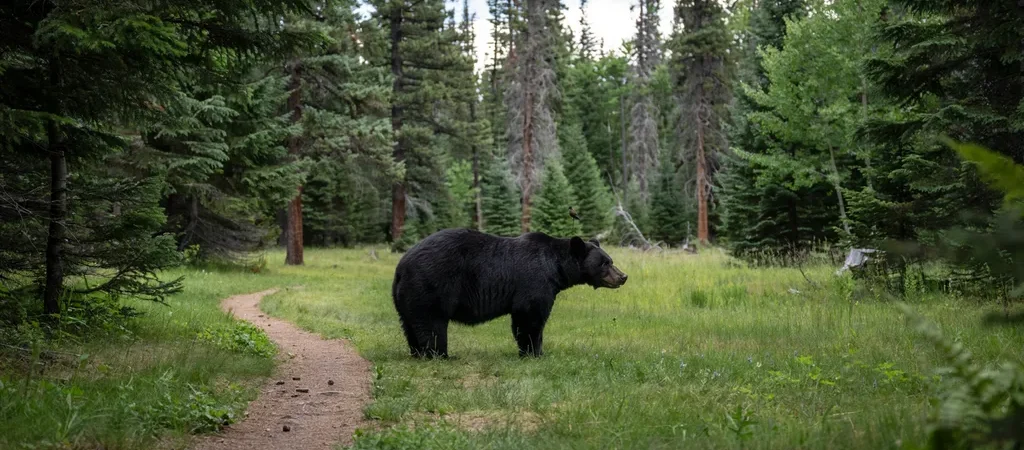
- Black bears — found in 40+ states — have no shoulder hump, tall ears, and a straight face profile. They can be black, brown, cinnamon, even blonde.
- Grizzlies (brown bears) — mostly the Northern Rockies and Alaska — have a prominent shoulder hump, small rounded ears, and a dished face.
- The hump is the tell, not the color. This matters because the last-resort advice is opposite for each species.
If You See a Bear That Hasn’t Noticed You
Back away quietly the way you came, keeping your eyes on the bear without staring it down. Give it a wide detour. Don’t run, don’t take a selfie, don’t get closer for a photo — most maulings involve people who approached.
If the Bear Notices You
- Stand your ground and speak calmly — a low, firm “hey bear” identifies you as human, not prey.
- Make yourself big: raise your arms, open your jacket, group up if you’re with others.
- Back away slowly at an angle. Never run — running triggers a chase response, and bears sprint at 35 mph.
- Ready your bear spray: safety off, in hand, if the bear is within 60 yards.
- A bear standing on hind legs is usually curious, not aggressive — it’s trying to see and smell you better.
If the Bear Charges
Most charges are bluffs: the bear veers off or stops short. Stand your ground — running turns a bluff into a chase. Deploy bear spray when the bear is within 30–40 feet: aim slightly down to create a cloud between you, and give a 2–3 second burst. The National Park Service describes bear spray as “proven to be highly successful at stopping aggressive behavior,” and stresses that it must be EPA-approved and specifically formulated for bears — human pepper spray is not the same product. We have removed a “90% effective” figure that appeared here previously because we could not trace it to a primary source.
If Contact Actually Happens (Rare)
- Grizzly: play dead — flat on your stomach, hands laced behind your neck, elbows and legs wide so you can’t be flipped. Stay still until the bear is long gone. Defensive grizzlies stop when the “threat” stops.
- Black bear: the opposite — fight back with everything, targeting the face and nose. Black bears that make contact are usually predatory, not defensive, and they can be driven off.
- If any bear enters your tent at night: fight, regardless of species.
Carry Bear Spray (And Keep It Reachable)
Bear spray only works on your hip or chest strap — not buried in your pack. These are the proven canisters rangers themselves carry:

- Item Package Dimension: 9.9999999898L x 8.399999991432W x 2.7999999971439995H inches
- Item Package Weight – 1.7500000000000002 Pounds
- Item Package Quantity – 1

- MAXIMUM STOPPING POWER: Strongest formula allowed by law (EPA Requires range of 1.0-2.0% Major Capsaicinoids), Frontiers…
- SPRAYS UP TO 50% FURTHER: With a 35-foot (11-meter) spray range reaching up to 10-feet further than the competition, Fro…
- IMMEDIATELY ACCESSIBLE BEAR SPRAY: Easy to access when seconds count, our bear sprays are available with quick draw belt…
Don’t Get Into This Situation
- Make noise on blind corners and near loud streams — surprised bears cause most incidents.
- Hike in groups; groups of 3+ are almost never attacked.
- Store food, trash, and toiletries in bear canisters or hangs — never in the tent.
- Keep dogs leashed; loose dogs find bears and bring them back to you.
- Give cubs an enormous berth. Mom is closer than you think.
Prevention is 95% of bear safety — our bear safety guide for camping covers food storage and camp setup in depth. And for the rest of your safety kit, see satellite messengers and our core safety tips.
Frequently Asked Questions
What is the difference between black bear and grizzly encounters?
With black bears: stand tall, shout, fight back if attacked — they usually bluff and flee. With grizzlies: speak calmly, back away, and if contact comes after a surprise encounter, play dead on your stomach, hands over neck. Identify by shoulder hump and face profile, not color.
Does playing dead work with bears?
Only for defensive grizzly attacks — lie face down, protect your neck, stay still until the bear leaves. Never play dead for a black bear, and never for any bear that stalks or enters a tent: those rare predatory cases demand fighting back with everything.
How effective is bear spray?
Extremely — studies show it stops aggressive bear behavior in over 90 percent of uses, outperforming firearms in real encounters. It only works if reachable in two seconds: hip or chest holster, safety understood, and practiced draw.

Written by Sarah Brooks · Hiking & National Parks
Sarah fell in love with the outdoors on a childhood trip to the Smokies and has logged thousands of trail miles across 30+ national parks since. She is happiest above treeline with a map in hand.