
Heads up: this post contains affiliate links. If you buy through one, we may earn a small commission at no extra cost to you. As an Amazon Associate, we earn from qualifying purchases.
⚡ Quick Answer: The best backpacking water filters and how to choose — squeeze vs. gravity vs. straw vs. purification tablets, top picks, and filter care mistakes to avoid.
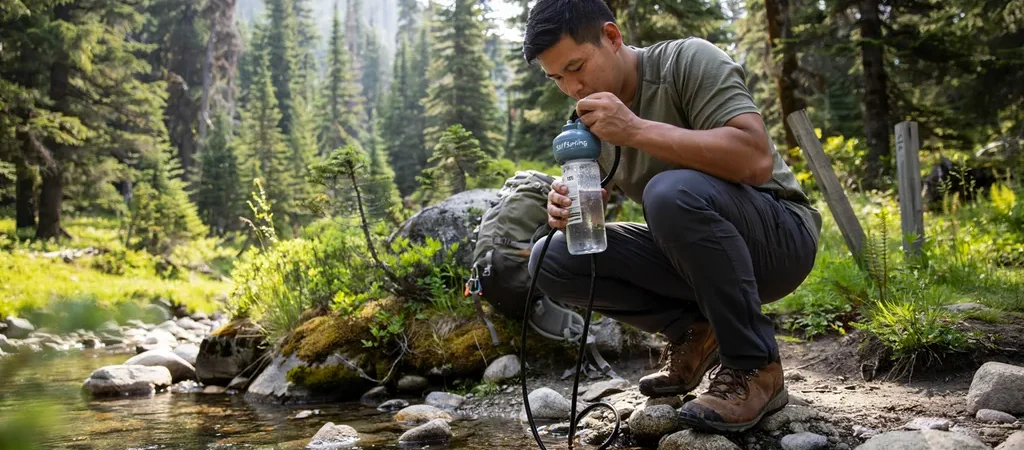
Water is the heaviest thing in your pack — a liter weighs over two pounds. A good backcountry water filter means you can carry less and refill from streams and lakes as you go, without gambling on giardia and a ruined trip. Here are the filters that have earned their reputations, and how to choose between squeeze, straw, gravity, and chemical treatment.
Why You Should Never Drink Untreated Water
Even the clearest alpine stream can carry giardia, cryptosporidium, and bacteria from wildlife and upstream campers. The symptoms (days of cramps and worse) show up a week or two later — long after you have forgotten which sip did it. Filtering takes a minute; giardia takes a month.
The Four Ways to Treat Water
- Squeeze filters: the backpacking standard. Fill a pouch, screw on the filter, squeeze clean water into your bottle. Light, fast, and filters hundreds of gallons.
- Straw filters: the simplest emergency option — drink directly from the source. Great backup, less practical for filling bottles or cooking.
- Gravity systems: hang a bag, let gravity do the work. The best choice for groups and base camps — no pumping, no squeezing.
- Purification tablets: nearly weightless chemical backup that also kills viruses (which most filters miss). Slow (30+ minutes) but bombproof insurance.
Top Picks
The Sawyer Squeeze is the closest thing backpacking has to a default answer, and the LifeStraw is the classic keep-it-in-every-pack backup:

- Removes Bacteria & Parasites: The Microfiltration Membrane Removes 99.999999% of Waterborne Bacteria (Including E. Coli …
- Removes Microplastics: Removes the Smallest Microplastics Found in the Environment (Down to 1 Micron), and Reduces Turbi…
- Rigorous Testing: All Claims Are Verified with Laboratories Using Standard Testing Protocols Set by the US EPA, NSF, AST…

- Lightweight, easy to use portable water filter removes harmful bacteria, protozoa, cysts, sediment, And 100% of micropla…
- The Sawyer Squeeze Filter is reusable and easy to clean, lasting up to 100,000 gallons. The fiber walls inside Sawyer’s …
- The Cnoc 2 liter (64 ounce) bladder is made from extra-durable TPU with a wide mouth opening for fast, easy filling.

- Very Versatile: This gravity fed water bag is compatible with SP128 Mini, SP129 Squeeze, Micro Squeeze and other common …
- High-Quality Materials: This 2 Gal gravity water bag is made of Food-Grade TPU materials,BPA-free,safe and ultra-durable…
- Large Capacity: Whole body edge of this 8L water bag adopts a double soldering sealing side quilting design to withstand…
Add a sleeve of tablets as your fail-safe — they weigh nothing and never clog or freeze:

- Ultimate Protection – The leading brands in water purification, Aquatabs, and radiation protection, Thyrosafe, have team…
- Years of Safety – Both of these emergency preparedness items have a long shelf life, allowing you to store them in your …
- Expertly Formulated – Most nuclear disaster preparedness kits aren’t quality tested like Aquatabs and Thyrosafe. With gl…
How to Choose
- Solo backpacker: squeeze filter + a few tablets as backup. Light, fast, cheap.
- Couples and groups: gravity system in camp, squeeze filter for the trail.
- Day hikers: a straw filter in the pack covers the “ran out of water” emergency.
- International travel or questionable sources: add tablets — the virus protection matters.
Filter Care (The Part Everyone Skips)
- Backflush squeeze filters regularly to keep the flow rate up.
- Never let a filter freeze — ice cracks the hollow fibers invisibly and it stops protecting you. In cold weather, sleep with it in your bag.
- Filter from the clearest water you can find; silty water clogs filters fast.
- Replace tablets by their expiration date.
Clean water sorted, make sure the rest of your kit is dialed too — our first backpacking trip guide and day-hike checklist cover the essentials, and our outdoor safety tips round out the safety basics.
Frequently Asked Questions
What is the best type of backpacking water filter?
Hollow-fiber squeeze filters are the most popular for their light weight, low cost, and ease of use, giving clean water on demand. Pump filters move more water and pull from shallow sources, while gravity filters are great for groups. Choose based on your group size and how much water you need at once.
Do backpacking water filters remove viruses?
Most physical filters remove bacteria and protozoa but not viruses, which are smaller. Viruses are rarely a concern in remote North American backcountry but can matter overseas. If viruses are a risk, use a purifier rated for them, add chemical treatment, or boil your water.
How do you keep a water filter from clogging or freezing?
Pre-filter cloudy water through a bandana, backflush the filter regularly to clear trapped debris, and let it dry between trips. Never let a filter freeze once it has been used, since ice can crack the internal fibers and let contaminants through. Sleep with it in your bag on freezing nights.

Written by Sarah Brooks · Hiking & National Parks
Sarah fell in love with the outdoors on a childhood trip to the Smokies and has logged thousands of trail miles across 30+ national parks since. She is happiest above treeline with a map in hand.