
Heads up: this post contains affiliate links. If you buy through them, WildMorrow may earn a small commission at no extra cost to you. As an Amazon Associate, we earn from qualifying purchases.
⚡ Quick Answer: The best desert hikes in the US – Zion, Grand Canyon, Arches, the Wave, and Joshua Tree – plus the heat-safety rules and the water, electrolytes, and sun protection that keep desert hiking safe.
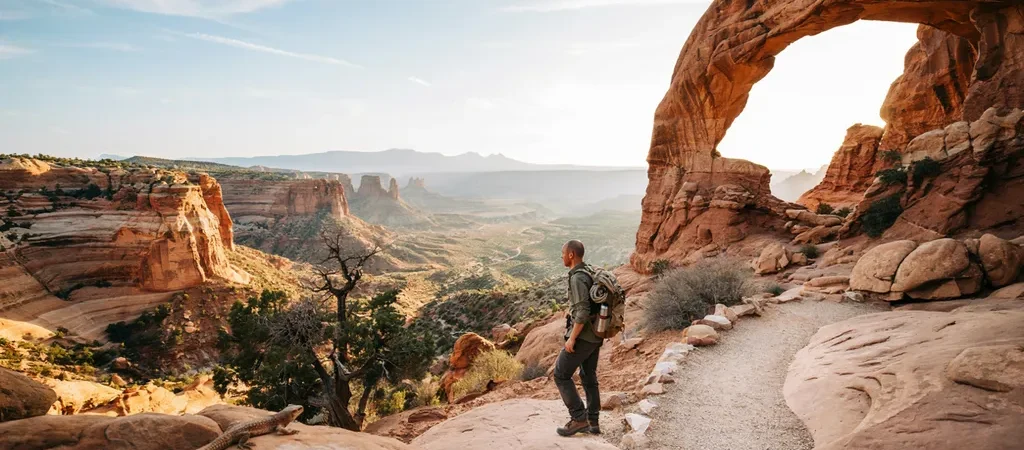
Desert hiking is addictive in a way green forests never quite manage: the impossible colors at sunrise, the silence, the sculpted rock, the sense of standing somewhere ancient and vast. But the desert plays by different rules, and it does not forgive the unprepared. Here are the best desert hikes in the US, and exactly how to hike them without becoming a cautionary tale. Heat safety here is not optional.
1. The Narrows & Angels Landing, Zion, Utah
Zion packs desert hiking’s greatest hits: wading a slot canyon river and scaling a chained ridge with jaw-dropping exposure. Spring and fall are ideal; summer midday is brutal. Full details in our Zion guide.
2. Bright Angel Trail, Grand Canyon, Arizona
Hiking down into the canyon is unforgettable, but remember the golden rule: down is optional, up is mandatory, and it gets hotter as you descend. See our first-timer’s Grand Canyon guide.
3. Fiery Furnace & Devils Garden, Arches, Utah
A maze of towering red fins and the park’s famous arches. Devils Garden strings together more arches than anywhere on earth; go early to beat heat and crowds.
4. The Wave & White Pocket, Arizona
Otherworldly swirled sandstone that looks computer-generated. The Wave requires a hard-to-win permit lottery; nearby White Pocket delivers similar surrealism with easier access.
5. Joshua Tree National Park, California
Where two deserts meet, with boulder gardens, Dr. Seuss trees, and some of the best desert stargazing anywhere. Hike the Hidden Valley and Barker Dam loops in the cool hours.
The desert survival kit
Three things keep desert hikes safe and enjoyable. Water is life, carry far more than you think (a gallon per person per day in heat is a real guideline), and electrolytes matter as much as water because plain water alone can’t replace what you sweat. A sun hoodie shields you better than sunscreen alone, and a cooling towel is genuine relief when the mercury climbs.

- Improve your focus & energy while staying hydrated with Nuun Hydration’s Electrolyte + Caffeine formula drink tablets. E…
- Nuun Hydration’s Electrolyte Drink Tablets enhance your workout or your work day naturally through improved hydration. K…
- Great for working out, hiking, cycling, exercise, sports or daily use to improve and replenish your energy and endurance…


Desert hiking rules
Hike early and late, rest in shade midday, and never rely on finding water. Tell someone your plan, carry more water than feels reasonable, know the signs of heat exhaustion (our first aid guide covers them), and turn around if you’re using water faster than planned. Respect the desert and it will show you scenery you’ll never forget. Find your next one in our best hiking trails guide.
Frequently Asked Questions
When is the best time for desert hiking?
The cooler months from fall through spring are ideal, with comfortable temperatures. Summer desert heat is dangerous, so if you must hike then, go at dawn, carry far more water than usual, and rest during midday. Winter is often the perfect season for exploring desert trails.
What should you wear for desert hiking?
Wear light-colored, loose, breathable clothing that covers your skin, a wide-brim hat, and sunglasses, plus sturdy shoes for rocky terrain. Sun protection is essential. Bring layers too, since deserts can be cold in the early morning and after sunset even when days are warm.
How do you stay safe hiking in the desert?
Carry at least a gallon of water per person per day, tell someone your plan, avoid midday heat, and know the signs of heat illness. Watch for flash floods in canyons during storms, protect yourself from the sun, and turn back before you run low on water or energy.
Written by Sarah Brooks · Hiking & National Parks
Sarah fell in love with the outdoors on a childhood trip to the Smokies and has logged thousands of trail miles across 30+ national parks since. She is happiest above treeline with a map in hand.