Heads up: this post contains affiliate links. If you buy through one, we may earn a small commission at no extra cost to you. As an Amazon Associate, we earn from qualifying purchases.
⚡ Quick Answer: The best hiking socks and why merino wool beats everything else — cushion levels, fit, blister prevention, and the Darn Tough picks hikers swear by.
Boots get the glory, but socks decide whether your feet finish the day happy. More blisters are caused by bad socks than bad boots — and the fix costs twenty dollars. Here’s why wool wins, what to avoid, and the socks serious hikers quietly buy five pairs at a time.
The One Rule: No Cotton
Cotton absorbs sweat, stays wet, and wet skin blisters. It’s the single most common footwear mistake beginners make. Merino wool and technical synthetics wick moisture away and keep working when damp — the difference is dramatic by mile five.
Why Merino Wool Wins
- Temperature regulation: warm when it’s cold, surprisingly cool when it’s hot.
- Stays comfortable damp: wool insulates even wet — the property that made it legendary.
- Odor resistance: naturally antimicrobial; multi-day trips without offending your tentmate.
- No itch: modern merino is nothing like your grandfather’s wool sweater.
Features That Matter
- Cushion level: light cushion for summer day hikes, midweight for backpacking, heavy for cold weather. More cushion = warmer.
- Height: crew height protects against boot collars and brush; ankle height suits low trail shoes.
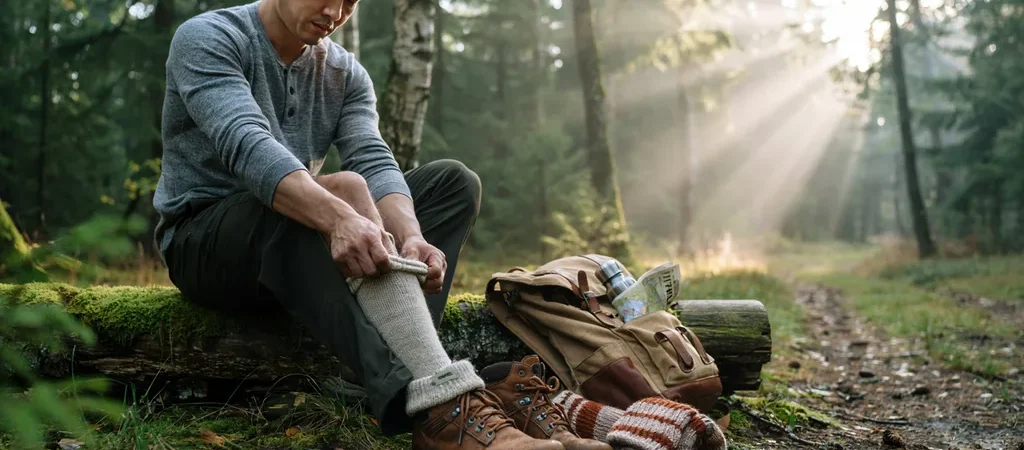
- Fit: snug with no loose fabric — wrinkles become hot spots, hot spots become blisters.
- Warranty: the best sock makers guarantee them for life. That tells you everything about durability.
Top Hiking Socks
Darn Tough socks are the trail standard — knit in Vermont, guaranteed for life, and genuinely worth the price:


- 53% Nylon 44% Merino Wool 3% Lycra Spandex
- Made in the USA
- Lightweight with Cushion – Light and strong with a thin layer of cushioning along base of foot. Our most versatile const…
Blister-Proofing Your Feet
- Carry a spare pair on long days and swap at lunch — dry socks reset the clock.
- Address hot spots immediately: stop, tape or moleskin the spot, keep the day.
- Trim toenails before big hikes (downhills will remind you if you forget).
- In winter, a thin liner sock under a midweight wool sock adds warmth and cuts friction.
- Wash wool inside-out, skip the fabric softener, air dry — they’ll last years.
Socks sorted, make sure the boots deserve them — our hiking boot guide covers fit, and the day-hike checklist covers everything else. Cold-weather hikers should also see our layering guide.
Frequently Asked Questions
What are the best socks for hiking?
Merino wool hiking socks are the top choice because they wick moisture, cushion your feet, resist odor, and stay warm even when damp. Synthetic blends are a good, faster-drying alternative. Avoid cotton socks, which hold moisture and dramatically increase your risk of blisters.
Why should you not wear cotton socks for hiking?
Cotton absorbs sweat and stays wet, and damp skin combined with friction is the perfect recipe for blisters. Wet cotton also loses all insulating value, chilling your feet in cold weather. Merino wool and synthetic socks wick moisture away and keep your feet drier and more comfortable.
Should you wear sock liners for hiking?
Liner socks are a thin layer worn under your main sock that moves friction between the two socks instead of against your skin, which helps prevent blisters on long hikes. They also add moisture-wicking. Many hikers prone to blisters swear by a liner plus a cushioned wool sock.

Written by Sarah Brooks · Hiking & National Parks
Sarah fell in love with the outdoors on a childhood trip to the Smokies and has logged thousands of trail miles across 30+ national parks since. She is happiest above treeline with a map in hand.